RSS

Tag Archives: www.samake2012.com

Analyzing Mali’s strife

Mali currently stands on the cusp of a big decision to be made. On one side, a deal favored by ECOWAS would be to allow interim President Dioncounda Traoré to serve the next 12 months as President of the transitional government. On the other side, would be to choose a new president during the transition. Mali remains divided on this decision. Many would prefer Dioncounda to leave office on May 22nd as per the Malian constitution. To many, Dioncounda is a reminder of the “old guard” that allowed things to get so bad in Mali, a reminder that Malians would soon like to put behind them.

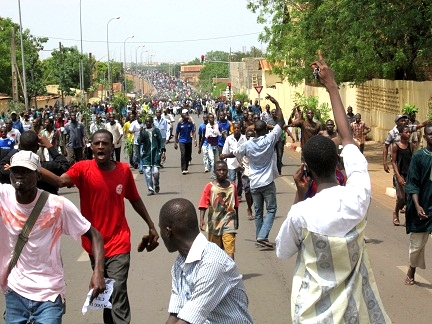
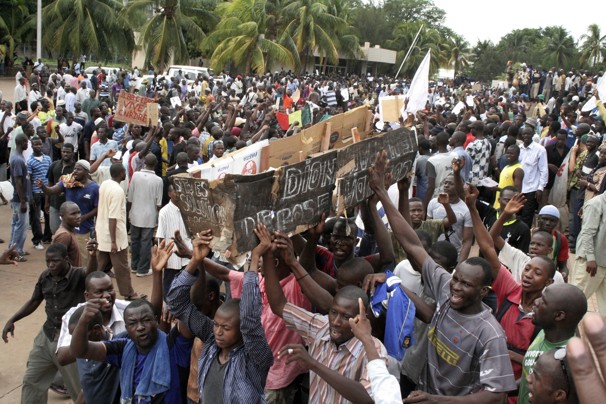
On May 21st, in response to a forced decision by ECOWAS to have Dioncounda serve as a transitional President, tens of thousands of protesters marched on the palace and brought harm to Dioncounda, who had to be admitted to hospital for head injuries.

Analysis from Presidential Candidate: N. Yeah Samaké

Yeah has always maintained that the solution to Mali needs to come from inside the country. In a Voice of America interview, he said: “Mali needs its partners, but we need to make sure that this is a Malian solution. We cannot make this solution outside of Mali [because] that will be an imposition. We don’t want that and it is not going to be a lasting solution”.

In response to today’s violence, Yeah stated: “These acts are condemnable. However may it serve as a lesson that there needs to be a concerted effort at a solution that is acceptable to all Malians, who believe the act of choosing a President is a sovereign decision.  After the violent reactions to the decision made by ECOWAS, we can anticipate a number of outcomes:

1) Follow the status quo decision keeping Dioncounda as the president of the transitional government as his term as interim President ends today. This means that ECOWAS will choose the interim President who will ultimately honor all agreements during the transitional power. The advantage of this decision will save Mali and ECOWAS from the daunting task of bringing Malians together to have a consensual President. It is also conducive to a quick return to an acceptable, seemingly acceptable constitutional order that is a pre-requisite for involvement of the international community. The drawback of the decision would be the sustainability of the solution beyond the 12 months transition. This decision excludes the participation of political leaders who are ultimately going to become the decision makers to upload the agreements made during the next 12 months.

2) The consensual decision. This implies the organization of a national convention that Sanogo and several political players have called for. This will allow for a consensual transitional body that will be accepted by all involved parties. This alternative will ensure a more stable transition supported by all the stakeholders. As a drawback this option may not be warmly received by the international community. As a result, Mali may continue to receive sanctions imposed by bilateral and multilateral partners such as ECOWAS, US, France, World Bank and the IMF. Ultimately the withdrawal of this support would cripple the country from the capacity to resolve the rebellion in Northern Mali.

3) An elected transition President as suggested by ADPS. ADPS is formed with 14 other political parties and their solution would allow Malian political leaders, civil society, and the junta soldiers to be proportionally represented in a 30-person body. Seven representatives of the military, 18 represented from the political parties and five from civil society. This 30-person body will elect the transitional president in their midst excluding the military representatives. This alternative would take the longest to achieve. It may also not receive the blessings of the international community. However the outcome would be the most compatible with the constitutional order. This alternative will offer the most legitimate form of leadership, where the president is actually elected and the remaining 29 members form the legislative body. The legislative body will replace the current Assembly that is reaching the end of its term. This option will resolve the unpopular decision to prolong the term limits of the Assembly which violates the constitution.

So which one is the best option for the Malian people? At the end of the day, Mali as a whole represented by leaders of civil and political society need to come together and decide. Mali’s future cannot be planned by other leaders and countries who are driven by foreign agendas. This solution has to be about the best for Mali and Mali alone.

Yeah would certainly love to hear your comments on which alternative would be your pick.

 
4 Comments

Posted by on May 22, 2012 in Past Posts


Tags: , , , , , , , , , , , , , , , , , , , , , , ,

The rapidly changing political circus

This weekend has been long and relaxing. With Yeah being back in town, we decided to escape the busy political mess of Bamako for the quiet of Ouelessebougou, where Yeah is still the Mayor. The kids have been extremely excited that Yeah has returned, especially Carmen who now has her teasing partner back. However, life did not get less busy for Yeah as his mayoral duties reclaimed his attention.

The changing weather has aligned with the changing political scene. One day it could rain cats and dogs and the very next day the sun shines so brightly that the idea of rain seems unbelievable. However, the rain has brought some much-needed relief to drought stricken Mali and an early start to Mali’s rainy season.

But while the rain is much awaited and much-needed, the changing political scene has brought about controversial debate. On May 22nd, Mali’s interim President Dioncounda Traoré was to step aside and make way for a transitional president as per the constitution of Mali. Many in Mali’s political circle were in favor of a strict observance of the 40-day rule by DioncoundaTraoré because for many he represented the “old guard” that had failed to protect Mali’s best interest and instead lined their own pockets.

Captain Sanogo congratulates Interim President Dioncounda at his investiture ceremony

For a few weeks, there had been much debate between ECOWAS and the junta. For all their claims of giving up power, the junta has been very much involved in Mali’s political scene, going as far as to arrest politicians they believed to be involved in “threats” against the country. It is interesting to note also that in the past few weeks, journalists have accused them of threat tactics like phone tapping and arresting an editor of a local newspaper. The national TV continues to depict a very strong junta involvement, where they can be seen at events representing the government. ECOWAS was never able to provide the junta with a sense of security that nothing would happen to them if they left power. This may explain the junta attempting to maintain a very strong role in the government.

The debate has now been ended at least temporarily. A new deal was cut yesterday between the junta and ECOWAS. The verdict is that Dioncounda will serve the entire transition as the President until elections are held next year. This makes him ineligible to run for office when elections are held. However, who’s to say this will be honored. His role as President will remain merely as a figure-head. The country will be run by the Prime Minister Cheick Diarra and the transitional government. The interesting thing to note is that Sanogo has come out of this deal better off. As part of the deal, he has been given all the privileges that a former head of state would have like a lifetime salary, a home, bodyguards, and amnesty from criminal proceedings. Given that political leaders have not been involved in the mediation process, should a democratically elected president uphold these agreements?

All the while Sanogo has been stating how the Malian people are first and the minute a deal gets offered that favors the junta and primarily himself, he jumps on it. It is to be noted that the junta was under extreme external pressure from countries in the European Union, the African Union and the US. However, a majority of the Malian people have been adamant that Dioncounda not serve the transitional period as President. He has hardly done anything in the 40 days he has been in power. The North remains as divided as ever and if anything, terrorist groups like AQIM and MUJWA are only making themselves comfortable. The refugee situation gets direr every day and the aid is only getting to the boundaries of these captured zones.

Already, angry protesters have taken to the streets as of Saturday, expressing their discontent with the decision made. Members belonging to groups like APMA and other youth groups have organized a sit in at the monument of independence. Their claim is that they will not leave until Dioncounda leaves power. Today demonstrations continue as people express their discontent. There have been reports of disorderly conduct like burning tires and an atmosphere similar to that after the coup first happened. Dioncounda has been reported to be killed in these protests but there is no verification in that story or the many others that are feeding fuel to the flame. The one thing that is certain is that for most at this stage of the game, it isn’t even about Dioncounda anymore. Many feel like ECOWAS bullied the junta and ultimately most Malians into doing what they wanted done. However some also feel like the junta has let them down by giving in, especially in exchange for favors.

Courtesy of AP reporter Baba Ahmed : Protesters march on the royal palace. Look at the throngs of people

Hopefully, ECOWAS and the international community will correct their mistake quickly for the solution to Mali’s issues needs to come from Mali, not the outside. Only then will true democracy be possible. If the solution is a forced solution where the people feel like Mali’s junta are being held hostage to a decision, then the support will be limited. ECOWAS get Mali’s politicians and leaders involved in our country decisions before it is too late!

 
1 Comment

Posted by on May 21, 2012 in Past Posts


Tags: , , , , , , , , , , , , ,

The clock is ticking

On April 12th when Diacounda Traoré was sworn in as Mali’s interim President, the clock started ticking on his 40-day term. His responsibility was to plan when elections would be held and to help resolve the issues of the Northern region in terms of security and the refugees. Diacounda’s inauguration speech was punctuated with severe rhetoric against the rebels of the North, going so far as to even threaten war against them. 30 days into his term, one can clearly see that talk is cheap and that Diacounda has fulfilled very few of the promises that he stated when he was sworn in. This is another reason for Malians to continue to distrust the old guard that has watched over the politics of Mali for the last 20 years.

To be fair, I should say that his task is no easy task. The task remains difficult to reunite a country in which not only the North remains separated by the South, but where different political parties have been reaching out in different tangents. The situation has not been helped by a counter coup attempt by the ex-President’s loyalist forces. Nor has it been helped by threats from ECOWAS on deployment of an army of 3000 foreign soldiers on Mali’s soil to help gain the territory back but more importantly make sure the junta returns to the barracks. These threats have in effect gone against the April 6th agreement between the junta and ECOWAS and have caused great anger among the junta, who see the constitution of Mali being changed by foreigners and power quickly slipping away. By extending Diacounda’s 40-day mandate, the constitution that was quoted when the coup first happened, will in effect be violated. After the whole rigmarole about violating the constitution initially, it seems like a farce for it to now be violated to serve external preferences.

I have seen Diacounda do little in these 40 days other than meet with individuals that cannot influence the course of Mali’s future. The important task of gaining back Mali’s northern territories seem pushed to the back burner. Even more crucial, the refugee numbers have now swelled to 235,000+ with numbers getting higher each day. The US State Department has in effect stated that they hold the junta directly responsible for the mounting suffering of the Malian people.  While the junta has contributed to the issue, to blame them whole heartedly seems unfair. There have been many players who could be blamed for the situation in Mali: the old guard ATT, the politicians that have been on the scene for 20-30 years, the junta, the flip-flopping young politicians that go where the power is and also foreign interests.

Now, the one thing that might explain Diacounda’s relative lack of media presence is that the junta still controls the national TV. Each evening the screen is filled with events that seem to embolden the junta’s presence at community events. It is almost as if the stage is being set for them to take over when Diacounda’s 40 days is over. This is something the international community and especially ECOWAS (the body of African countries) would prefer not to happen. By establishing military rule, the junta would be returning the country to a similar period 20 years ago before democracy was established. The events in Mali have already proven that Mali’s democracy was a superficial one with leaders lining their pockets and fulfilling personal ambitions rather than truly answering the needs of those that put them in power. Captain Sanogo, the military leader, has already shown that he has the ability to gain the support from the Malian people that has lacked for so long. However, the constant quashing of the national TV does not bring any comfort and is an early indicator that dissenters could be silenced.

Just last week, I was headed to the PACP headquarters right by ex-Prime Minister Modibo Sidibe’s house. Modibo Sidibé was the one rumored to have stolen a lot of money and used even more to finance his Presidential campaign. He has already been arrested twice by the junta. As I was there, I saw few motorcycles carrying heavily armed guards. They were hunting for Modibo. The first thought that entered my mind was, “Why are you here. Should you not be in the North protecting your people?” It seems more and more that the junta is using the military to advance their personal protection and needs.

Nevertheless, the people of Mali remain embittered by the past 20 years of ineffective democracy and regardless many people see the junta as the lesser of two evils. Especially, since they provide a non-politically affiliated group that ended an ineffective democracy. Sanogo is viewed by many in Mali as a leader, and this is an impression that will not be dispelled anytime soon. I wouldn’t be surprised on May 22nd if the junta reclaims the Presidency and Sanogo remains in power till elections happen next year.

I cannot decide if this is a good thing or bad thing. While this is not an ideal solution, most other solutions will cause further unrest and delay a resolution to the important issues gripping the North. For now, Mali seems to be biding its time with Diacounda, waiting for a true leader to emerge to take the reins of the country. Hopefully the new transition leader will be one that makes more progress than the country has seen in the last 30 days with the least amount of unrest.

10 more days till the hourglass turns once again in Mali to begin the next phase towards determining Mali’s future.

 
2 Comments

Posted by on May 12, 2012 in Past Posts


Tags: , , , , , , , , , , , , , , ,

Empowering women

The weekend has passed in somewhat of a peaceful manner despite isolated, unverified reports of gunfire in central Bamako.The ECOWAS rhetoric has now moved from forcing troops on Mali to stating that troops will only be deployed if the Malian government gives the go ahead.

Yeah spent the last week in Salt Lake City trying to raise awareness and also continue to raise funds for the refugees and his campaign. Thank you to Adele Kammeyer and Susan Escalante for helping arrange a meet and greet and a cottage-style meeting respectively! This coming week he heads to New York, DC and Boston to do much of the same, especially meeting with Senators that oversee America’s foreign policy.

As Yeah remains busy in the US trying to meet with individuals and American leaders to raise awareness on the situation in Mali, his party PACP continues to make leaps and bounds here.

As turmoil embroils the lives of the basic citizen, PACP continues to do the things that might improve these citizen’s lives. Today saw such an opportunity. Bamba, a local businessman, spent some time with a group of women teaching them skills that they can then market. For example, he taught them about micro enterprise that would help finance businesses and also how to make fabric and peanut butter.

This kind of entrepreneurship is essential to helping Mali’s individuals make a living for themselves in a country where jobs are scarce and the likelihood of making more than the $1 is incredibly low. May many such meetings happen and may women finally get a break from the hardship that has become their lifestyle.

 
1 Comment

Posted by on May 5, 2012 in Past Posts


Tags: , , , , , , , , , , , ,

Developments towards a sustainable democracy

As the political uncertainty hovers around Mali, the average Malian individual’s life has returned back to somewhat of a normalcy. It is not that people do not care. However, there are more important things for the average Malian than what is happening or not happening in central Bamako. Malians have been served a plate of misery and as long as their leaders don’t make their deplorable lifestyles even worse, they will usually not speak out. However, despite this, if one were to ask a Malian what they think about the situation currently, most Malians will just shake their heads in amazement as to how Mali will get out of this dilemma and which leader is honest and capable enough to help do it.

Part of the plan made between the political class of Mali and the junta in Burkina Faso was to choose a prime minister who would then choose a transitional government that would take the country one step closer to restoring democracy. Yesterday, the big announcement came that most of the political circle and international community was watching and waiting for. The announcement of the transitional government.

The agreement reached on April 6th between the ECOWAS and the junta was that the transitional government would be a national unity government. That is it would contain representatives from all national forces. This was not to be and the Prime Minister Cheick Modibo Diarra created a 24-member government without consultation with the political parties, whose members had not served in the prior President’s cabinet.  The breakdown is 21 ministers and 3 deputy ministers. Of the 21 ministers, three army representatives close to military leaders who overthrew the government last month are part of this government. They hold three of the big posts namely, defense, interior and civil protection. 3 of the 21 ministers are women. The way the government was created has caused some unhappiness in the political circles, especially from the bigger parties that have ruled Mali’s political scene for many decades. There was a hope that some of their representatives would have been part of the new government and many of these parties had spent long weeks trying to sweeten the deal with the junta and then the Prime Minister. An interesting fact to note also is that most of these appointed individuals do not have a heavily involved political background. In addition a few have spent a majority of their time outside Mali and have ties to neighboring countries and international institutions.

The appointments are as follows:

1 – Minister of State, Minister of Foreign Affairs and international cooperation: Sadio Lamine SOW

Sadio, has had little political clout in Mali. His main role has been as an aide to Burkina Faso President Blaise Campaoré (the mediator assigned by ECOWAS to help with this crisis). He has worked a majority of his life outside Mali. Having this individual fill this role might come across as a conflict of interest given his close ties to another country’s President.

2 – Minister of economy, finance and Budget: Tiéna COULIBALY

Tiéna Coulibaly is better known in Mali as the Director of the Malian Textile Development Company (CMDT) and former Director of Mali’s Cotton Privatization Agency. Also interesting is that he held the same exact position under President Moussa Traoré, who was overthrown by ATT in the 1991 coup.

3 – Minister of defense and former combatants: Colonel – Major Yamoussa CAMARA (This is a post that is held by one of the junta’s people.)

4 – Minister of internal security and Civil Protection: General Tiéfing KONATE (Another post that is held by one of the junta’s people.)

5 – Minister of public service, governance and administrative reforms and policies, Chargé des Relations with Institutions: Namory TRAORE Mamadou

Dr. Namory TRAORE Mamadou has served as the National Director of Health in the past.

6 – Minister of Territorial Administration, decentralization and development of the territory: Colonel Moussa COULIBALY Sinko (Another post that is held by one of the junta.)

This is an important post given that this individual will work to ensure free and fair elections in all territories. Also this individual before this appointment was the junta leader’s chief of staff.

7 – Minister of trade, mines and industry: Ahmadou TOURE

Interesting fact is that M. Toure is the brother-in-law of the candidate of the URD, Soumaïla Cissé, who was arrested in the wave of arrests recently.

8 – Minister of Agriculture, breeding and fishing: Moussa SIDIBE Léo

M. Sidibe belongs to ADEMA, the same political party as the interim President. He served as the Secretary General for the Ministry of Agriculture under the previous administration.

9 – Minister of youth, labor, employment and vocational training: Mamadou DIAKITE

10 – Minister of health: Soumana MAKADJI

11 – Minister of Education, literacy and the Promotion of the national languages: Adama OUANE

12 – Minister of Justice, keeper of the seals: Malick COULIBALY

A change in what has become norm, M. Coulibaly has been a firm critic of judges and justice in Mali. His classmates from Ecole Nationale d’Administration (ENA Bamako) and colleagues recognize him as “a principled, honest, rigorous work.” His task will be to fight the corruption that has seeped deep into the government.

13 – Minister of Malians abroad and African integration: Ms. TRAORE Rokia GUIKINE

A career diplomat, Ms Traore was Ambassador of Mali to Gabon, technical advisor and director of international cooperation. Before her appointment, she was the secretary general of Soumeylou Boubèye Maiga, former Foreign Ministry.

14 – Minister of Humanitarian Action, solidarity and the elderly: Dr Mamadou SIDIBE

M. Sidibe was a former Director of Human Resources (HR) of Health, Social Development and Promotion of Women and Children. Given the travelling he has done as part of his previous roles, he is recognized as a connoisseur of the country. The expectation on him will be to assess the health and humanitarian situation in the North where the situation is dire.

15 – Minister of the family, the advancement of women and the child: Madam ALWATA Ichata SAHI

Madam Sahi is an active and influential member of the Women’s Movement in the ADEMA party. She also previously served as the African Representative for Afrique de l’ouest de l’Organisation Panafricaine des Femmes.

16 – Minister of energy, water and the environment: Alfa Bocar NAFO

 Served as CEO of the Regional Solidarity Bank (BRS).

17 – Crafts, Culture and Tourism Minister: Mrs. DIALLO Fadime TOURE

A sister-in-law of Madani Diallo, a prominent member of ADEMA and candidate in the 2002 presidential election.

18 – Minister of Communication, post and New Technologies: Hamadoun TOURE

Dr. Hamadoun Touré of Mali has been Secretary General of the International Telecommunication Union (ITU), the specialized agency of the Nations dedicated to information and communication technologies (ICTs), since 2007. He was re-elected for a second four-year term in 2010. Also he was the spokesman for the United Nations mission in Côte d’Ivoire last year and is very close to Ivoirian President Alassane Ouattara.

19 – Minister of equipment, transport, housing and urbanism: Mamadou COULIBALY

20 – Minister of higher education and scientific research: Harouna KANTE

21 – Minister of sport: Hameye Founé MAHALMADANE

M. MAHALMADANE was previously the secretary general of the Free Trade Union of Magistrates (SYLMA) and a very active campaigner against the constitutional reforms initiated by former President Amadou Toumani Toure.

22 – Minister delegate to the Minister of economy, finance and the Budget, Chargé du Budget: Marimpa SAMOURA

23 – Minister delegate to the Minister of the public service, responsible for policy reforms and Relations with Institutions: Yacouba DIALLO

24 – Minister delegate to the Minister of youth, labor and employment and vocational training, responsible for youth and vocational training: Bruno MAÏGA

It will be interesting to watch and see how this new government will operate. While it is interesting to note the lack of political know how of the appointees, it will also be refreshing to not have individuals that have been soaked in bad policies and corruption.  Corruption remains one of the biggest challenges in Malian government and is one of the reasons that ATT lost favor during the last few years. There does seem to be a few players and connections from ADEMA, which lends the perception that the interim president Diacounda Traoré might have pushed the vote in certain party affiliated individual’s directions.

The aim of this transitional government is to set a date for fair and free elections and in essence help the Prime Minister run the government until elections can be held.

Things are progressing in the right direction. The coup has opened up the possibility for Mali to root out the inefficiencies and corruption that was making Mali a democracy in name alone. The hope is that once our territories are returned and our people come back home in the North, then elections can be held that will allow the people to once again choose their leader.

Yeah has said, ““The junta has given us the opportunity to change Mali,” adding that the coup of March 22 exposed the political dysfunction in Mali. Through this crisis, democracy must be rebuilt on a solid foundation. “If we miss this opportunity, the castle of Malian democracy will still grow on the same sand that made it collapse,” Yeah has said. This objective will be achieved when “the old guard agrees to make way for the new generation,” he concluded.

Sounds like the needful is happening. Small steps to a bigger, hopefully better future.

Some recent articles in the news:

  1. Canard Dechaine( in French): Niankoro Yeah Samake, president of the PACP: “We will not accept that Mali is untrustworthy”
    1. English version click here
  2. Zero Hora( Brazilian Newspaper): Interview with Yeah
    1. English version click here
  3. India West: Wife of Malian Presidential Candidate Encourages Democracy
 
Leave a comment

Posted by on April 26, 2012 in Past Posts


Tags: , , , , , , , , , , , , , , , , , , ,

The price of conflict

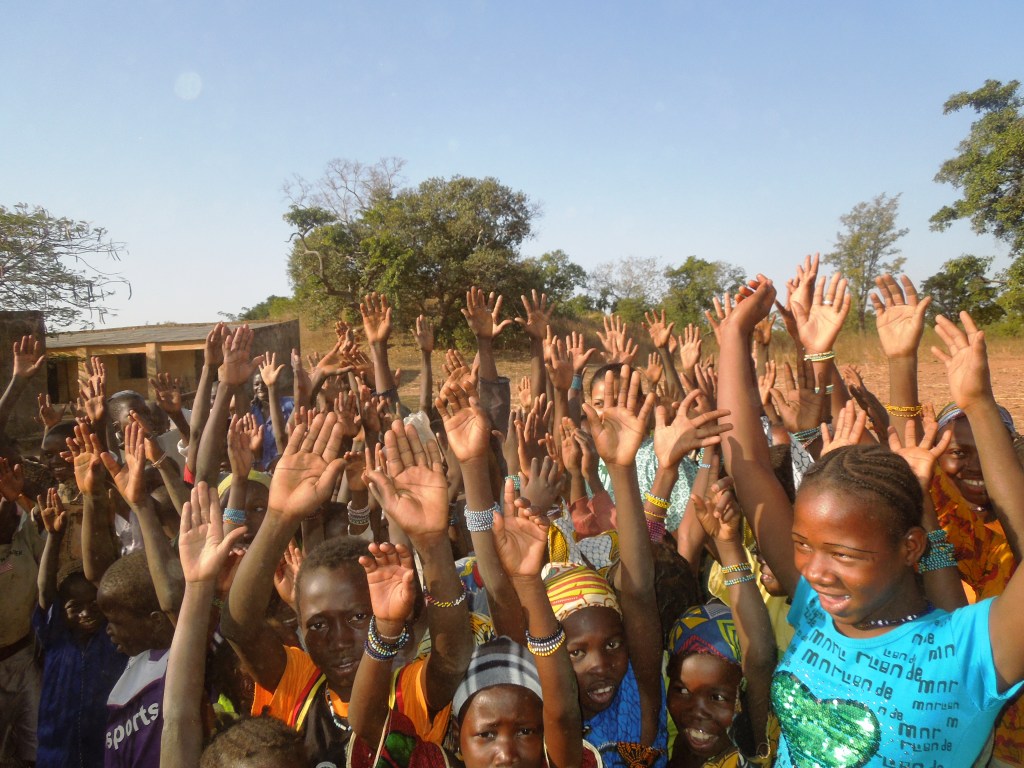
Mali’s present and future. The children celebrate a new school that will be built because of @YeahSamake work with building schools

For many weeks now, I have watched the internal crisis develop in Mali and throw the country into disarray. Many sectors have been affected as the junta dismantled any leadership that governed the different bodies that make up the country. Last week, the country saw the first real sign of returning back to pre-coup time as a new Prime Minister was named. However, the damage has been done and 20 years of democracy crushed in an instant of loss of control cannot be undone as easily.

So far little has been heard from the interim President Diacounda Traoré, in terms of what he is doing to get the country back on track. His term ends in about a month and his job is to do the things that will prepare the country for elections. A big part of that job involves the reunification of Mali and regaining the three lost territories. The job of the Prime Minister is to announce a transitional government. The PM and the transitional government will govern the country till elections happen. Any participant in the transitional government is not eligible to run in the elections. In the past week, there have been many arrests of key figures by the junta with the accusation that there was a threat to national security. The next day these individuals were released as the international community and political figures in Mali spoke out. These kinds of acts add a little uncertainty as to the junta’s role. I am not saying these individuals should not have been arrested but to play this game of catch and release not only destabilizes the community but also makes the whole thing a joke. Right now, the focus should remain on the return of governmental bodies back to a semblance of normalcy. That is what Malians want above all.

Mali has paid a heavy price for the actions of the top political figures. To begin with the “old guards” that allowed Mali to be taken advantage of in return for money/favors. Then the individuals that sat back and let it happen. And finally the junta that caused enough instability and weakness that part of Mali was lost. With the coup came change. As the rebels took over the North, many fled to escape the imposition of Sharia and also the unknown. As the junta made decisions, the international community watched as to how things would work out. Embassies pulled their non-emergency people out. Schools lost many pupils and even my son’s French school has started to look like a shanty town. European stores and restaurants saw a sharp drop in customers and hinted at the reducing expatriate population. The biggest loss however was of humanitarian NGOs that were operating in the different regions of the country. With the increasing uncertainty, many NGOs departed the Northern regions.

What I would like to say is, now more than ever, is that Mali needs all the humanitarian aid it can get. Most Malians get by on less than $1/day. Most can barely even make a $1. Today, I was approached by twin boys about 6 years old that looked no older than 4 because of their size. They came to me and told me they were hungry. My first reaction, as I looked around for their mother, was why you are out here asking for money. Where are your parents? And then I realized when parents cannot provide, then all the family are forced by their circumstances to make the little they can by begging.

I would like to send a message to all the people who read this. My message to NGOs is that Mali does have a future. They need all the help they can get. Now is not the time to abandon aid or run away. Now is the time to protect your investment and trust the Malians to stand by your side as they protect it with you. My message to aid organizations is not to let Mali down. Stay! Help the people. Continue to work in the community making a difference. Our children do need schools and teachers. The women do need to learn self-sufficiency through microenterprise and that they are strong individuals who can be part of a successful Mali. The current situation has hit the common man even more as they struggle to make ends meet. My plea to the international community is to help. Help a fellow brother, sister, mother, father and family. Do not fear that your investment will be in vain. Help because you can and because it will make a difference. Support organizations like UNHCR as they help the refugees. We can make a difference as individuals. The Malian people need your help.

Continue to keep this great nation in your prayers. Pray that they may be blessed with good leaders that put Mali’s needs first. Pray that aid organizations may continue to operate helping nurse back Mali’s failing infrastructure. Then, please spread the word about Mali and how to help. Contact your local organizations and see what they are doing to make a difference.

I am very grateful for all the wonderful support we have received and continue to receive. Mali has many friends and we are grateful that there are so many out there that do care about Mali’s present so that Mali may have a future. Thank you and may God bless all your efforts.

 
3 Comments

Posted by on April 23, 2012 in Past Posts


Tags: , , , , , , , , , , , , , , , , ,

Small steps in the right direction

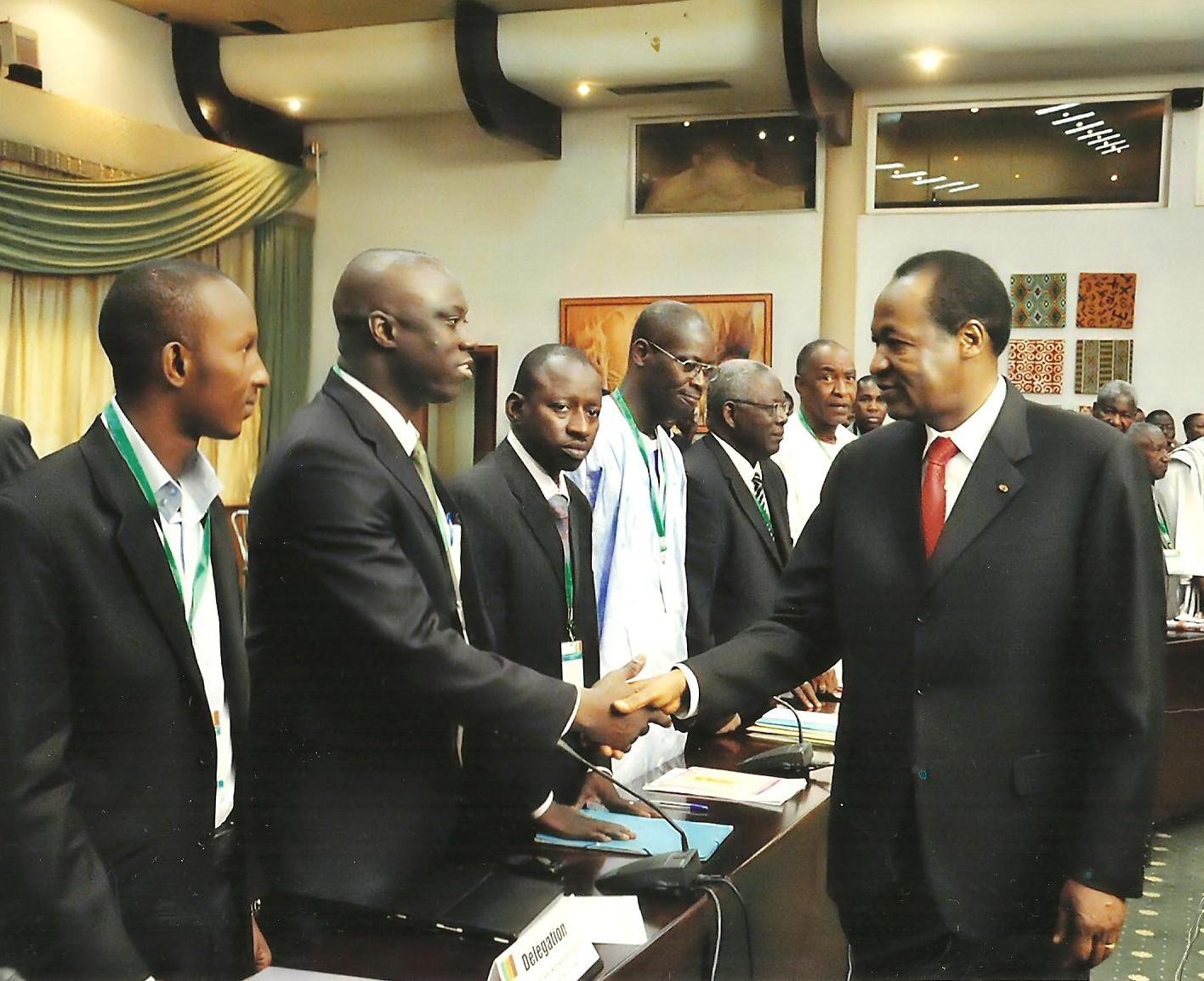
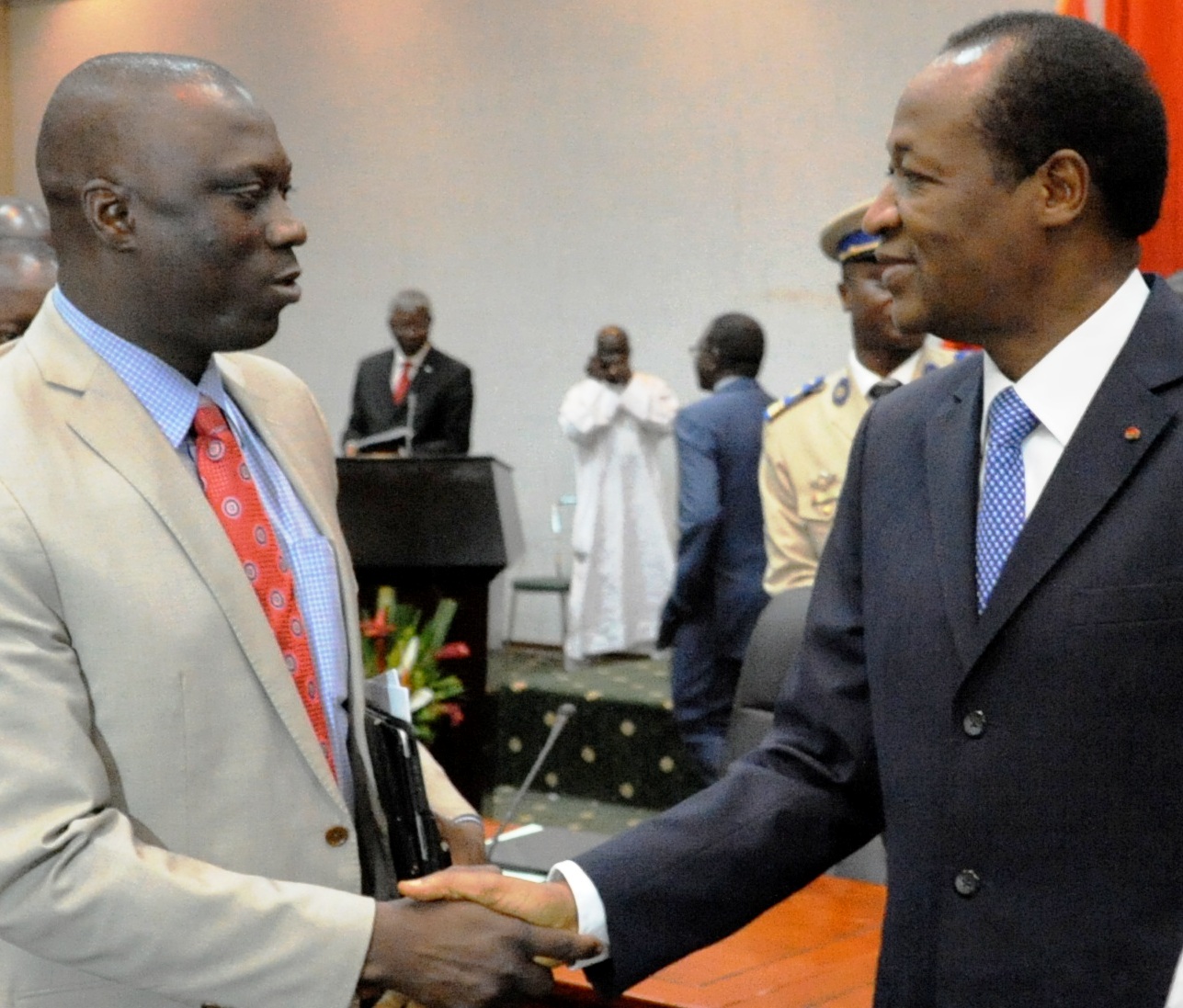
ADPS members Nouhoum Sa and Fomba watch on as Yeah exchanges a few words with Pres. Campaore

The meetings of this past weekend were a step in the right direction. Yeah and his team ADPS made sure that preserving Mali’s sovereignty was foremost as they headed to a weekend full of conferences with President of Burkina Faso, Blaise Campaoré, who has been appointed the official mediator by ECOWAS. Since the first part of the ECOWAS agreement had been honored by instituting interim President of Mali Diacounda Traoré, it was essential to discuss how Mali would now move forward. Diacounda’s primary responsibility is to reunite the country by regaining Mali’s 3 lost regions. The conference was filled with 78 members representing the different stakeholders in Mali. The conference provided a stage for political parties and representatives of the civil society to discuss their views on a number of topics including the territorial integrity of Mali, the transitional authorities, the duration of the interim presidency, and the authority that will make the choice of the Prime Minister to lead that the transitional government.

I am not going to lie and say that everyone had the same expectations.  Some of the participants were under the impression that the conference would designate the PM and members of the transitional government. However, it was more important to decide logistics before suggesting and appointing people. It was honestly a nice change to see somewhat of a democracy in action as leaders discussed what would best serve Mali in terms of leadership.

Yeah advised that the current interim President should not be able to name the next Prime Minister. If given that ability, Diacounda would have the power to put someone affiliated to his political party and potentially cause unneeded bias, especially at this sensitive time. It will be important for a non-partisan body to choose the Prime Minister. The only non-partisan body at this time is the junta. Hence, that role was given them and they will be tasked with choosing the Prime Minister. The Prime Minister in turn will be responsible to lead his transitional government before elections takes place.

So who is the new PM? The new PM announced just 30 minutes ago is Cheick Modibo Diarra, Microsoft’s Africa Corporation chairman and a former NASA astrophysicist. (http://en.wikipedia.org/wiki/Cheick_Modibo_Diarra). He was also a Presidential candidate for the 2012 elections. This could be either good for the country or really bad. Diarra lacks the political experience having no role in the political circle but might be what is needed to bind the differing political parties and views together in a strong transitional government that can lead the country till elections.

The agenda in Burkina contain essential promises and decisions that will affect the future of Mali. I can’t believe this all started less than a month ago. Mali has seen three different Presidents (ATT, Sanogo and now Diacounda) in a matter of 27 days. Now more than ever, Mali and Malians need to feel some stability return to the country. The country looks like it’s getting back on the track of democracy. And that is the right direction!

For those interested, the agreement (translated) made and acknowledged by all parties in Burkina Faso is as follows:

SOLEMN DECLARATION PROJECT BY THE VITAL FORCES OF MALI

The Conference of Active Forces of the Republic of Mali met in Ouagadougou in Burkina Faso, under the auspices of His Excellency Blaise Campaoré, President of Burkina Faso, and the mediator of the Economic Community of West African States (ECOWAS) in the Malian crisis.

Welcoming the Framework Agreement of 6 April 2012 on the implementation of the solemn declaration of the President of the National Committee for the relief of Democracy and Restoration of the State (CNRDRE) from 1 April 2012 on the return to constitutional order;

Read the rest of this entry »

 
Leave a comment

Posted by on April 17, 2012 in Past Posts


Tags: , , , , , , , , , , , , , , , , , , , , , ,

Personal thoughts

March 21st 2012 meant a lot of things for our family. As we celebrated my son Keanen’s 6th birthday, we awaited news about what was happening in the middle of Bamako. What was happening was a coup that would spell the end for a 20-year-old democracy.

As we watched and waited, we were hit with every sensation you would get when you lose something/someone dear. The disbelief, the shock, the dread, the pain that this can’t be true, the anger at the why and finally a gradual acceptance of what cannot be changed.

As soon as dawn broke, Yeah was in different mode. From campaign mode he switched to firefighter and the diplomat. Now was not the time to be threatening action, now was the time to talk and make a plan on how to proceed. However Yeah was not going to just bow down to the coup. He condemned it on National TV and it was never played. He met with Sanogo and told him where he stood but how the country must move forward. As I watched Yeah go through his private struggle, it hit me how much he really did love his country. Inside, he was seething at what had been taken away but the surface was calm and realistic.  During the two weeks that followed, I saw him lead a difficult schedule. Sleep was the last thing on his mind and there were not enough hours in the day. As the rebels gained hold of first Gao, Kidal and then historic Tombouctou, it felt like the nightmare kept getting worse. What could be done? So Yeah did what he knows best? He became the mediator, the connection, the glue between political parties. His country suffering and divided became his own personal hell. You might think I am exaggerating. There is not one person I know that loves his country more than Yeah does. Every dream or task he has ever pursued ultimately lands up in Mali. Some may see it as carefully planning a political future, but what it really is, is the vision that Mali and Malians everywhere deserve better.

As Yeah became more and more tied up with meetings, to me it seemed like what we had been working towards was blown up. It did not seem like we would have elections. Worse still was the constant fear that something bad would happen. With Yeah so heavily involved with politics and the news spreading like wildfire that politicians were being “detained”, we only had to leave our wild imaginations to wonder why and when our turn would come. Secretly, I had packed a small bag and was ready during the first days to hightail with our kids to Ouelessebougou. Yeah kept asking me to go telling me the kids and I needed to be safe but listening never was one of my better qualities. It’s not that I wasn’t scared for the kids, but it terrified me more to see Mali in essence falling apart. Yeah wasn’t going and neither was I. We were in this together. I wasn’t going anywhere! Soon my attentions got fixed on other things. Making sure the world knew what was going on became important. As reports spread and continued to spread of looting, raping and random acts of violence, I continued to write because I felt that my adopted homeland was under fire for things some of which were not true. As people came out of the woodwork claiming atrocities, my heart was angered because I knew that they were doing it to get their two minutes of fame. As sanctions were threatened, I was angered because no person should have to suffer for the actions of someone else. Sanctions were not the answer, but it did get the intended impact and I understand that. I guess I would never be a good politician. As Azawad was claimed by the rebels, my people in the North went hungry. With every day that passed, 500 more refugees were displaced or escaped across the border. More and more the news became about the coup and people lost sight of the mothers, children, fathers and families that died or became another statistic. That continues to be a fight till today. As things in Bamako got better, a light seemed to shine that democracy would indeed we restored.

On Thursday, an interim President was assigned the job. Optimism is returning that politicians will meet around the table to discuss the situation and how best to get out of the crisis that has gripped Mali. This weekend is testament of that as Yeah meets with Burkina Faso President Blaise Campaoré with 70 other politicians from Mali. The aim is one. To unite Malians in an undivided Mali.

Let us not fail Mali now. Mali, now more than ever, needs good leadership. It needs diplomacy. It needs patriotism. It needs, in my humble opinion, Yeah.

 
11 Comments

Posted by on April 14, 2012 in Past Posts


Tags: , , , , , , , , , , , , , , , , , , ,

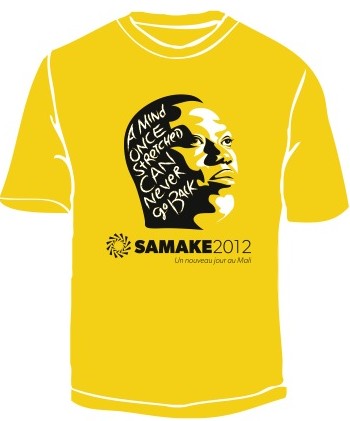
Limited Edition Samake2012 T-Shirt

Original Farm is teaming up with Samake2012 and has produced a limited edition T-shirt to help support Yeah’s efforts in Mali. There are just 3 days left to buy the T-shirt. Each shirt is just $20 ( +shipping)

To buy your T-shirt click http://shop.originalfarm.com/deals/support-samakes-presidential-bid-in-mali/

Show your support today for a return to democracy in Mali by donating to support the activities that will create conditions conducive to hold free and fair elections in Mali.

Thank you for all your support. We cannot do this without you.

 
Leave a comment

Posted by on April 14, 2012 in Past Posts


Tags: , , , , , , , , , ,

A Deal reached ending Sanctions: political aftermath

As yesterday night passed, so did a deal between ECOWAS and the junta. The consensus concurred with the old constitution that the head of the National Assembly would be named as Mali’s next President. The deal came amidst mounting pressure placed on the junta by economic sanctions.

Within two weeks Mali has not only been further weakened but the number of regions it presides over has been reduced by three. AQIM (an Al-Qaeda branch) and the MNLA have taken over the main regions of Gao, Kidal and Tombouctou. The Tuareg claim is one that has been consistent for the past 50 years going back to when this ethnic group requested their French colonizers to grant them an independent territory. With the return of Gaddhafi’s fallen soldiers that originally hail from Mali, arms have made their demands more attainable. Confusion in the South allowed these groups to take over these three regions in a period of 3 days.

Our Mali divided

This agreement that installs the head of the National Assembly, 70-year old Diacounda, has been received with a mixture of feelings. Diacounda is himself a Presidential candidate and had been pursued by the junta for his alliance with ATT.  Malians in general, while they would not want him as a leader, I think, are glad that the sanctions have been lifted. Two weeks after it started and 1 month before elections were set to happen, one could say that the coup seems almost pointless. My concern however is that coups do not happen for “no” reason. They happen because there is an issue within the government. By installing an “old guard”-one from ATT’s regime that allowed many of ATT’s law to pass the legislative body unquestioned, the issue is not being resolved, merely being brushed over because the world says it’s time for the coup to be over. By not resolving the very reason that the coup happened, which is the government’s inabilities and shortcomings in dealing with corruption and the lack of a well-prepared army, we are setting ourselves up for failure. However all Mali can do at this point is to move forward. Yeah will continue to work with his team ADPS to ensure that the voice of the people is heard in the transitional government and that individuals are instituted in the interim that have Mali’s best interest.

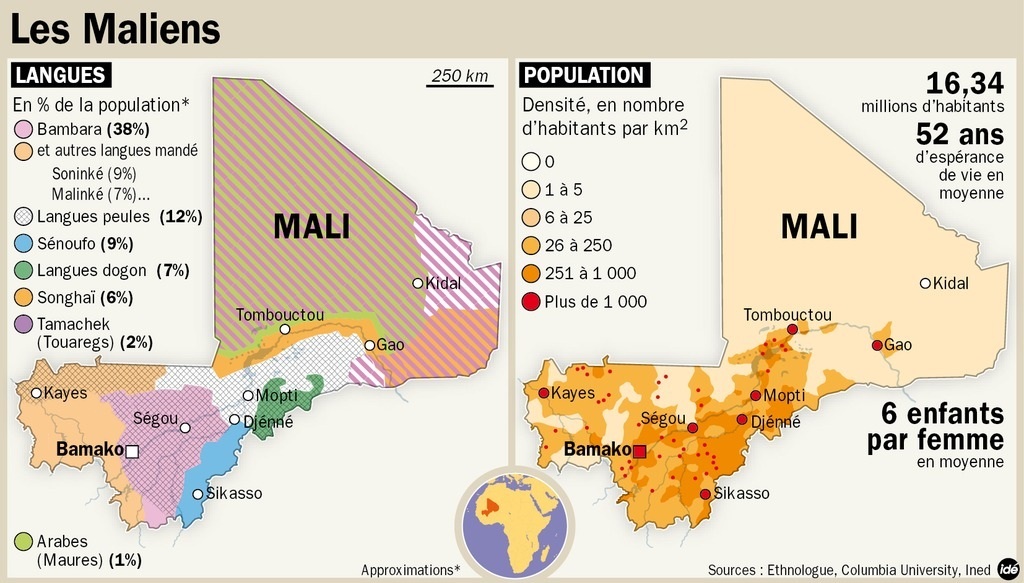
So what does this new deal mean for Mali? The good things are that Mali will get the international help it desperately needs right now. Humanitarian conditions are worsening and in the regions captured Malians are being forced under a rule of terror and religious law. We are thankful that our African neighbors are willing to provide boots on the ground to fight the rebels of the North and free our people that are being oppressed. Another good thing is sanctions are being lifted and the economy once again will breathe a sigh of relief as the flow of goods is restored. On the other hand, no time line has been set in place, on when the change of power will happen. The junta promise that it will be soon. Also, the agreement hints it might be impossible to hold elections within 21-40 days as dictated by the constitution because of the attacks on Mali’s territorial integrity. Before elections can be held, territories need to be regained or let go. To clarify, the regions of Tombouctou, Gao and Kidal do not just hold a Tuareg population. These regions hold a higher percentage of Songhai and Peul. So to allow these territories to just “go” as some countries are suggesting would be to deny citizenship to certain ethnicities that have been part of Mali for centuries.

Mali's various ethnicities

All in all there are some steps in the right direction. It is a hope that the humanitarian crisis will end soon and our brothers and sisters in Gao, Kidal and Tombouctou may once again be free. Within the weeks to come the date of the election will be established as a transitional government is put in place.

The election will go forward. Please continue to show your support at www.samake2012.com. We need you with us as we continue this historic journey. Spread the word, the campaign continues! The spirit of democracy in Mali that is Samake2012 lives on!

For those interested, the agreement (translated into English) reads as:

Whereas a return to constitutional normality requires compliance with the constitution of 25 February 1992 which, in Article 36 organizes the Acting President of the Republic in case of vacancy or incapacity.

Read the rest of this entry »

 
5 Comments

Posted by on April 7, 2012 in Past Posts


Tags: , , , , , , , , , , , , , , , , , , , , , , , , , , , , , , ,