This past week has been a huge political muddle. May 22nd was to spell the last day of office for interim President Dioncounda Traoré. A deal brokered by the African nation’s body ECOWAS sought to extend his term for 12 months. Now Dioncounda would have limited powers and the main running of the country would fall in the hands of the Prime Minister Cheick Modibo Diarra.
On Monday, protesters unhappy with the forced decision to keep Dioncounda marched on Mali’s palace. There in the heat of the moment, the 70-year old Dioncounda was injured and admitted to the Mali hospital with head injuries. Now people are saying the junta that was supposed to be protecting the President let these protestors in. On the other side, we have also heard that there was a scheduled meeting between Dioncounda and 10 individuals that represented opposing factions. When these 10 individuals came to meet the President and were waved in by the guards, the protesters pushed past as well. Either story while the second may remove the junta’s involvement are hard to corroborate and point to the finer meaning that not even the highest office in the country is safe from protest.
As Bamako watched the news of this attack spread, we were in disbelief. While I am a big believer in democratic process and making your opinion heard, I am also of the belief that human beings need to act like human beings and not animals. In addition, in a society that reveres its elderly, for a 70-year old individual to be assaulted by youth is something that Malians do not take kindly to. That next morning, in secrecy Dioncounda was flown to Paris to be admitted for further testing. That evening, there was another protest held which claimed that Sanogo would be the new President. This protest was only attended by a few 1000 compared to the tens of thousands the previous day. This could mean one of two things. One, many people were shocked that the events of the previous day got so out of hand and also many people felt that Sanogo betrayed them when he took a deal with ECOWAS that bestowed him with an ex-President’s privileges. Sanogo, for his part, other than condemning the violence of the protests, has remained quiet. He as brokered a pretty sweet deal for himself. He would get paid $10000/month (5 million cfa), a house, two cars and a security detail. So the gift he is getting for bringing so much insecurity is very big. In a country so poor, one can only imagine how anyone can get so much money when the average Malian makes less than a $1 a day. The question that also is high on every ones minds is that Sanogo has benefitted but what about the 500+ odd men under the junta. If they feel that Sanogo has betrayed them, then things could get ugly.
This past week Yeah met with the Prime Minister to discuss the ongoing situation. The Prime Minister has condemned the actions of the mob and called on people to be calm using the Bambara word “Sabali” which means “patience” several times in an address to the nation. Yeah also had an opportunity to talk with CNN’s Suzanne Malveaux on the issues in Mali. Take a listen at CNN below. You can also find this on http://samake2012.com/updates/
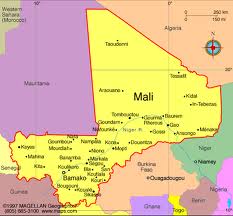
The North continues to remain in the hands of rebels and the ties that these groups are building are very dangerous to Mali’s stability. Mali’s AZAWAD last week even installed their own President over the North. There has been talk of Mali letting these three regions go. If that happened, I think the outcry in Mali would be huge. These territories not only house the Tuaregs that want their independence but also many other ethnic groups, of which the Tuaregs are a minority. By allowing an independent state to emerge, Mali would be allowing a territory in which groups similar to the Taliban will emerge. In essence Al-Qaeda would be able to get a new playground to harvest various training camps and illegal activities. The entire world will pay the price if the North becomes another Al-Qaeda festering pot. In all this, Malians will pay the heaviest price. With Sharia law already established in Tombouctou, Malians are already being suppressed. Malians in the South need to focus their attentions on the Northern regions. Aid is not the only thing the North needs. It needs freedom from groups attempting to take away civil liberties. If the world wants to get involved it needs to be putting pressure on these groups to pull out. Yeah spoke with CNN’s Erin Burnett about the Northern issue in Mali.
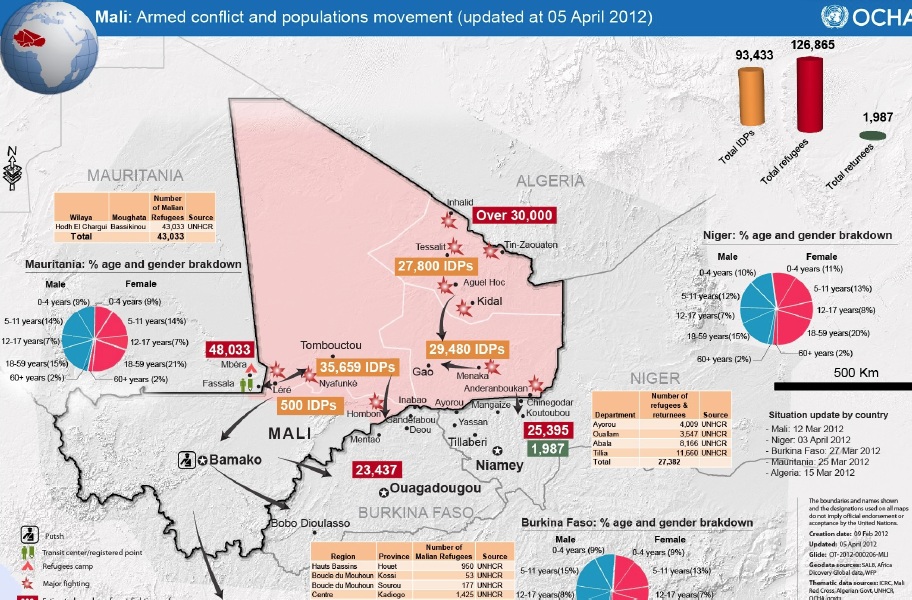
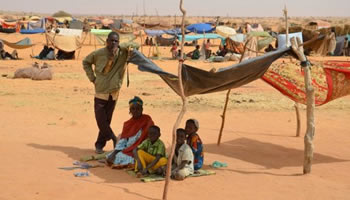
In this entire ruckus, the one thing that remains as forgotten today as it was two months ago is the growing refugee situation. The situation is worse today as the numbers continue to climb. People are living in despicable conditions and while the aid is coming in more now than before, it cannot meet the growing demand. It amazes me that when the earthquake happened in Haiti, the American celebrities put on a great fundraiser and raised a lot of money to benefit Haiti. Probably because Haiti was closer to home. However, the refugee situation has not gained the support of celebrities despite Angelina Jolie being called as a special envoy for the UN High Commission for Refugees. The need is great, the supply is small. Next week, Yeah plans to go to Mopti where some of the refugees are and then later to Burkina Faso. The hope is to assess the growing need and then provide the refugees with some much needed food.
The one thing that never fails to amaze me is the tenacious strength of the Malian people. Through all this, they continue to build their lives, taking in stride the changing forces. As noted before, their faith in their politicians is very low and their belief is as long as the politicians don’t make their lives worse, life will go on. Here it is hard for people to look to the future when their present is so filled with turmoil and hardship. But the Malian people will prevail like they have before. They deserve a much needed break. They definitely deserve better leaders who will give their needs a priority. Mali’s mess cannot be solved by self-serving politicians. It needs honest leadership!
On April 12th when Diacounda Traoré was sworn in as Mali’s interim President, the clock started ticking on his 40-day term. His responsibility was to plan when elections would be held and to help resolve the issues of the Northern region in terms of security and the refugees. Diacounda’s inauguration speech was punctuated with severe rhetoric against the rebels of the North, going so far as to even threaten war against them. 30 days into his term, one can clearly see that talk is cheap and that Diacounda has fulfilled very few of the promises that he stated when he was sworn in. This is another reason for Malians to continue to distrust the old guard that has watched over the politics of Mali for the last 20 years.
To be fair, I should say that his task is no easy task. The task remains difficult to reunite a country in which not only the North remains separated by the South, but where different political parties have been reaching out in different tangents. The situation has not been helped by a counter coup attempt by the ex-President’s loyalist forces. Nor has it been helped by threats from ECOWAS on deployment of an army of 3000 foreign soldiers on Mali’s soil to help gain the territory back but more importantly make sure the junta returns to the barracks. These threats have in effect gone against the April 6th agreement between the junta and ECOWAS and have caused great anger among the junta, who see the constitution of Mali being changed by foreigners and power quickly slipping away. By extending Diacounda’s 40-day mandate, the constitution that was quoted when the coup first happened, will in effect be violated. After the whole rigmarole about violating the constitution initially, it seems like a farce for it to now be violated to serve external preferences.
I have seen Diacounda do little in these 40 days other than meet with individuals that cannot influence the course of Mali’s future. The important task of gaining back Mali’s northern territories seem pushed to the back burner. Even more crucial, the refugee numbers have now swelled to 235,000+ with numbers getting higher each day. The US State Department has in effect stated that they hold the junta directly responsible for the mounting suffering of the Malian people. While the junta has contributed to the issue, to blame them whole heartedly seems unfair. There have been many players who could be blamed for the situation in Mali: the old guard ATT, the politicians that have been on the scene for 20-30 years, the junta, the flip-flopping young politicians that go where the power is and also foreign interests.
Now, the one thing that might explain Diacounda’s relative lack of media presence is that the junta still controls the national TV. Each evening the screen is filled with events that seem to embolden the junta’s presence at community events. It is almost as if the stage is being set for them to take over when Diacounda’s 40 days is over. This is something the international community and especially ECOWAS (the body of African countries) would prefer not to happen. By establishing military rule, the junta would be returning the country to a similar period 20 years ago before democracy was established. The events in Mali have already proven that Mali’s democracy was a superficial one with leaders lining their pockets and fulfilling personal ambitions rather than truly answering the needs of those that put them in power. Captain Sanogo, the military leader, has already shown that he has the ability to gain the support from the Malian people that has lacked for so long. However, the constant quashing of the national TV does not bring any comfort and is an early indicator that dissenters could be silenced.
Just last week, I was headed to the PACP headquarters right by ex-Prime Minister Modibo Sidibe’s house. Modibo Sidibé was the one rumored to have stolen a lot of money and used even more to finance his Presidential campaign. He has already been arrested twice by the junta. As I was there, I saw few motorcycles carrying heavily armed guards. They were hunting for Modibo. The first thought that entered my mind was, “Why are you here. Should you not be in the North protecting your people?” It seems more and more that the junta is using the military to advance their personal protection and needs.
Nevertheless, the people of Mali remain embittered by the past 20 years of ineffective democracy and regardless many people see the junta as the lesser of two evils. Especially, since they provide a non-politically affiliated group that ended an ineffective democracy. Sanogo is viewed by many in Mali as a leader, and this is an impression that will not be dispelled anytime soon. I wouldn’t be surprised on May 22nd if the junta reclaims the Presidency and Sanogo remains in power till elections happen next year.
I cannot decide if this is a good thing or bad thing. While this is not an ideal solution, most other solutions will cause further unrest and delay a resolution to the important issues gripping the North. For now, Mali seems to be biding its time with Diacounda, waiting for a true leader to emerge to take the reins of the country. Hopefully the new transition leader will be one that makes more progress than the country has seen in the last 30 days with the least amount of unrest.
10 more days till the hourglass turns once again in Mali to begin the next phase towards determining Mali’s future.
The weekend has passed in somewhat of a peaceful manner despite isolated, unverified reports of gunfire in central Bamako.The ECOWAS rhetoric has now moved from forcing troops on Mali to stating that troops will only be deployed if the Malian government gives the go ahead.
Yeah spent the last week in Salt Lake City trying to raise awareness and also continue to raise funds for the refugees and his campaign. Thank you to Adele Kammeyer and Susan Escalante for helping arrange a meet and greet and a cottage-style meeting respectively! This coming week he heads to New York, DC and Boston to do much of the same, especially meeting with Senators that oversee America’s foreign policy.
As Yeah remains busy in the US trying to meet with individuals and American leaders to raise awareness on the situation in Mali, his party PACP continues to make leaps and bounds here.
As turmoil embroils the lives of the basic citizen, PACP continues to do the things that might improve these citizen’s lives. Today saw such an opportunity. Bamba, a local businessman, spent some time with a group of women teaching them skills that they can then market. For example, he taught them about micro enterprise that would help finance businesses and also how to make fabric and peanut butter.
This kind of entrepreneurship is essential to helping Mali’s individuals make a living for themselves in a country where jobs are scarce and the likelihood of making more than the $1 is incredibly low. May many such meetings happen and may women finally get a break from the hardship that has become their lifestyle.
As the rain came down in buckets, it brought to end the heat wave of 120F that has hit Mali and all Malians very hard. April is the hottest month usually in Mali and this year, the heat took no breaks. I am blessed that during the hot months, I and my kids can retreat to our air-conditioned house. However, it only served to stress how most Malians cannot afford this basic necessity. To be honest, most part of the country remains without electricity and so even fans remain inaccessible.
Seeing the rain come down, made me think of the wonderful relief it would bring to the general Malian population. But then the thought hit me. What about all those 235,000 people who are now living in the North without any shelter or food?
As the world focuses its attentions on the “political” crisis in Mali, more and more, the humanitarian issues in the North continue to remain on the back burner. We could be going through the worse humanitarian crisis and it might be too late before anyone takes notice.
The refugee crisis began in January when Tuareg rebels started a fight for the liberation of the North. The ensuing drought only made matters worse as the nomadic northerners started traveling in search of food and other resources. When the coup hit in March, the crisis deepened and people found themselves fleeing to escape harsh conditions being imposed by the rebels in Gao, Kidal and Tombouctou. In a matter of days, 1500 people were fleeing a day versus the 200 fleeing before the crisis broke. The conditions are best described by the Doctors without Borders based at a camp in Mauritania that has been receiving some of the fleeing refugees. “As the number of refugees increases, so does the pressure for humanitarian response to improve the living conditions within the camp. There are currently 100 communal latrines for 57,000 refugees and just nine liters of water per person, per day. The conditions are below humanitarian standards, which call for 20 liters of water per person per day, and one latrine per 20 people”.
I cannot say this enough. We need to bring in some much needed relief for all Malians that are suffering in the North. Mali, being one of the poorest countries in the world, has been served another plate of misery. The conditions at these camps are deplorable and aid workers are doing the best that they can do. No child deserves to go hungry. No child deserves not to be able to go to school. No mother deserves to watch her child die or not be able to provide them with the basic necessities. No mother deserves to lose a baby because of lack of medical treatment. No family deserves to be separated.
The effects of war are damaging. However, let’s help turn some media attention on Mali’s forgotten people. Contact the media; ask them to cover this crisis. Facebook and tweet about this. Saving a human life is newsworthy! Contact your friends and family. Ask them if they can donate. $1 a day feeds 1 child for a day. If anything we can start by saving 1 child a day. If we band together we can help provide the much needed help for our people in the North.
We are collecting funds right now for the refugee crisis. If you can help please make an online donation at www.samake2012.com (Put Refugee in the comment field) or at a trust set up: Friends of Mali Trust, 472 East 4380 North, Provo, Utah 84604 (Please note the trust is not tax-deductible).
If you can help today, help make a difference. Every little bit helps. Please, please, let’s do what we can. My friend told me that I can’t save the world but I can add my 2 cents in and maybe others would follow. Well friends, I am putting in $100 towards the crisis. Will you join in and create a domino effect? Are you in? Together, lets help contribute to aid for Northern Malians.
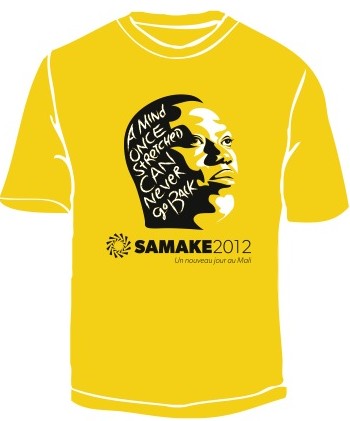
Original Farm is teaming up with Samake2012 and has produced a limited edition T-shirt to help support Yeah’s efforts in Mali. There are just 3 days left to buy the T-shirt. Each shirt is just $20 ( +shipping)
Show your support today for a return to democracy in Mali by donating to support the activities that will create conditions conducive to hold free and fair elections in Mali.
Thank you for all your support. We cannot do this without you.
UN PEUPLE, UN BUT, UNE FOI ( ONE PEOPLE, ONE GOAL, ONE FAITH) IN OUR COUNTRY MALI
The past week has been an eye opener to not take things for granted. A democracy that had become the beacon and lesson for other countries in Africa was pulled to its feet. As the world watched, a coup led by junior army officers brought down the soldier of democracy himself, Amadou Toumani Toure (ATT).
Much of the Western world has responded in addition to the surrounding African countries requesting a swift return to democracy. The US, EU and ECOWAS have issued sanctions and in some cases threatened them if democracy does not return. So why is democracy so important? Democracy is a relatively fresh concept for many Africans and even at that those countries that have democracies and have elected leaders, eventually find themselves distanced from the very leaders that they put in power. Democracy which entails the formation of policies and determination of state’s role becomes a hard sell in general for so called young African democracies that do not see an exchange of this sort at the local level. In order for democracy to succeed and truly be embraced, leaders need to involve their constituents in running the government. Constituents need to see how laws passed affect them at a local level. For democracy to succeed, local participation should not only be hoped for, it is essential.
Mali had been a democracy for 20 years. The one thing that weakens a democracy like no other is when there is a vast difference between the elite that make the rules and the majority of Malians. Mali has been independent for 52 years, but has seen little improvement in healthcare, education and the poverty standards. Despite an influx of NGOs, unless the Malian government takes a personal stance literacy will stagnate at 46%. 1 doctor will continue to serve 20000 people. The average life expectancy will remain 52 years—almost 30 years shorter than the average Westerner. A huge percentage of the population will continue to live below the international poverty line of 1.25USD a day. The biggest challenge remains the institutions that have been created to resolve these issues. In addition, while great foreign investments have happened in terms of infrastructure, Mali has seen little investment to enhance its primary strength in the agricultural field. 70% of Malians work in agriculture; however, changing climate and the demand on food has made Mali very dependent on importing a majority of its food. More investments need to be made to make Mali self-sustainable and profitable in the agricultural arena.
The new leader will have a plateful of challenges.
Teaching a man to fish: Education needs to be an important part of a new Mali. Today with 46% of the population literate, Mali has very few Bachelor degree holders and even fewer Master degree holders. Very few PhD holders will ever return to Mali because of the lack of opportunity. The new leader will need to increase the number of schools in the rural areas; pay teachers better and make education mandatory. Today, children are favored to work in the fields rather than in the classroom because the first option yields an income for the family. By providing incentives to children and their parents to enroll in school as well as making schools accessible, education can become a reality for many Malian students. Yeah hopes to build 1000s more schools as soon as he comes into office as well as hiring more teachers. He hopes that each region will have its own university and that the strikes that have ravaged the educational systems since 2009 can be resolved with better pay and more investment in the student’s future.
The healthcare situation in Mali is despicable. The average Malian finds healthcare unaffordable and unreachable. With the life expectancy very low and the death from preventable diseases very high, Yeah hopes to build hospitals in every region. Ouelessebougou will have its first hospital in the area that will house a maternity center, pharmacy and eye/dental center. In addition, it will be important to make Mali a safe haven for medical expeditions that come to serve the people of Mali. Through our years we have been blessed to meet many giving hearts and hands and we hope that they will continue to come and bless the people that need it most in Mali.
Jobs: Malian people are not asking for a handout. No one likes to beg and Malians are no exception. However, circumstances currently do not give much choice and it is hard to pass a street without seeing a hoard of hungry children or a mother with a baby on her back and another two in her hands. An important task will be to create jobs for the individuals graduating and also those in the unemployed middle class. Mali’s unemployment is gauged around 30% and is evident in the streets where young men sit hoping that opportunity knocks. Yeah has been able to create jobs with the hospital, school and solar panel field. Also with the cotton plant reopening in Ouelessebougou, 100 more individuals have a paycheck.
A security issue: The north is becoming more and more an Al-Qaeda battle ground. The issue of sovereignty has existed for a few centuries with the Tuareg feeling unappreciated and unaccounted for in a government they elected. The only reason Al Qaeda stands a chance in Mali is that our youth are desperate for opportunities. Normally our people are not prone to radicalization. The Tuaregs in the North believe they have been marginalized—that the government is not serving them.
All these things can only be instituted if you have a government that is not riddled by corruption and institutions that are run effectively and efficiently. Many current government institutions are riddled with inefficiencies and bureaucracy.
Democracy is not lost. This is evident in the opinion polls where 74.5 % prefer democracy to any other regime type. However it has been hit hard in Mali. More than half of Malians feel that government has not served its purpose. Malians for the most part believe government is there to make their lives better. Lives have not gotten better.
Once the immediate security threat of MNLA is crushed, it will be important to start creating stability for our Northern brothers and sisters and also creating opportunities in the North for the refugees displaced by all the fighting. Then it will be important to return to the democratic process and allow Malians to truly choose their candidate unbiased by money and favors.
I truly believe that Malians need a leader with a vision. I truly believe that they need young blood that has been untainted by lives lost and the people’s money stolen. I believe the people of Mali will find a leader who cares in Yeah Samake. Yeah has been distraught over the current crisis that has gripped Mali. Today he told me:” My heart is crying for my country”. I hope that the leaders that are running the country today will work with the international community to end the Northern rampage of MNLA. I hope that international organizations will not forget my people suffering the North. I hope and pray that democracy will be restored temporarily with an interim government and then with free and fair elections. But most of all, I hope Mali will get the leader it so desperately needs that can show his people that there is hope and that Mali can be a great country not made great by foreign aid but by Malians themselves.
Democracy can be and will be restored. Make your voice heard at www.samake2012.com. Support Samake for Democracy!
A landlocked country, sanctions could mean devastating economic trouble
Today we find ourselves in the first 24 hours of the threatened economic sanctions that will be imposed in 48 more hours by ECOWAS if Mali’s junta does not hand over power to the people. To be vigilant, we decided to stock up on things like water, drink cases, rice, potatoes and sugar. If ECOWAS does impose sanctions it will cause great harm to the Malian individual. It strikes me as ridiculous that the UN would actually make a statement saying that they hoped the individual would not be harmed by these sanctions. Sanctions do not harm governments, they harm individuals. The junta has apologized for the protestors that rushed onto the tarmac, causing a security scare to the oncoming ECOWAS plane. They have asked that ECOWAS leaders not to be hasty in their decision but rather to understand the circumstances of the coup and how the junta leaders are attempting to resolve Mali’s economic concerns and the security issues in the North. The old constitution of Mali stated that if the President resigned, power would be handed over to the head of the National Assembly. In this case the head of the old Assembly is Diacounda, a presidential candidate and one of the very leaders that the junta has accused of stealing from the country and showing ineffective leadership. In addition, Diacounda is not liked by a majority of Malian people. However ECOWAS is asking that they would accept a resolution with Diacounda being placed as the interim President.
If the junta does allow this to happen, Diacounda would be taken out of the running in any elections held for the Presidency. If ECOWAS continues to push its agenda, it will find itself hated by Malians who will see it as bullying tactics pure and simple. A bigger, more complex issue would be to deal with the dissatisfaction of the people. The Malian people are very supportive of the junta currently. Not because they believe in the coup and the end of democracy, but because of their frustration with the old government. Malians do not believe their government has served them. They see corruption and nepotism rampant and when the coup happened, it seemed the answer they were looking for to end the situation of an inept government. This explains the sentiment that runs high in the protests in the streets.
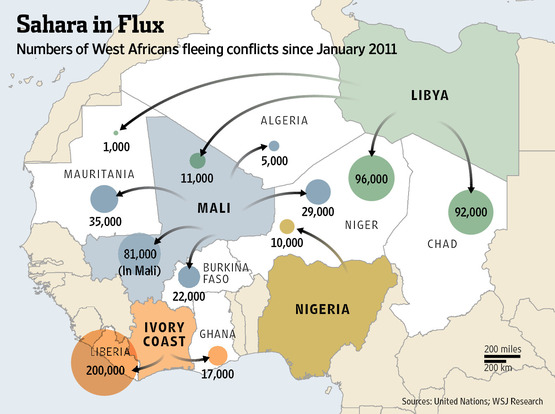
However, this sentiment may soon find itself conflicted. Today, the Northern town of Kidal, which has about 25,000 Malians, came under attack by MNLA and was taken over by the rebels. Kidal is a major town and in all disputes it has never been taken over so this takeover could be disastrous. The reason behind the coup was the military’s dissatisfaction with ATT sending them into battle unprepared and uncared for. Now with Kidal falling to rebel control, it begs the question, what is the military doing so we don’t lose more territories in the North and cause a bigger humanitarian crisis with the refugees. The refugee crisis is worsening with each passing day and as each town falls, more and more escape into neighboring areas and countries.
Wall Street Journal: The displaced and fleeing numbers
The military this afternoon, called on the international community to provide them with assistance with the rebels in the North. This is a large favor to ask, given that in the world’s eyes, this junta isn’t even considered a legitimate leader.
At this point in time the junta looks like it’s stuck between a rock and a hard place. If it does not give in to ECOWAS it will have sanctions imposed which could cause an economic crisis. If it does not stop more towns like Gao and Tombouctou from falling to the rebels, the Malian people might turn against the soldiers that a week ago were saviors. The next week will spell the junta’s fate and that of 15 million people.
Please continue to keep the people of Mali in your prayers. They are the ones that are suffering with each passing day. May a quick resolution be sought so democracy may be restored in a peaceful manner. May the international community support Malians so that no more lives are lost or families displaced in the North. May peace once again be returned to Mali.
SAMAKE FOR DEMOCRACY! MALI IS STRONG. MAY OUR VOICE BE HEARD.
This past week has been a testament of how nothing should be taken for granted and how quickly things can change in a blink of an eye. This past week has seen the fall of a stable democracy, the removal of a President, the institution of a military government, pandemonium, a return to calm and restored stability. For me on a personal level, I have witnessed firsthand changes. For one, the goal that we have worked so hard to achieve for the last year has been pushed. April 29th was supposed to be Election Day in Mali, when the voice of the people would be heard. That has now been pushed and there is no date set when the elections will happen. It was comforting to see the outpouring of love we received from the four corners of the globe and we were touched by the kind words of faith and encouragement. So what does these events that crash landed mean for the fate of Mali and that of the Samake2012 campaign?
Mali is at a critical time in its history. While the coup is said and done, now is not the time to go back. For one, to contemplate the scenario, what would be achieved by restoring the power to Amadou Toumani Toure (ATT) that the EU, AU and the US have called for? To give back power to ATT would mean showing support for the irresponsible handling of the Northern war and the way that our troops have been treated. There is no doubt among the Malian people who ATT has handled the security situation in the North poorly. Nothing has been done to stop the atrocities happening in the Northern regions of Tombouctou, Kidal and Gao. In fact these regions have seen an increase in the illegal trafficking – including drugs, weapons, migrants, cigarettes and Western hostages. We could have stopped the remnants of Gaddafi’s army long before lives were lost. However, nothing was done to stop them from crossing our borders and bringing in firepower that has made them extremely hard to defeat. They joined a pre-existing Tuareg protest movement, the National Movement of Azawad (MNA), a group of young activists which denounced the regime’s management of northern Mali allegedly based on its alliances with corrupt local political elites and a racketeering arrangement with al-Qaeda in the Islamic Maghreb (AQIM). MNA leaders elaborated the political platform of what would become the National Movement for the Liberation of the Azawad (MNLA). To give back power to ATT means to allow this terrible management of a crisis to go on. What do we do about the 175,000+ people who are displaced? What had ATT done to help them or make sure no additional harm came to them? What continues to happen that will help them? “Up to now aid agencies have not had great access to these areas… It’s hard to sell this crisis, it’s quite forgotten,” says Helen Caux, West Africa communications head at the UN Refugee Agency (UNHCR). Really? How can we allow an inhumane crisis like this to continue?
We now need to move forward. Do the leaders of the National Committee for the Reestablishment of Democracy and the Restoration of the State have a solution? Patriotism and dissolution of a non functioning government only takes you so far. Do they have a way to resolve the issues in the North? How do they propose to restore the government and end corruption? These are questions for the political leaders as military leaders do not have the political know how or training to answer them. We need to form a unified front of leaders that can appeal to the military leaders and provide them with a proposal on how a government can be instituted temporarily until free and fair elections can be held. In addition, now is not the time for sanctions or aid to be withdrawn. A country whose GDP is so heavily dependent on foreign aid cannot withstand such a hit. And who does it hit most? Not Sanogo sitting comfortably at the top. No, it is the men and women that live below the international poverty line of $1.25 a day. Let’s not make their life even more miserable than it already is. At this point in time, they are not worried about what policy the government passes next, all they see is the immediate harm in terms of feeding themselves and their families.
Mali at this time needs friends and not foes. They need the international community to work with the military leaders currently in power and encourage them to work with political leaders in Mali on how a peaceful transfer of power can be made. There is not a day that goes by where Sanogo does not reaffirm that power will be handed back. It can be seen one of two ways. Either, he is trying to convince the outside world or he is trying to convince himself. Either way, great strides have been made by the military rule to ensure the safety of our Malian brothers and sisters. The Malian way of life has for the most part been restored with the borders reopening and airports functional. In addition government buildings and banks are open. There are security measures in place at the banks which are controlled by the Central Bank of Africa so that huge withdrawals are not made. All in all, calm is restored in the capital. Now, it will be important for political leaders to work together with the military leaders and provide solutions to get out of the current situation with the least casualties.
Now more than ever, the campaign must go on. I could take my family and return to the safety and security of America. However, my heart is compelling me at this moment that my and Yeah’s efforts are needed here in Mali. I have the firm belief that things happen for a reason and they are a test to man as to how we can make the best of what life throws at us. It is at times like these true leaders will emerge that have only one duty and that is to serve our people. We must now focus on the situation at hand and decide what is best for Mali.
Please continue to support our campaign. I know you probably are saying, well why would we support something when we don’t even know when the elections will be. In a way I can understand that. However, this has never been about the goal of winning the elections. This campaign has been about an awakening of the hearts and minds of Mali to a new way of government which actually cares and furthers the wellbeing of their people. I implore you to think of it as not just an election that has been delayed; now we are in the fight to restore democracy. We are in this to bring relief to the 175K+ refugees stuck without recourse.
You know how we all say, well that is history. Well here is your chance to help make history and restore to Mali the stability and the voice of the people who are struggling to be heard.
Today was a very memorable day for Malians. No it was not a 4-day celebration of the coup. Today, we celebrated Martyrs Day. As the world watched the events emerging since the coup, many embassies and consulates warned their citizens to stay away from the march that was to commemorate this day which is also popularly known as Democracy Day.
A little history about this day. On March 26th, 1991, 300 demonstrators were killed in clashes with the military, as they protested against then leader Moussa Traoré. The protest was organized against Traoré’s Multiparisme political system set up on October 1989 and increasing amount of unemployment and pay cuts from the government including the rampant privatization of government properties created great dissatisfaction. In an attempt to control the crowd and stall the mounting protest and crack down its organizers, Traoré launched a violent military attack against the protesters ending into a horrific death of more or less 300 people. Because of this, members of concerned military officers, headed by ATT himself, launched a military coup against Traoré thereby ending his more than 23 years of political rule in Mali.
To be honest, I find it most ironic that the coup happened less than a week before the so-called Democracy Day, ending the very democracy that so many sacrificed their lives for. Many parties and individuals sharing this very sentiment joined a peaceful march to speak out against the coup. The march was held at Bourse de Travail ( Labor Union Building) and there were chants for Sanogo to step down and for ATT to be restored back to power. In addition, there were shouts for the ORTM building to be liberated. The military has kept control of the TV station since the coup started on Wednesday. Soldiers maintained their presence to keep protesters at bay and ensure that no one got violent. I am just glad this march did not go wrong. It was also nice to see that democracy was not completely lost as people voiced their displeasure with Sanogo taking over the democratic process a month before Malians were set to go to the polls. Sanogo, on National TV, spoke to honor the souls that had been lost in this historic battle and reaffirm to the Malian people that power would be returned to the people. Sad and ironic how Mali has stepped back in time. May those 300 lives not have been lost in vain, may democracy rein free and fair again, for despite its weaknesses, the will of the people needs to mold the future of our country.
Martyrs Day March Mali: A Peaceful Protest
The day passed peacefully with no reports of any negative backlash or violence. Tomorrow will mark the first day of official work since the coup broke out. Sanogo has asked all government officials to return to work. The day after the coup, these were some of the first people that were given instructions. It will be interesting to see what new developments unfold. Sanogo is starting to look more and more like a President and less like just another military officer on TV. Another good sign that life is returning back to normal is that airports will open tomorrow. My interns leave us on March 29th, a month ahead of their planned departure. I am definitely sad to see them go. They have been a true asset to our campaign. How many students would be willing to pay their own way to come intern in a foreign country for a foreign campaign when they could be in the US doing the same thing in this election year? Not many and there are not many that could have worked the 14 hour days we sometimes threw at them. Liz Jessop and Kyle Rehn, you will be missed but we are glad your parents will have you back home, safe and sound.
Yeah has been working hard as well. He left this morning at 9am and has been having political meetings since then to try to see if a unified front can be created to convince the new President to restore democracy. It is becoming harder and harder to do so, as politicians attempt to gain favor with the new President in hopes that they may get a position in government. It is disheartening to see that these are the same leaders that if they had run on April 29th and won, they would be running our whole country. Sanogo, came on ORTM tonight, promising to work with political parties within the next few weeks to create a unified government. The question becomes with a unified government, it’s like having a dual Presidential system with Democrats and Republicans. No bill would ever get passed and no law ever instituted.
The time has come when politicians in Mali need to get off their personal agendas and start pushing out one agenda alone and that is the welfare of Mali.
Yeah did another interview with Al-Jazeera in which he answers questions about what should happen now that the coup is already done and Mali finds itself once again under the leadership of a military leader.
Yesterday, Sanogo, the new President, firmly asked all looters to bring back all that they had taken, saying: ” if it is not yours bring it back”. This gives me some hope that these individuals do mean well and that they will do as they have promised.
Now more than ever, our country Mali is in need of strong, honest, diplomatic leadership. We need someone who is willing to stand firm and resolve the issues of our brothers and sisters in the North without more bloodshed. We don’t need leaders that are brown-nosing the military leaders to their face and then behind their back publishing declarations on the internet and in newspapers denouncing the coup. We need someone who can work with this new government, making them understand what their personal position is but willing to work them to represent the true needs and values of all Malian people. We don’t want leaders that will further their own personal future but rather someone who will work with the current leadership to return control back to the people. Mali needs to once again make itself the beacon of democracy of West Africa. My hope is that this is a temporary situation and that the military leaders will make good on their promises and return power to our people.
It is also my hope that the situation in the North does not get worse. It is already bad enough for the 175000 refugees displaced. I cannot imagine the pain of being in a place unable to provide for my family the basic necessities like water, food and shelter. Yeah and his team have been attempting to raise refugee aid to help our displaced Malian brothers and sisters while the issue in the North plays out. We are calling on the international community to step up aid to these displaced people so that basic necessities like food, water and shelter are given them so that we don’t have a similar issue like that in Sudan and Somalia. Those interested in doing so through the Samake 2012 campaign may make anonymous donations to a trust that has been set up: Friends of Mali Trust, 472 East 4380 North Provo, Utah 84604.
As soon as the current violence ends in the North, a new need will arise: Helping those who have been displaced to return and resettle into productive lives. In East and South Africa, many displaced populations have suffered for years – prohibited from finding local employment, they have become dependent upon western aid organizations. In some cases, these camps have witnessed second and even third generations growing up in these conditions.
Mali must be different. My people are strong and independent. Beyond the immediate aid needed to sustain life, we also seek just enough aid to help families return to their formerly productive lives.
Yeah is determined to address the disease that led to the rebellion – the sense that many northerners have developed that they cannot share in the fortunes of a country that seeks their taxes but not their welfare. All Malians – certainly including the Tuaregs of the North – can become full stakeholders in our country only if they have a voice about how their taxes are spent.
It will be essential on March 27th for these leaders to elect a temporary government that is made up of political leaders in Mali and not military personnel that are unfamiliar with the rule of effective governance. Yes, we do have leaders in Mali that have shown competence and it is time that those leaders be brought to the forefront.
May democracy prevail as it should. May the issues of the North be resolved with the least pain. We do not need more pain and suffering coming down on the Malian people. We need strong leadership and honest governance.
Vive la démocratie ! ( Long Live Democracy) Vive le Mali ! ( Long Live Mali) Divisés nous perdons tous ! Unis nous gagnons tous! (Divided we all lose! United we all win!)
Join us on our journey as we attempt to affect change for Malians. On July 29th, we will be running for the 2018 Presidential elections in Mali. Be part of our journey at www.yeahsamake.com
You can also Follow our foundation's work at www.empowermali.org






 Moving Mali Forward