RSS

Tag Archives: mali

Why we do what we do

malichildf

Think about the future of your children when you vote


With 5 days to go, all I can say is Mali’s future is at stake. We are determined now more than ever to affect change. Mali cannot remain destitute for 20 more years.

On July 28th, Malians will choose their destiny. They will either say they want to stick with the old corrupt guards or go with a new leader with fresh ideas and someone who has served them.

For us the Presidency is a means to an end. An end in which we can make Mali the great, prosperous nation that can enjoy education and healthcare for all citizens.

This video captures perfectly our vision and our passion. We thank our Alma Mater BYU for sharing our story. We all have the ability to make a difference in our own corner of the world. Don’t miss it!

Here are some shots from the last few days of campaigning in Koutiala, San, Segou, Commune IV, Kenedougou, Koury and Mopti to name a few

I thank all our supporters for donating to our campaign, especially when we issued an announcement for a $30,000 need. In the last three days we were able to raise $10K. We are still trying to raise $20000 to be used on the actual day of elections to be able to send our members in each voting area to ensure no voter fraud happens. There are 8 regions in Mali containing 703 cities. The money covers their transportation to/from the regions and their food.

Asking for money is not something I am comfortable doing. But we need your help. If you can help, no matter how big or small, please help push us closer to that $20,000 goal. 

donateButton

God bless Mali and all Malians everywhere!

 
Leave a comment

Posted by on July 23, 2013 in Past Posts


Tags: , , , , , , , , , , , , , , , , ,

ITS OFFICIAL!

Quick update! Friday, June 28th was the deadline to declare our candidacy with 5 signatures from each region supporting our candidacy (TOTAL: 55 signatures) and pay a fee of 10 million CFA. You are probably thinking, 55 signatures, no biggie. Well, when you are take into account 3 regions ( Gao, Tombouctou and Kidal) that are involved in insecurity and terrorism, things become a little different. Our party has been blessed with members that are willing to take risks to travel into these regions, meet with the leaders there to get the sponsorships needed.

So far 36 candidates have submitted dossiers of signatures and the fee of 10 million CFA. However the Constitutional court has to validate the final number and make sure that the signatures gathered are valid and belong to deputees and counselors in each region. We hope to hear how many official candidates there are this coming week as campaigning officially begins in Mali on July 7th.

I am excited and humbled that we could make this grand milestone with 65 signatures from all regions in Mali. This would not be possible without each and every one of you contributing to our success and efforts.

Getting ready to submit the sponsorship signatures to the Malian Constitutional Court

Getting ready to submit the sponsorship signatures to the Malian Constitutional Court

We are so appreciative and blessed by your support.

Keep the fire burning at www.samake2013.com. We do not need 20 more years of corruption, inefficiency, bad governance and bad healthcare. Mali needs your support! We need you to help us make this happen!


1 Comment

Posted by on July 2, 2013 in Past Posts


Tags: , , , , , , , , , , , , , , , ,

Villages of Baga and Kandian welcome Yeah Samake

A few days back, for the first time in the history of the villages of Baga and Kandian, a presidential candidate paid them a visit. The event was historic  and the villagers turned out in droves to meet a candidate for the first time. That candidate was none other than Yeah Samake.

The Chief of the village of Baga had requested to have a face to face meeting with Yeah. To honor his request, Yeah traveled to this distant village to get the Chief’s blessing. The chief solemnly promised that all his people would vote for Yeah Samake because he was the only candidate that had taken the time to come and hear the problems and concerns in the village of Baga.

Yeah also paid a visit to the Chief of the village and the people of Kandian. The people there too were extremely surprised and very pleased that a candidate would come visit them. They stated to the PACP delegation that this was the first time a candidate had come to visit them and it was a symbol and proof that they did matter. They too promised that they would support the son of Djitimou.

Yeah is one of the only candidates that was actually born and brought up in the rural areas. So he is familiar with the conditions that 80% of Malians have lived in for the last 53 years. He understands what it means to not have enough to eat, what it means to not have a job after graduation, what it means to support a big family. Here is a candidate who understands what a majority of the Malian people are suffering from because he himself has been through all the conditions that besiege ordinary Malians.

I truly believe that Yeah is the candidate Mali needs at this critical time in its history. 50 more years of inept, corrupt government will destroy this great country beyond repair. 50 more years of bad education and pathetic healthcare will push Mali and all Malians back instead of driving them forward. Mali cannot afford failed government. Mali cannot afford an inept public system that is governed badly. Mali needs a leader who is willing to listen. A leader who has acted rather than spoken about what he will do. A leader who looks at Mali and sees the opportunity to raise a great nation, not the opportunity to become rich personally. A leader who will raise Mali so that she can look in the eyes of other African nations not bow down at their feet.

That leader is YEAH SAMAKE. Join us today as we speak up for Mali. Join us so that we can make Mali the great nation she was and the great nation she can become with good honest leadership.

Learn more about Yeah Samake and our party PACP at http://www.samake2013.com ( EN) and http://www.pacp-mali.com (FR)

 
1 Comment

Posted by on May 28, 2013 in Past Posts


Tags: , , , , , , , , , , , , , , , , , , , , , , , , , ,

To Lead is to Serve

This slideshow requires JavaScript.

On May 22nd, 2013, the Parti Pour L’Action Civique et Patriotique ( PACP) held its 1st congress. For this special occasion, more than 240 PACP delegates from the different regions of Mali came to Bamako to represent their individual sections.  The event was held at the CICB in Bamako, a meeting place for many big conventions and events.

This was a great opportunity for the various delegates who are themselves leaders in their own regions to reaffirm their support of their candidate and the party. This event was an essential one. It gave the party the chance to show and explain all the activities that PACP has been involved in since it became a party in 2011 as well as to confirm the goal of the party in achieving stability and growth in Mali.

As we walked through the doors of the CICB, we were surrounded by the youth. Their chant became the theme of the convention: UNIS NOUS GAGNONS TOUS, DIVISES NOUS PERDONS TOUS ( United we all win, Divided we all Lose). The youth support has been growing for the last 2 years and it reached a climax at the event. To see the youth volunteer their time to come support their candidate was heartwarming and encouraging. The youth make up the majority of the voting population and it is essential that we train tomorrow leaders today. We need to include these bright minds in tomorrow’s future plans for Mali. And they sure did make their voice heard as they chanted their support for Yeah Samake.

The conference started with a speech by Yeah. In it he talked about the changing dynamics in Mali. His focus was on PACP as the party of change, growth and development of Mali. Yeah spoke with great passion about all things that the party has accomplished since it was created. He highlighted the actions of the party leaders on the day the country fell to a coup. While all parties were running away from the coup leaders, Yeah was right there condemning the coup and urging Sanogo to return power back to the people. Yeah spoke about the trips he has made to many countries and the meetings with many individuals to help explain the Malian perspective on the crisis in Mali. So many times, countries get caught up the issues in Mali that they forget to include the Malian in the solution. Yeah has consistently tried and succeeded at getting the Malian perspective represented and expressed. The partnerships he has created over the last two years with different governments was evident by the presence of representatives from different embassies, including Burkina Faso, Senegal, Algeria and the US Embassy. Usually, embassies try not to get involved in the political parties, so it was heartening to see the support and respect signified by their presence.

After Yeah’s speech, the secretary general Aboubacar Sidiki Fomba spoke. He stated the facts of what PACP has done in the humanitarian and social arena. Namely the 15 schools that have been built in rural Mali under Yeah’s leadership, the multiple medical missions that continue to come each year, the scholarships Yeah has been able to get for Malian students going to America,  donation of medical supplies and equipment to hospitals and clinics through Bamako, donation of computers to the Ministry and various schools in the country, a donation of food worth about $50,000 to Malian refugees in Burkina and Mopti and a visit to the Army in Tombouctou a month ago to name a few . More recently PACP has been holding multiple health clinics in rural villages where they have been able to utilize the expertise of doctors within the party. Most Saturdays, these doctors will travel to distant villages to give free healthcare and also train fellow doctors.

This is what this party is all about. Yeah’s success today is linked to his ability to serve his countrymen and women. That is one thing I respect the most about Yeah. He is the kind of man who will go out of his way to help if he can. So for him to create a party that replicates and signifies that sense of service is essential and crucial in the process of developing Mali. The party, despite being in its infancy, is at a crucial time. In Mali today, it is very rare and almost impossible to find politicians that serve their people. Most are in it for personal agendas and gain rather than to improve the lives of the Malian people. From day one, Yeah has wanted to make Mali a model of change and success. From day one, the people’s needs have been the priority.

The congress continued with various members from key areas like Tombouctou making statements about the party’s activities in their separate areas. The guiding principles, statutes and rules were read and acknowledged by all leaders present.

The event ended with all delegations reaffirming Yeah Samaké as their candidate in the 2013 Presidential elections. Yeah was touched by their commitment and stated: “I pledge to you that I will spare no effort to carry the torch of the party, for the term that you just trust me.”

This congress was an essential one. It was a reaffirmation not only of the candidate but also of the delegates who vowed to continue to support Yeah and work on his behalf. Many of these delegates traveled from far away, some as far as a 15 hour drive. This speaks volumes about the commitment of the people that join PACP. When I talk with people, they always tell me that they could go join other better know parties. However the reason they have joined Yeah and PACP is because it has demonstrated that it is a party of action, not just talk. This is something so rare among today politicians in Mali. Let’s look at it. Mali has been independent for 52 years. Where is she today? She is the second poorest nation in the world and in the top 5 worse educated countries in the world. Look at the healthcare system. There is 1 doctor to 20000 people in the rural areas that form 80% of Mali’s population. The education system has been riddled with strikes both on the teachers side and the students as well. Even the electricity has been as undependable as Mali’s current and past government leaders.

The time has come for Mali to celebrate the dawning of a new day. A day filled with hope for all Malians. This was an amazing conference. I feel blessed to have participated in it. I feel blessed to be part of this journey. But most of all, we feel blessed by your support that makes this journey possible.

Come join the Mali Moment. Visit us at http://www.samake2013.com (EN) or http://www.pacp-mali.com (FR). The ability to change a country’s destiny lies in our hands.


2 Comments

Posted by on May 24, 2013 in Past Posts


Tags: , , , , , , , , , , , , , , , , , ,

Impacting Governance at the local level

On March 16th a delegation of Malian mayors and municipal leaders left hot, sweltering Mali for Utah. The goal was to attend a 3-day governance summit in Salt Lake City, Utah.

One of the key things that Yeah hopes to offer as President of Mali is further training and exchange between Malian leaders at the local level and local leaders in other countries, so that an exchange of ideas and best practices can happen. This falls in line with one of the key platform points of the Samaké campaign: decentralization of power. No one knows better how to solve the problems of the Malian people at the local level than the Malian leaders that govern them locally. By providing them the tools to make better decisions and implement different ideas, we are stretching minds to the endless possibilities that can give Malian people a better life and it all starts with educating and empowering local leadership.

The summit and the trip were made possible by a partnership between the Utah based foundation Empower Mali and Utah League of Cities and Towns. Yeah, as the Mayor of Ouelessebougou, Mali, led the delegation of local leaders. The really cool thing about this delegation is that its members hail from 5 of the 8 regions in Mali, even war torn Tombouctou.

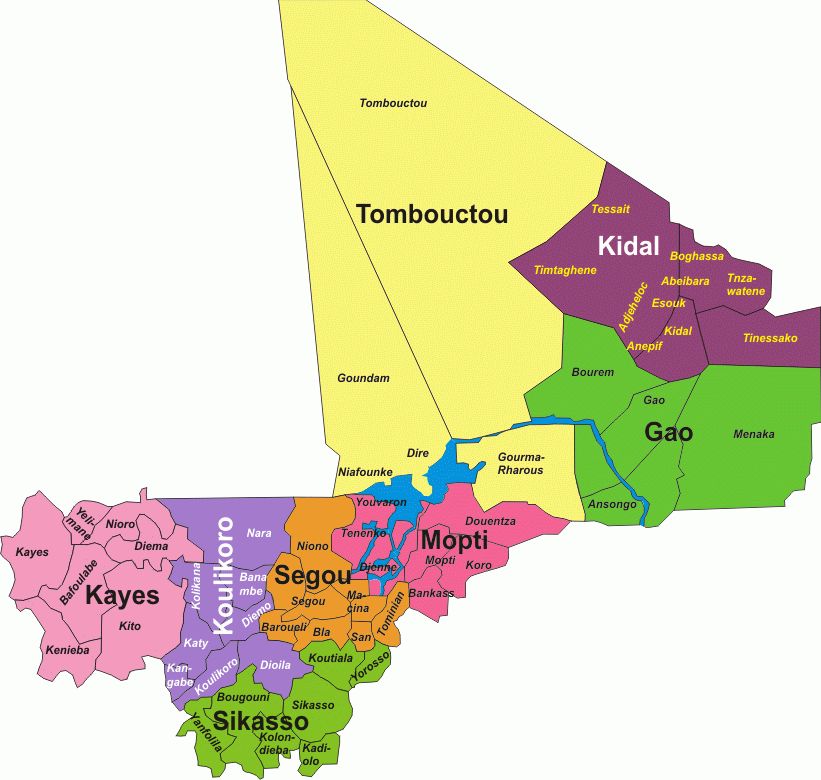
maliregions

The delegation includes members from different political parties. It included the following members:
• Nampaga Coulibaly, Mayor, Misseni (Population: 45,000 people, Sikasso Region)
• Diarha Diarra, Mayor, Moribabougou (Population: 29,000 people, Koulikoro Region)
• Sekou Boubacar Doucoure, Mayor, Tele (Population: 2,078+ people, Tombouctou Region)
• Malik Guindo, City Council Member, Doucoumbo (Population: 13,000+ people, Mopti Region)
• Malick Keita, Mayor, N’Gabacoro (17,000+ people, Koulikoro Region)
• Ousmane Kouyate, City Manager, Ouelessebougou (Population: 44,000+ )
• Birama Traoré, Mayor, Kirané (Population: 40,000+ people, Kayes Region)
• Barakatoulahi Keita, Partnership Coordinator, Association of Malian Municipalities
• Mamadou Tangara, Mayor of Kénédougou, Sikasso City ( Population: 230,000+, Region of Sikasso)
• Delegation led by Yeah Samaké, Mayor of Ouelessebougou (Population: 44000+, Koulikoro Region)

The 3-day summit was jam packed with visits and discussions all over the state of Utah from Logan to Provo. City Councilman Carlton Christensen greeted the delegation on behalf of UCLT. The delegation also received a warm welcome at a luncheon hosted by the Hinckley Institute at the University of Utah. The Mayors were impressed with the student’s commitment and involvement in government studies. Prominent figures like Mayor Mike Winder and Director of the Hinckley Institute, Kirk Jowers expressed hope that a partnership between local leaders in Utah and Mali would be solidified through this exchange. The energy was high and this was a great start to the three day summit in Utah. The delegation, despite being extremely tired and jet lagged, was excited at the endless possibilities of what they would take away from this experience during the next few days.

During the remaining days, the delegation also visited facilities like the UTA Trax Station, Sandy City Fire Department, Waste Management Transfer Station, Salt Lake Valley Landfill, Parleys Canyon Water Facility and Salt Lake City Waste Water Facility. These are all new experiences for the group. These kind of high end facilities are not available in Mali. That is not to say there is no fire, waste or police facilities in Mali. The difference is that the level of resources committed does not even begin to compare. The delegation was impressed by the organization of these facilities, especially the police station, water and waste plants. They asked many questions on how these facilities worked at a local level to handle the State’s needs. The mayors discussed the significant differences between waste and water management in Mali and waste and water management in the U.S. and what measures they can take to improve access to and quality of water and handling of waste in their own communities.

The delegation also had a unique opportunity to visit with the Sandy City, South Jordan and Ogden City councils. This gave them the opportunity to compare these councils and their functions against similar councils in their own regions. Each of these mayors works together with the city council in Mali in their respective regions to determine things like budget and requirements within the city limits. So it was nice to see some similarity of a process and observe how things are done in the US vs. Mali. The delegation also met with the African representative Franz Kolb at the Utah Office of Economic Development and Lew Cramer, President of the World Trade Center. The key topic of discussion was how to realistically implement a partnership between the cities in Utah and the cities represented by the delegation.

A good starting point was determined to be via the school systems in Utah and the primary schools in their cities. The delegation was pleased and impressed by the discussion and with the prospect of business partnerships between cities in Mali and cities in Utah.

The trip to Utah also included a visit to beautiful Temple Square. The delegation had a meeting with Elder Robert Gay of the Quorum of the Seventy of the LDS Church. Elder Gay is in charge of employment, education, and new business startups worldwide. At this meeting, they discussed the role of the Church in helping young people to find work after they have graduated. Elder Gay also emphasized that if education is only in the cities then the youth will come to the cities and never go back to the villages. The organization Unitus that Elder Gay helped start up is in the process of building apps that can be used on tablets and phones to help educate individuals in the rural villages. They are also focusing on water innovation in rural areas, primarily in Africa. Elder Gay asked the delegation to send him an official invitation to Mali to for his education application pilot program. The group also visited Welfare Square where they looked in amazement at the scale of services offered to the needy through the thrift store and employment program.

The final high note was a visit to none other than Costco. It is amazing the things we take for granted. Seeing so much food and items in one place can be overwhelming. The delegation loved it! I remember Yeah telling me when he first went to Costco back in 1999 when he first went the US, the feeling of awe that went through him and the realization that all the food there could help feed his own people back home.

All the delegation members wished the trip in Utah could go on longer so that they could see more and learn more. That is definitely something we will implement next year when we invite yet another batch of municipal leaders and mayors to come to Utah and other parts of the US for an exchange. The delegation was pleased with the trip and spoke of plans to act on what they had seen and learned, particularly in regards to partnerships.

I am thankful to all the wonderful people in Utah who helped with the delegation, especially the Utah League of Cities and Towns for arranging the meetings, the Empower Mali Foundation for arranging everything on the Mali side, our volunteers who translated and helped where they could, Jen Leahy our amazing photographer and Brett Van Leeuwen who kindly arranged lodging for all the delegation members in beautiful Alpine, Utah. It is support like this that makes what we do a possibility. We are grateful for your support!

The delegation is currently in NYC where they had the opportunity to visit the United Nations and the current Ambassador of Mali to the US Al-Maamoun Baba Lamine Keita. Also NYC hosts a strong population of Malians. The delegation was excited to meet with and mingle with many members there. The Malians in NYC showed great hospitality to the delegation, a tradition not forgotten or absolved of even though they are many miles away from Mali. The Malian delegation will return back to Mali this week.

It is opportunities like these that will empower our local leaders to effect change in their own communities. Yeah has often said: “A mind once stretched can never go back”. Yeah, through his public policy education at Brigham Young University, Utah has learned many things about governance. He has been able to apply the things that will work and has moved Ouelessebougou from the bottom 10 cities in Mali to one of the top five cities in terms of development and transparency. He talked last year with the Sutherland Institute about how his education has helped him . You can watch that video here: https://www.youtube.com/watch?v=h8nFS7AwrpU

It is essential that leaders be given the opportunity to see the endless possibilities and then pick and choose what will work to better their communities’ lives and livelihood. We want Mali to be a strong nation with a prosperous people. It is for that reason that we create opportunities like these. We hope that through these conferences and summits, that we can affect change at the local level. It is a possibility that can be made a reality with the right kind of leadership and implementing the right processes for change. Ouelessebougou, Mali is proof of that and the track record of Yeah Samaké displays that he is the leader of good, honest change and can make Mali a great nation.

This slideshow requires JavaScript.

 
Comments Off on Impacting Governance at the local level

Posted by on April 24, 2013 in Past Posts


Tags: , , , , , , , , , , , , , , , , , , , , , ,

French Ambassador Rouyer makes historic visit to Ouelessebougou

Ouelessebougou and the surrounding communities welcomed a very special guest to their commune on March 26th, 2013. The visit was the first of its kind by a dignitary of this magnitude in this region of Mali. Given the recent circumstances in which France has extended solidarity to Mali, Yeah, in his mayoral capacity, invited the Ambassador of France to Mali, Ambassador Christian Rouyer, to see Ouelessebougou and experience the many developments ongoing in the region. Ouelessebougou already shares a sister city relationship with Pontivy in France. Through it many great projects in the areas of water and education has become a reality for Ouelessebougou.

Ambassador Rouyer and the French delegation were received with great pomp as he and his delegation entered the city of Ouelessebougou. The air was thick with excitement as such an event has not seen for as long as many could remember. The people of Ouelessebougou and the surrounding villages turned out in droves to meet the French delegation.

Ambassador Rouyer in his speech was very appreciative to the people that came out to welcome him so warmly. In his speech he expressed gratitude to the people of Ouelessebougou and also their leader Yeah. He has been very appreciative of the leadership role that Yeah has played since last year’s coup. Regarding the situation in Mali, he said it was France’s obligation to help Mali. For during the Second World War, it was many Malians who paid the price of freedom with their life as they fought for France. Now it was France’s turn to help Mali combat terrorists. About governance in Mali, Ambassador Rouyer bluntly stressed that “Mali is not condemned to poverty, corruption and rebellion. It’s just a question of governance. It has all the capacity and potential to remain strong among the great nations of the world. In any case”, he added, “the majority of Malians aspire to a profound change. To do this, the Malian people must take their destiny in hand through a high turnout in elections to elect men and women to meet their aspirations.” This was amazing to hear as it was a reaffirmation of what Yeah has been saying all along. Mali’s many problems come not from the lack or inability of Malians, but rather from the leadership that has failed them.

Mayor Yeah Samaké then presented the Ambassador with a flag of Mali as a token of appreciation. This is the same flag that Yeah was presented with by Colonel Keba Sangare in Tombouctou last week. Colonel Sangare is a Red Beret and paratrooper commando and is the current commander over the 5th military region in the North. He had presented Yeah with the Malian flag as an appreciation for what Yeah has done for Mali. By giving the same flag to Ambassador Rouyer, Yeah was extending the military’s appreciation for the French forces now fighting on Mali’s behalf.

This slideshow requires JavaScript.

After the speeches and an afternoon filled with cultural richness, Ambassador Rouyer and his delegation joined the dancing. Malians love music and love to dance. For Malians to see “white” people dancing is indeed unique, but also it warms their hearts, for to them it is an acceptance and embracing of the Malian culture. The visitors were not shy. They seemed to truly enjoy the Malian culture that is often hidden in the city life of Bamako. Many of these diplomats will not venture past the main cities because their duties usually keep them in these areas.

The evening ended on a high note as Yeah led the delegation to look at all the development projects and achievements Ouelessebougou enjoys today. Ouelessebougou enjoys the spot as one of the top 5 cities in terms of development and management. Many people in Ouelessebougou have not been as affected by the economic crisis in Mali as other villages and cities. This is apparent in the level of development projects present and the life style of the people of Ouelessebougou. As they toured the solar panel field, high school, the hospital and water tank, there was great, genuine, appreciation for how far Ouelessebougou has progressed in comparison to other areas.

The date that this took place is also a memorable date for Malians. March 26th marks the anniversary of the martyrs that lost their lives for democracy in Mali. On March 26th, 1991, after days of fighting, displeasure over the military dictator Moussa Traore’s government reached its peak. Many university students especially lost their lives as riots seized the streets of Bamako. I remember Yeah telling me, that back in those days, he was a student at ENSUP. He remembers going to join the movement against the dictator. However with the death toll mounting, his father came all the way to Bamako and pleaded with him not to join. Soon, the army lead by Lieutenant-colonel Amadou Toumani Touré (the same President who was overthrown last year), refused to fight the civilians and instead with a team of 18 other soldiers they arrested and overthrew President Moussa Traore. Malians have long celebrated those that gave their lives for the democracy movement. This year, this day holds more significance for it is a caution that those deaths should not continue to be in vain. That the democracy that they fought for should not be forgotten and that Mali must return to a government where the people are represented.

Ambassador Rouyer expressed his genuine gratitude for this memorable event. It comes at a time, when his tour of duty in Mali comes to an end. A Sarkozy appointee, he will return to France soon and he will be replaced by Gilles Huberson. He has been an outspoken advocate for the French military intervention and had been posted in Mali since 2011 and had cautioned about rebels in the North long before they took over.

This is a memorable event for Ouelessebougou as well. It comes at a time when Ouelessebougou is enjoying its own successes and growth. It is hoped this event will only bring more development opportunities to Ouelessebougou and the surrounding communities.

It is at times like this, that I pray that people will see the great work that Yeah does. Yeah doesn’t do it because he will personally gain. The successes of his people and his community are paramount to any political ambitions. However we realize that it is only through our political ambitions that we can spread the successes of Ouelessebougou to all of Mali.

I have read comments that try to downplay Yeah’s popularity. I would urge all these naysayers to actually venture past the walls of Bamako and gain a true perspective of the 80% population and what they say about Yeah Samaké. What Mali needs is a leader that is trustworthy and dependable. A leader that will guide Mali to greatness and Malians to a better standard of living. A leader that has actually done something for his community and given rather than taken away from Mali.

This all is possible. Two words: YEAH SAMAKE.

This slideshow requires JavaScript.

 
2 Comments

Posted by on March 29, 2013 in Past Posts


Tags: , , , , , , , , , , , , , , , , , , , , , , , , , , ,

MALI COUP: The coup that brought democracy to its knees

Today, Malians will remember a very controversial day in its history. Today, Mali marks the one year anniversary of the coup that ended 20 years of a stable democracy.

I remember the day, a year ago, like it was yesterday. My heart is still scarred with the pain that surged through me as I watched the panic grip Mali. My stomach still recollects the feeling of fear and apprehension of the unknown. I still remember clearly, the days after as all of Mali seemed gripped, not knowing what to do or who was right.

On March 22nd 2012, the actions of a few would re-write Malian history. On March 21st, mid afternoon, a few junior officers, disgruntled with the regime’s inaction in the North of Mali against rebels, stormed the National TV station. For a day, the station’s channel stayed black interrupted only by hours and hours of Mali’s music. The air resounded with intermittent gun fire. Then at 4am on March 22nd, Mali’s immediate dilemma became apparent as the TV zoomed in on a group of officers with guns surrounding one man: Captain Amadou Aya Sanogo. Here was a man, Mali knew nothing about and in one fell swoop, he became the man of the hour. Till today, the controversies exist. Malians remain divided on where loyalties lie. Many Malians believe that Sanogo saved them from the plots of the government. Soon after the coup, rumors circulated that the deposed president Amadou Toumani Toure had in his possession the money and materials to promote and rig an election in favor of one of the candidates, Modibo Sidibe. This rumor was spread far and wide and is a common story given by those who support Sanogo and his actions. There are others that remain loyal to the previous regime believing that the soldier’s duty is to defend their country but under Sanogo’s watch, Mali lost a huge portion of its territory.
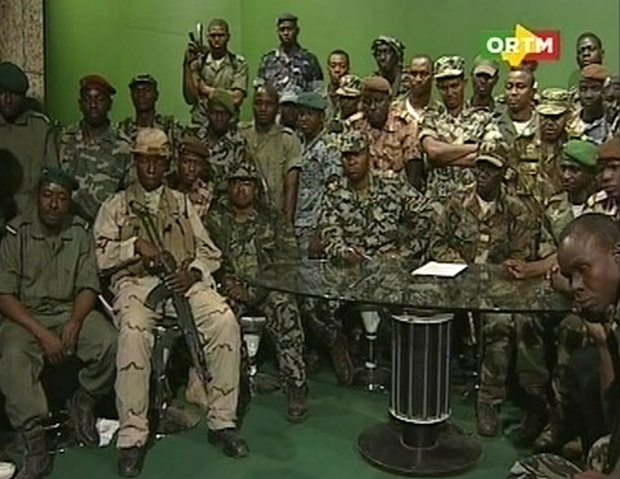
The announcement on March 22, 2012

The announcement on March 22, 2012

In the days that followed, the streets of Bamako reflected the days of the deadly student revolution of 1991. There was looting of the government offices and the presidential palace. Soldiers were confiscating vehicles and cars. In fact, some tried to stop the car Yeah was in but Yeah advised his driver to keep moving. The soldier was infuriated by this action and shot a round in the air, but that only made them drive faster. Political leaders joined the fray and Sanogo’s office was filled with many leaders that wanted favors in the new government.

Sanogofirstmth

March 22nd 2012: Yeah Samake meets with Sanogo to ask him to return power to the people of Mali

In all this, Yeah remained true to what he stood for. He recounts the day he met Sanogo for the first time: “I came walking through the crowd and went and stood in front of the office of the captain.  And he was just walking into his office and he said Mayor Samake!  He recognized me with perfect English, and I said ‘Captain, I have been waiting to get to see you for an hour’. And he said ‘Come with me.’  He said, ‘What has brought you here today?’  I said I came to ask him to turn the power back to civilians.  That power belonged to civilians and he needs to turn that back.   He looked at me and said, ‘Why have you come here to tell me that?’  To which I replied: “Because I know you love this country—you’re wearing the uniform. No matter what your motives are, I know you love this country.  And I love this country—I have sacrificed for this country.  So I am here to help you make things right.  If there is anything I can do, I’d be happy to help. He looked at me and said, ‘How? How do I do that?’ I said, ‘I don’t know, you will figure it out.’  As I walked out, he asked me if I would say something to the national television that he was in control of.  He brought in the camera and microphone and asked me to say something and he was probably expecting me to say something else.  I told to the microphone exactly what I had told him—that he needs to give the power back to the civilians and reorganize the military quickly so that Mali can defend itself.   He didn’t like that-he didn’t show that, that was censored. But this built a very trustful relationship between me and the captain.  He respects me, till today, that I had come and said this.  And he has turned to me several times, as a political leader, to solve some urgent problems that he couldn’t, or the military couldn’t.  So, he knows that everything I’m doing, I’m doing it for the love of the country, not for my own sake.”

Sanogo’s actions in the last year seem disjointed. While his initial actions seem to indicate a desire to rid the country of the old, corrupt politicians, his actions in the months that followed raise questions. The weeks that followed the coup were filled with many political arrests. At first we did not know who was getting arrested and on what basis. We did not know whether given his political status, Yeah would be next. All we knew was now was not the time to give up. If we gave up now, then we were not fit to lead this country.  Soon we found out that the people being arrested were former politicians that had stolen money from the country and army officers that had colluded with the deposed president. Through all this Yeah encouraged Sanogo to let these people go and ensure that Mali’s justice system handled it. Some were let go, and others fled in fear that they were next.

As Mali’s neighbors closed their borders, the country became afflicted with a fresh crisis. No one could get out and no one and nothing could get in. With the economic crisis looming, Sanogo was forced to let go of leading the country. After multiple backroom deals and with growing pressure from the West African neighbors, Sanogo announced he would step aside and allow the Assembly President to become the interim President as per the 1992 constitution. This was probably the best time to ensure that a government was put in place that would truly handle the needs of the Malian. What instead happened is the old guard, that was responsible for Mali’s growing economic and development issues, were put back into power under a different puppet. The current interim government is filled with the old guard of Mali’s failed democracy and continues to display the very reason why the coup happened. It is filled with bureaucracy and inefficiencies.

As part of stepping aside, Sanogo would receive full benefits as an ex-President, including but not limited to a house, constant security and money each month. For me, this was the part that first created some disillusionment about Sanogo. Here was a man who was saying he was doing this for Mali and suddenly, here he was taking from Mali. What separated him from the corrupt President he helped overthrow?

In the months that followed, Sanogo would show the country and the world just how much power he really had. The silent arrests continued to happen. In fact in December 2012, he demonstrated this power when he removed the Prime Minister (PM) Cheick Modibo Diarra from office. The reason explained was that the PM was attempting to run in the elections and was using his office and the country’s limited resources to do so. One of the pre-clauses of the interim government that Sanogo required was that no participant in the government would be allowed to run when elections were held in 2013. In a way, these actions restored some confidence in Sanogo. To Malians, he demonstrated that he had their best interests at heart and wanted to make sure the leaders in place continued to be held accountable.

To me when you think March 22 in Mali these days, Sanogo is the name that comes to mind. Most Malians regard him as a hero, regardless of what has happened. For me, I am more divided. Maybe it because I personally associate the rebels taking the North and the issues that followed as a byproduct of the coup.

All I know now, is that Mali cannot afford a failed government. Mali cannot afford another leader that takes away more than they give. Today, my heart cries when I see how the people of this country continue to suffer for the actions of a few. It breaks my heart to see how the deplorable economy continues to take away from the ordinary Malian. Before the coup, Malians were already suffering. After the coup, a year later, the suffering is intensified. Life has become harder for everyone. But the one thing I love about this country is its resilience and ability to continue to live life as fully as possible. Malians have and will continue to make ends meet the best they can. The coup awakened Malians to the realization that they had become too silent in allowing their government to run things.

Today the mood has shifted in Mali. There seems to be eagerness among the youth and the middle aged citizens, a majority in Mali, to stand up and fight for democracy in Mali. The elections in July are a sign that Mali and Malians are ready to return their country back to the people.

We are ready for this fight. The victory is not the elections. The victory will be getting Mali back on track and helping it attain greatness for itself and its citizens. Mali can be a great country. Malians have suffered enough and it’s time to get rid of the leadership that is dragging our country back into the pits.

Today, I celebrate the resilience of all Malians. I celebrate the possibility of a return to democracy. I celebrate Yeah Samaké, a symbol of a new democracy in Mali.

We have a proven track record. All Yeah has ever done is give to Mali and Malians from schools to scholarships to medical missions to building a successful community in Ouelessebougou, which is ranked in the top 5 cities in all of Mali in terms of development, transparency and government.

We are fighting for Mali and Malians everywhere. Join us in our fight for this beautiful people and this wonderful country! Visit us at www.samake2013.com to find out how you can become part of the #MALIMOMENT


yeahsamake

 
1 Comment

Posted by on March 22, 2013 in Past Posts


Tags: , , , , , , , , , ,

Happy 44th Yeah Samake!!

happybdayyeah

Today is a very special day. Today, my life partner and the man I trust to lead Mali to prosperity is celebrating his birthday.

This past year has indeed been a challenging time for Mali. It has seen a coup, a country divided and a people plagued by economic hardship. Despite the many challenges, Yeah and his party have continued to work hard to overcome the many challenges. Over the last year, Yeah has spent much time in multiple countries raising awareness to the issue of Mali’s territorial integrity and our refugees. I sincerely don’t know how he does it so tirelessly and without wavering. It is no small task and Yeah has earned every last one those gray hairs 🙂

Growing up, Yeah did not have a chance to celebrate any birthdays. In Mali, most children do not get to celebrate their birthday.  Most children barely remain children as they are sucked into the hardships of Mali life. Today, not only do I want to celebrate Yeah’s birthday, but I would also like to celebrate all Yeah’s achievements and his steadfast courage and hope for Mali.

We are in the final stages of this almost 2-year campaign. On July 7th 2013, elections are scheduled to happen. These next five months will be a dash to the finish. We believe that this is the Mali Moment. The time for change and innovation, but that has to begin with the right person who does the right things at the right time, whether it is in the face of opposition or support. I believe that person is Yeah.

Today, I ask you to help me wish Yeah “Happy 44th. To celebrate this special day, I call on all our supporters to make a memorable donation at http://www.samake2013.com in a denomination of 44 – $4.40, $44, $440, etc. or another amount that is comfortable for you.

The money raised will allow us to continue to work hard to win these elections so that Mali can once again be the great, prosperous nation it deserves to be. I believe with you on our journey, we have the chance to finally make it right for Mali.

Thank you for your support. We cannot do this without you!

————————————————————————————————————————————————————————————

Donations can be made at http://www.samake2013.com

 
2 Comments

Posted by on February 27, 2013 in Past Posts


Tags: , , , , , , , , , , ,

Moving Mali Forward

The last month has certainly been one filled with challenges for Mali. In a way, however, the events that have played out and the results broke the deadlock and inaction in Mali.

On January 6th 2013, rebels took over the town of Konna and started an offensive that predicted doom for Bamako, the seat of the Malian government. If Bamako had been overtaken, Mali as we know it would become Al-Qaeda’s newest playground. The French reacted immediately to the threat and deployed troops to secure the South and then in a bold move, together with the Malian army they pushed the rebels back. First Gao, then Tombouctou and finally Kidal. While Kidal still remains in question since MNLA is controlling it, other rebel groups like AQIM are reportedly not present. The French are refusing to get involved in Kidal and maintain that talks need to happen between MNLA and the Malian government. MNLA is mainly made up of Tuaregs from Mali’s northern region. This might explain why France wants to distance itself from getting involved in a civil dispute between MNLA and the government of Mali. However, it also “rumored” that France has in the past supported the MNLA. Nevertheless, the sentiment among a majority of Malians is that the MNLA exacerbated the initial issue in the North by teaming up with other rebel factions like Ansar Dine and AQIM (The Al-Qaeda faction in Northern Mali).Most Malians feel that no negotiations should happen with MNLA. However if Mali is to succeed, talks must definitely happen with the people of the North to ensure that they do not continue to feel marginalized by the people/government of the South. This issue runs deeper and is old as Mali’s independence.  

Now that Mali is once again whole, another serious issue is the refugee issue. It has been reported that the refugee count now stands at 350000 refugees in bordering countries and 200000 plus refugees inside Mali. When Yeah had visited the refugee camps in Burkina Faso last month, there was a woman whose main plea was to return home. Conditions in these camps are terrible and there is not enough supply to meet the growing demand. With the regions in the North now secured, refugees can start to return home. However, there is fear because of an increased report of reprisal killings by the military. Since it was mainly the Tuareg leaders that deserted to the rebel factions there has been a backlash against this ethnic group. In addition, many of the rebels have simply melted away into the desert and also the civilian population, a very common guerilla war tactic. While one can understand why the reprisal killings are happening, these issues need to stop. There needs to be a level of discipline and leaders of the army have strongly addressed that their members need to focus on securing the areas and protecting the citizens.

The faster elections happen, the better chance Mali has of starting its recovery and ensuring its growth and stability. Democracy will also reopen the doors to the West where all negotiations had broken down since a military coup derailed elections and split the country.

Hope has returned to Mali. People are returning back to a way of life they knew a year ago. The past 12 months has affected not only the North, but people in the South too. I hear certain groups condemn the French for interfering, but what they don’t understand is if the French had not intervened Mali today would be the hub of Al-Qaeda and within arm’s reach to Europe, the Americas and Asia. That threat had to be stopped and instead of sitting and discussing it like other countries in the world, the French acted with quickness and agility. The war has been temporarily won. However the battle for restoring a nation back to stability is on.

Now, more than ever, I believe in Yeah’s ability to lead his nation. Mali’s issues are many and the country is probably in a worse off state than at its independence. I believe Yeah has the ability to restore true democracy in Mali and rebuild the economy. I believe Yeah is the hope for the dawning of new opportunities, better life and security for the Malian people.

MALI WITH YEAH SAMAKE AT THE HELM

MALI WITH YEAH SAMAKE AT THE HELM

If you believe like I do, then please support us. A donation to the campaign ensures that our work can continue. Now more than ever it is essential that democracy be returned to Mali. A donation can be made online at www.samake2013.com

Also, this past week, Yeah shared his opinion on what Mali must do to now move forward. His opinion was published in the Washington Times. You can access it at this link or read below: http://www.washingtontimes.com/news/2013/jan/28/the-way-forward-for-mali/

THE WAY FORWARD FOR MALI

“It is critical to stability in the Maghreb and the Sahel region that terrorism in Mali be dealt with, both militarily and politically. The current situation in Mali cannot be separated from the issues in the Maghreb and the Sahel.

Extremists are breaking down the traditional tribal cultural bonds that have held society together in the Sahel region. This breakdown has far-reaching consequences for future generations. If we do not begin to reverse this trend immediately, we will have an exponentially greater problem to deal with in the near future, and much more serious long-term effects. It is critical that we apply equal pressure across the entire region in order to deal with terrorism.

As French forces have promptly intervened to help avert the movement of Islamists toward the south of Mali, there is a growing concern that the militants will spread into neighboring countries. Regional forces have been deployed alongside the French troops, which gives hope that the military campaign will succeed. There is also hope that the United States might soon restore direct political engagement with the Malian government.

The recipe for restoring and maintaining a democratic Mali requires holding elections, the return of Malian administration and army in the north, political stability and accountability, and the homecoming of displaced Malians. The way forward in Mali will begin with a Sovereign National Conference similar to that of 1991. This national dialogue will put in place the right political environment as a precursor to free and fair elections. Malians have a tradition of picking leaders through electoral processes, not by consensus, even when the outcome is less than perfect. When the country is unified, the authority of the state will need to be strengthened to allow cohabitation with decentralized local governance.

We must also consider the humanitarian situation. Humanitarian efforts should be balanced with the need for displaced Malians to return to their homes. They have been driven to camps because they do not want to live under Shariah law. After a successful military intervention, it is important politically that they become part of the solution by returning to their residences. Humanitarian assistance must be balanced in this regard.

There is a legitimate and valid need for the international community to continue to engage on the holding of elections. The current transitional government has shown no great eagerness to hold elections that might remove them from power. Deadlines must be established and commitments to those deadlines. Leverage can be found for both the military and political solutions required to restore Mali to a fully functioning democracy.

Recovering the north is not merely a logistical support effort. In the post-coup environment, there are still some political levers that need to be applied. Support for the Malian army requires not just logistics and training, but also restoring some of our critical relationships.

A group of generals ousted in the coup could play a critical advisory role in retaking the north. In particular, the former Malian Joint Chief of Staff Lt. Gen. Gabriel Poudiougou had a good working relationship with Maj. Gen. David Hogg, commander of U.S. Army Africa, and is well respected by the U.S. Embassy. He was recognized to be a good player with U.S. Army Africa and had not been tainted by some of the corruption that was apparent elsewhere. He should be brought back into the process of taking Mali forward militarily. It is imperative that some of this lost leadership be leveraged back into the process.

The political and military process must be inclusive, not exclusive. This inclusiveness in a small area will be necessary for the political aspects that must drive the re-unification of northern Mali.

Accountability must be the principle that underpins our support. Political corruption was what led to the coup. Military corruption followed that political corruption. As Mali receives material support, it is imperative that the United States, as a major stakeholder in the process, should have a mechanism in place to monitor the flow of this equipment and material to ensure that corruption does not subvert the effort.

Deadlines for an election tied to material and other support for the military effort, along with necessary reforms, will start us down a productive path toward restored democracy and reformed accountability. This road is complex, but it is worth traveling, and it is a journey that must begin immediately.”


Leave a comment

Posted by on February 2, 2013 in Past Posts


Tags: , , , , , , , , , ,

Mali’s future

The year 2012 has been a challenging one for Mali. Mali is already the second poorest nation in the world with issues in many sectors like healthcare, education and government. And if that is not bad enough, the coup last year has made matters worse. While Sanogo seems nowhere in the picture, it is not hard to see that not much happens without his approval. The Interim President Dioncounda is a President in name and more power lies with the Interim Prime Minister Django Sissoko, who so far seems as ineffective as his predecessor. December 2012 saw the resignation of the previous Prime Minister Cheick Modibo Diarra as allegations circled that he was advancing his own political agenda instead of focusing on resolving Mali’s territorial integrity and helping prepare Mali for elections. After months of negotiations, the UN Security council finally backed a resolution to send an African led force to Mali to unseat the rebels in the Northern regions. Unfortunately we have seen more Islamist attacks on areas that were previously held by the Malian army. Yesterday, it was reported that there was an intense battle in the town of Konna, a small town by Mopti.Today reports show that the Malian army was able to successfully regain control of Konna.

So what does 2013 hold for Mali? One only has to be living among Malians to know that Mali is suffering internally. While Sanogo was hailed as a hero immediately after the coup, public opinion in his favor is starting to waiver. The cost of day to day goods has risen significantly and in an economy that already had a 35% unemployment rate before the coup, things seem bleak. Tourism has suffered dramatically and many hotels/restaurants are feeling the pinch. The people in the North are suffering under the imposition of Sharia law. In addition, the refugee crisis seems forgotten. It has become an issue that has been put on the back burner while Mali’s inefficient government tries to figure where it is going and what it is doing. Yeah’s most recent trip to the camps in Burkina Faso last week revealed degrading conditions. One woman in the camp told Yeah that the refugees were tired of the situation and the conditions and just wanted to return home. A home of a united Mali, not a North run by extremists.

The international community is requesting elections in April 2013. Is this doable? Many politicians, who were running prior to March 2012, have now been imprisoned or have fled the country in fear of the junta. The large parties have had to find replacements that are relatively new and unknown. In addition, some of the prior candidates are serving in the current interim government making them ineligible to run in the next elections. Finally, much of the collected campaign funds were utilized prior to the coup and so more fundraising needs to happen to replenish this fund to campaign. Despite these reasons, it is good to see that many of the old corrupt politicians are nowhere in sight to run in the next elections and that much of what is left are younger politicians with newer ideas on how to improve Mali.

However, if we don’t have elections soon, we will not have a government that is recognized as a true democracy. When you have too many players determining policy, fighting to regain the North will become harder. When you have a central leader recognized and elected by the people and a government that responds to that leader, then you have a unified front to represent Mali and regain the North. With all the forces involved from the junta to the interim President to the interim Prime Minister, you have too many faces trying to call the shots and assert authority. Elections mean one authority, one government and a stronger face against terrorism. So if that means April, we will have to be ready.

Mali cannot afford another failed government. I believe strongly, that Mali needs leadership. The issues to date have been caused by a lack of leadership. First, by the former President ATT who was overthrown and who for 10 years failed to raise the level of living. Then by Sanogo who let key parts of the country fall to rebels, while he asserted control. Then by a puppet government which has not truly led. We need to look at what is being done for Malians. While so-called Malian leaders were floundering in their self importance, it was Yeah who was meeting with other Malian politicians trying to reach a consensus on where Mali needed to go. It was Yeah educating key African and Western figures on understanding the situation in Mali from Mali’s perspective and about what was needed for Mali. It was Yeah who was bringing attention to the refugee crisis and reaching out to external organizations to send food and medical care.  Malians need a leader who isn’t self serving. They need a leader that has proved that a Malian’s life is more important than lining their own pockets. Now it is just a matter of allowing Malian voices to be heard so that free and fair elections will be held.

People ask me all the time. Why are you here? Aren’t you afraid for your family, for Yeah? I would be a fool if I said I did not fear for my family and Yeah’s well-being. I do worry, but if we don’t take this opportunity to make a difference, then the fate of 15 million people lies in the balance. Our comforts and tension is nothing compared to the suffering that Malians undergo daily.

The only hope for Mali now is to hold elections and create a strong, unified government. If Malians continue to hope the solution will come from outside, it will be too late. The economy cannot take another year of bad news.

I believe that Yeah can bring change. I believe that this campaign is not about just becoming President of a country. Rather I believe that this campaign has become a quest to restore integrity to a nation and bring hope to a people that are suffering. Too many years have passed with the Malian people being marginalized. Things need to change. Yeah possesses the skills, education and integrity needed to lead Mali. He possesses the strength and diplomacy to unify the government and restore his country.

If you believe like I do, then support us. Become a part of Team Samake and see how you can help us in 2013 to unite a country and raise hope for the people of Mali. www.samake2013.com

The Samake2012 year in review

The Samake2012 year in review

 
3 Comments

Posted by on January 11, 2013 in Past Posts


Tags: , , , , , , , , , , ,