The political situation in Mali, as far as South Mali goes, remains quite stable. The Prime Minister seems to have gotten his team together so that the country can be run. The Interim-President Diacounda Traore remains absent as he continues to have treatment in Paris. To be honest, it really matters little that he is not here as much of the government running is done by the Prime Minister and his transitional government while the President remains in name alone. There are pitter-patters of discontentment from the political circle in regards to the running of the government. The transitional government that was formed left out all political parties, one feature that has received international credit but that has caused major discontent among Mali’s political class who feel they should have been included in the government. While it seems admirable that no old guards from the political parties were represented among the transitional government, it would have been advisable to have a few fresh faces from Mali’s political circle as advisers. The result now is that there are many parties, mainly the big ones that are creating a stir by saying the Prime Minister is ineffective and the country is not making progress.
Yeah’s had formed a political coalition ADPS (Alliance des Démocrates Patriotes pour la Sortie de crise) with other political parties. This past week saw members of some of the political parties claiming that they wanted to ask the Prime Minister Diarra to resign and have a new government be created. Yeah refused to go along with this and advised PACP’s official position as such: “The Political Bureau of the Party for Civic and Patriotic Action(PACP) informed the Executive Board of the Alliance of Democrats for the Patriots out of the crisis (ADPS) of our decision to disengage from the memorandum between the ADPS and FDR. Given the principles and values that led to the creation of the ADPS, PACP will reserve from partnering with FDR. Our party is committed, in this delicate moment in the life of the nation, to support the government of Mali in its mission to regain territorial integrity of our country and the organization of upcoming elections.”
It is essential at this point in time that Mali not falter back to the position it was in 3 months ago. To return back to a non recognized form of government would create more uncertainty in Mali and encourage further rebel actions in Mali’s North. Already, the Northern region has declared their independence and is looking for Mali to separate from that region. The question is not whether Mali will relinquish its hold, it’s when it will start to regain its territory so that it’s displaced people in Niger, Mauritania and Burkina Faso can return home. Also letting the Northern region go will mean doom to other ethnic groups that form the majority in these regions as they will be driven out and suffer the same fate that the refugees suffer today. Also, already the activities of rebels and AQIM are pointing in the direction that the North will become Al-Qaeda’s new playground.
Mali’s dilemma is complicated to say the least. Diarra, the Prime Minister, needs to become more vocal about his intentions or his people will start to lose faith in his abilities. There is little indication as to where his policies are headed. An uninformed people can easily be led away and become an opposition. Diarra, now more than ever, needs to get his people on his side. Food prices are rocketing and it is the general population that lives on less than a $1 a day that suffers. Two things remain a priority for Mali. First and foremost, Diarra needs to show the Malian people who is in charge and share his ideas to get Mali where it needs to be. Second, he then needs to bolster the Malian army so that terrorist groups can be expelled from the country. When these groups are removed, then negotiations can happen with the Tuaregs to determine their rights without infringing on other ethnic groups.
While the political scene remains complicated, but stable, the Malian people continue on with their daily lives. Yeah’s party PACP has been growing in droves ever since the coup happened. With the major political parties in disarray with no leadership, many youth leaders are knocking on PACP doors to investigate joining the party. PACP is engaging in tasks that follow its core principle of patriotic and civic action. Along these lines, PACP sent a delegation to Burkina Faso to assess the refugee situation a week and half ago. Their visit lit a fire under the Malian authorities who now have also paid a visit to these camps.
Another group that has received some attention from PACP is the women. Personally, I believe that Malian women are strong. They work dawn to dusk taking care of their families and are usually the first to wake up and the last to go to bed. Usually they will have anywhere from 4-10 children with the average being six. Their responsibilities do not stop there. They cook, clean, chop firewood and often try to start small businesses so that they can bring in some income. All of this is usually done with a child on their back or one to two in tow. In Mali, women and men have separated incomes. The man is responsible for providing money for food and the general running of the household. Any money the women bring in can be used by her at her discretion. Having a business teaches these women how to sustain themselves. The culture in Mali is rapidly changing and it is very common to see small street businesses run by women selling anything from household items to produce.
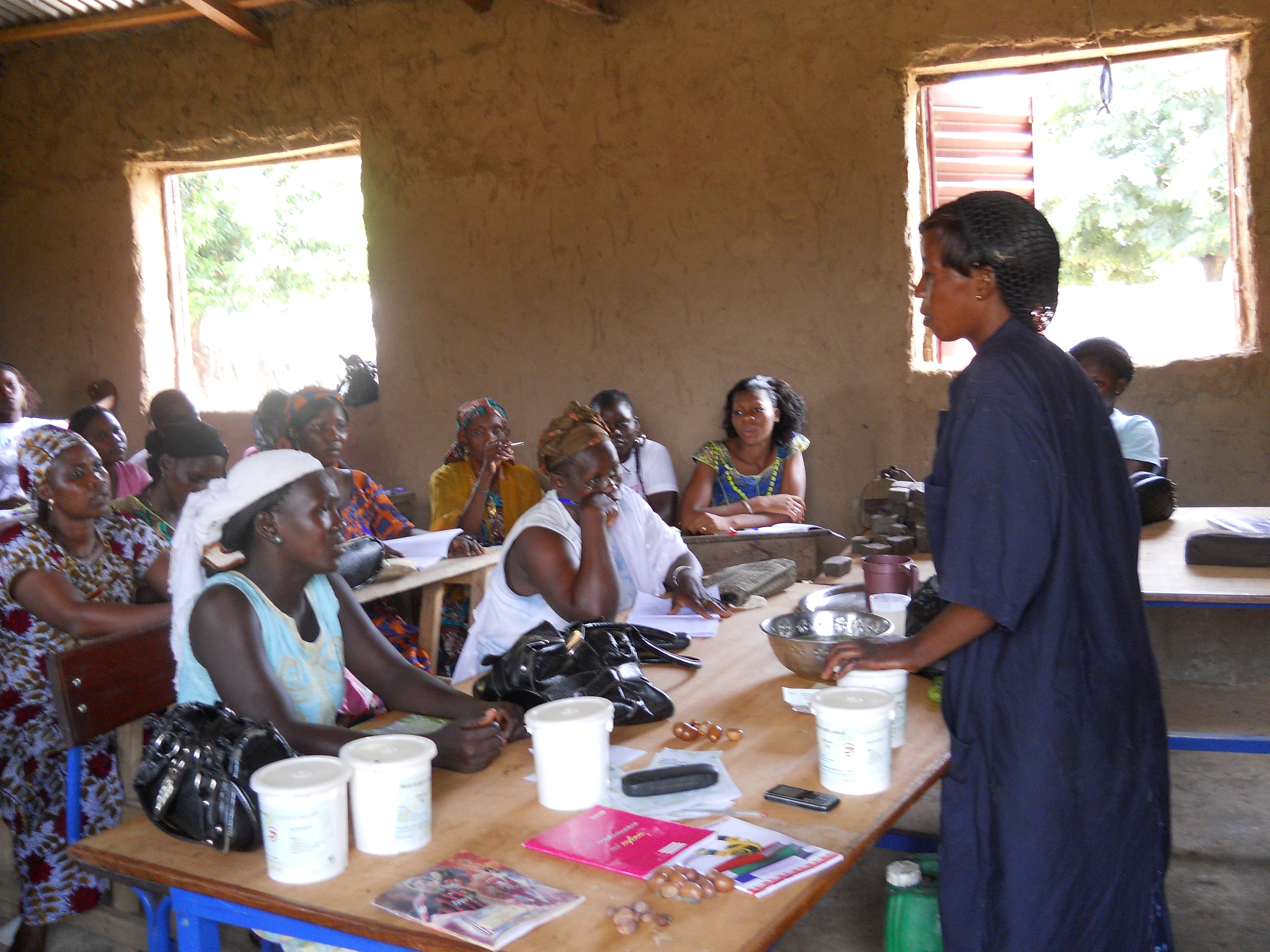
Classroom training for the women
PACP in an effort to encourage increased women entrepreneurship hosted a free workshop for 25 women, led by PACP member Kone, to teach women how to make soap and shea butter. The women in a 5-day workshop received the benefit of formal training in a classroom setting as well as on the job training. This was an awesome opportunity for these women to learn a business that they could then take back to their own regions and implement. Shea butter is a very essential product in Mali everyday life. It is used for anything from a cosmetic value to a medicinal use. People in Mali will often use shea butter when they have a cold or sore throat and many will swear by its effectiveness. In addition it is used in cooking and some will even add a perfume into it and make it a cream. Soap as well is an essential part of everyday life in Mali. As polluted as Mali is, Malian women do the best they can do to keep their surroundings and personal/family items clean. These two items are essential in Mali’s economy and there can never be too much of either product. By teaching these women how to make these products, PACP is providing them the tools to learn a skill that could change their lives. This knowledge can be shared not only with the next generation, but more importantly with other women in their communities. Women are very social in Mali and by teaching one woman you are in essence teaching the entire group she will associate with. On their final day of training the group met with Yeah in Ouelessebougou, where he expounded to them the importance of the training and what the women could gain from it if used.
Classroom Training on making Shea Butter
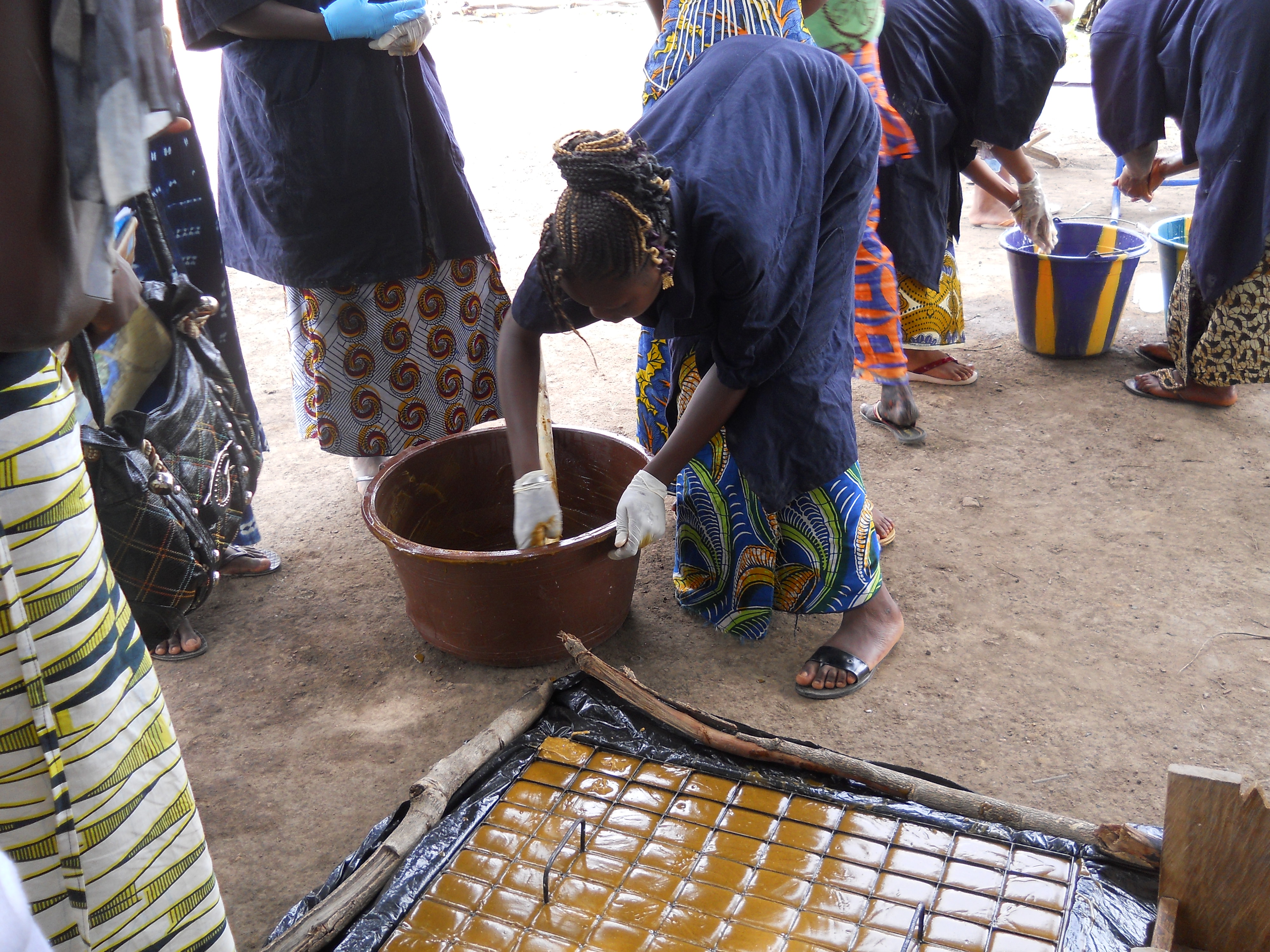
Practicing Making Soap
The finished product being allowed to set. In Mali, bars of soap are used to wash clothes, dishes etc. Detergent is reserved for car washing or cleaning the house.
Yeah speaking with the women at the end of their training
Many more trainings like this will happen and the need is great to empower women. Many women in Mali are illiterate having had little to no opportunity to gain an education. It is projects like these that will help women create opportunities for themselves. A 5-day workshop like this usually costs $1500-2000. You might be surprised, and this does not include the trainer’s fees. In the case above, the trainer donated his services to PACP. The fees come from renting vehicles, gas and for housing/food. To truly learn these skills, you have to travel to different villages and regions hence contributing to the cost. Regardless of the cost, I believe this was money well spent. I am a big believer in empowering women and it is my hope that projects of this nature will educate women and then give them the hope to change their lives and the lives of those around them.
The one thing that is on my mind these days is the current growing Malian refugee situation. It is hard to watch your fellow man suffer. However, it is harder still when you know they had little to begin with and now everything, including their dignity, is being stripped from them. These people did nothing to deserve the conditions they have been subjected to.
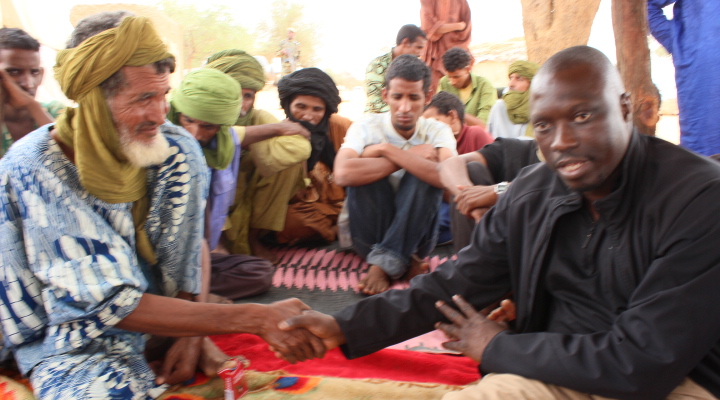
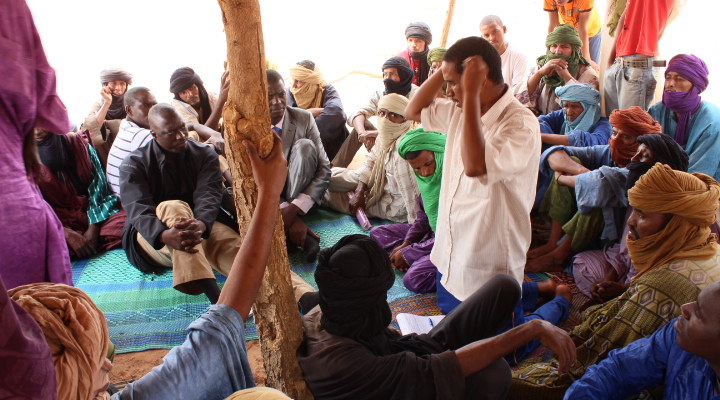
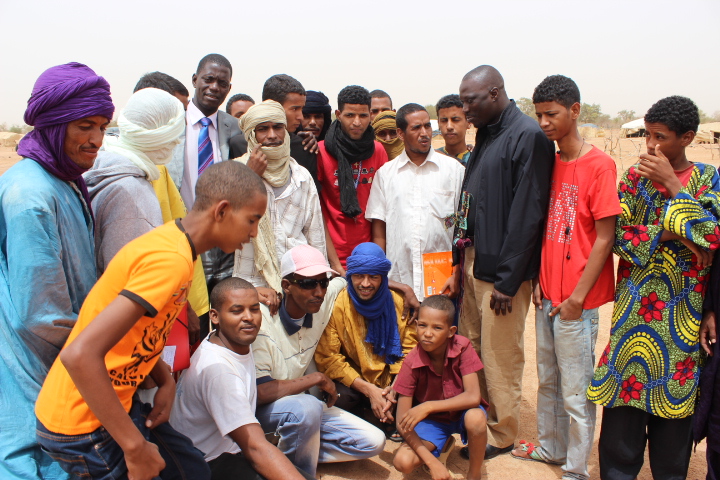
On June 10th, Yeah was a man on a mission. His mission was to truly investigate the conditions of the camp and the state of the refugees living in them, so that he could get the international community and the Malian government more involved.
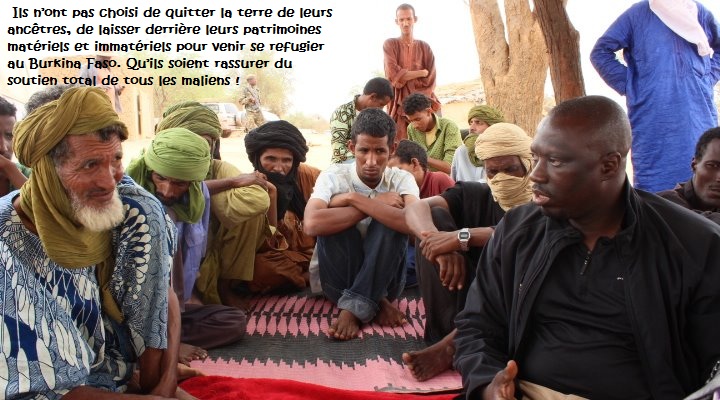
The camp at Soum
Yeah went to visit the Malian refugees in Burkina Faso. UNHCR (High Commission for Refugees UN), reports 180,060 refugees displaced all over Mali, Burkina Faso, Mauritania and Niger. 65009 refugees are in Burkina Faso as of June 9th 2012. Of these numbers, almost 60% are children. About 38% are aged 18-59 and about 3% are 60 and older. The situation in these camps is getting more and more desperate. The flow of aid is unable to match the need. Yeah went with Malian journalist Yaya Samaké (not a relative) to document the situation and hear firsthand what the refugees and officials concerned with the crisis were saying.
Yeah met with the officials at the Mali Embassy in Burkina Faso. Mali Ambassador to Burkina, Seydou Traoré, admitted that they had not been to visit the Malian refugees situated in Burkina Faso. They told Yeah that the Malian government had not given any aid to be delivered to the refugees. This seems amazing to me that one’s own government does not care two cents as to the plight of their own people. Yeah was the first Malian from Mali to have visited the refugees in Burkina. What is the use of an embassy in Burkina Faso if it does not even serve its people?
Yeah also had the opportunity to meet with the country’s head of UNHCR, Fata Courouma, to better understand the needs of the camp. Yeah visited the Mentao, Damba and Djibo camps which is in the Soum province, 250 km from Burkina’s capital of Ouagadougou. This area (as of May 18th 2012) according the UNHCR houses 14,506 individuals and 2,472 households.
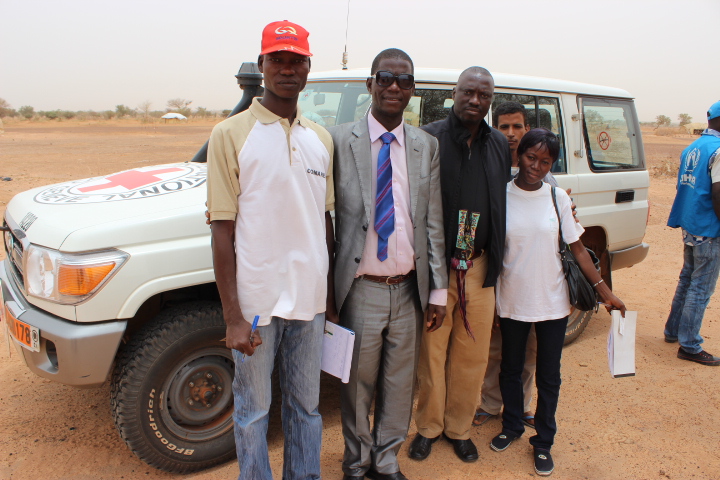
With the UNHCR/CR-BKF representatives
The refugees in these areas hail mainly from the Tombouctou area. Also among the refugees there are people who have served in the armed forces of Mali. Conditions are getting worse because of the rainy season coming in. The tents available are inadequate to deal with the rainy season. The number one need right now is protection from the elements. Even though food is being served, the rations do not meet the nutritional requirement and are lower than what a person would eat on a daily basis. Children that are displaced are not receiving an education. There are limited health services provided by the UNHCR and the CR-BKF. There are no words to describe the situation in these camps. It is unbelievable that it has come to this and that nothing is being done to help these individuals.
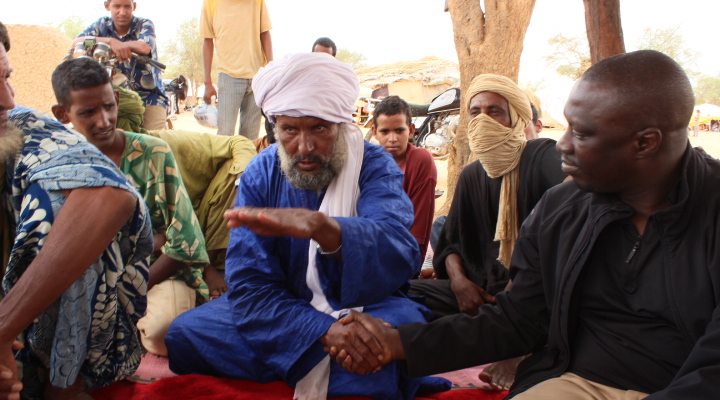
These individuals were so happy that a fellow Malian had finally come to hear what was happening to them in these camps. They expressed their gratitude to the Burkina officials and were frustrated with the Malian government because no one had come to help them. To them, it seemed like they had been forgotten by their own government. Yeah said to them, “I am not come to you on behalf of the Malian government. I came to see you as a brother wounded at the situation as you live. Your suffering is our suffering. Your expectations are not met, not because the government does not have the will, but because the country is almost stopped. Let us all pray for the speedy return of peace, so you can find your homeland. We will always be by your side”. Yeah promised the camp leaders that he would do more to help them and raise awareness to the growing humanitarian situation.
Aghali Ag Hamidou, the teacher that returned to help
Yeah met one camp representative by the name of Aghali Ag Hamidou , who is from the Tombouctou region and was teaching in Bamako when the fighting broke. He left his job in Bamako and returned to Burkina Faso to help his tribe in the refugee camp. Another camp leader Almahil Ag Almouwak of the South camp said “I prefer the Malian tree to another tree”. Despite the harsh conditions the refugees are under, he was quick to say that Mali will always be their home. They want to return home. He cautioned that not all Tuaregs are rebels and vice versa and cautioned the government to stop treating them as such.
Our Malian brothers and sisters still hold on to the hope that Mali will be reunited and that they will then be able to return home and live in peace. Speaking through Yeah, they call on the Malian authorities to step up to the plate and help them.
I am glad that Yeah took the opportunity to go see what the refugees have to deal with on a daily basis. The conditions are desperate and are worsening. Now I ask you, imagine not having enough to eat. Imagine being unable to sleep because your tent let water through or because you were simply too hungry. Imagine not knowing what to do with yourself all day, because there simply is nothing to do. Imagine being unable to take care of your family. Imagine a life where death seems preferable to suffering. Conditions are terrible for the Malian refugees and they are about to get worse as we approach the rainy seasons from July to September.
Donate today to organizations like UNHCR that are on the ground and trying to make a dent in the growing numbers with Operation Mali. Or donate to Samake2012 and specify refugee in the comments field and the funds will go towards the collection Yeah is making for the refugees.
A year ago, do you remember what you were exactly doing? June 17th, 2011 is imprinted very well in my mind. This time last year, I was getting off a plane from the US to Mali for a journey that we believed would change our lives and the lives of the Malian people. We came with the firm belief that Yeah could be the change that Mali needed. We believed he could be a fresh start for a country that was stuck in a rut of bad leadership and corrupt practices. Who knew where we would be a year later. All we knew was the journey had begun and was bound to be exciting.
I remember a year ago, my kids would freak out about flies and bugs. Now, a year later they run after them and catch them. A year ago, they would stick very close to each other. Now, they are making other friends. A year ago, they spoke only English. Now their minds are grasping words and phrases in French and Bambara. Instead of having a family of four, they have added our guards, cook and chauffeur as family. My kids have indeed grown since we came last year.
Politically, Mali too has come a long way. Who knew a year ago that what was one of Africa’s most stable democracies would not only be overthrown but the country would be divided. Who knew that almost 200,000 innocents would be displaced and uprooted from a country they had called home for centuries. Who knew that a year of campaigning would ultimately come down to fighting to restore a democracy instead of extend it. Who knew?
Through the year we have campaigned hard in the 4 corners of Mali. We have seen different cultures and traditions all compiled into a Malian. Mali’s diversity contributes to its beauty and uniqueness and we have found ourselves blessed by it. We have had the opportunity to better know Yeah’s culture and his family. I think his family has accepted us even more as they have gotten to truly know us. We have gotten to understand the challenges that Mali faces. We have been blessed to meet medical missions and people that want to make a difference and come to Mali to do just that.
However, we have also experienced history be rewritten and found ourselves amidst a coup. We have ourselves fearing for our family’s safety and in the prayers of many people that feared for us. We are being given an opportunity to continue to make a difference.
Now that we are here a year later, our resolve is no less strong than the day we started. Sure we have a hit a roadblock, but is a journey worth remembering if there are no bumps? Our people must be brought home. Mali needs to become a democracy again, so the people’s voice may be heard again. But the most urgent dilemma is that the North needs to be rid of terrorists. Mali and all Malians will not and should not be compromised anymore.
This past week has been calm and Bamako continues to remain quiet after the drama of a few weeks back. The President continues to remain MIA while the Prime Minister continues to try to assert his presence. He does seem to have a lot of opposition from many bigger political parties. The reason is probably because his cabinet that he has picked does not include any political players from these parties. The North remains heavy on many Malians minds. More and more reports are emerging about the rebel players in the North and there seems to be a uncertainty about how the government will be handling the rebel groups. The government has not displayed a straightforward plan despite the talk of the PM that Mali would not give away the land in the North.
Most expat hang outs remain deserted which confirms the belief that many foreigners have indeed left the country. This will have some serious impacts on the economy as many workers/vendors find themselves without the more well off expats.
On the home front, things are well. The kids continue to get used to the changing weather. It has indeed become very hot and despite the increase in the summer showers, the heat is never far off. Electricity remains as iffy as ever with power shortages frequent and long. Just last week we spent two nights without electricity. Kean is doing wonderful in school and I am so proud of him. To help with the challenge of the language we have hired a tutor to help Keanen and me learn French. I wish I had the brain of a child. I can tell you Keanen is making leaps and bounds in French. He continuously surprises me when he chatters to his friend or teacher in French. I have no idea why the French cannot stick in my head. You would think it would be easier given that I know other languages. But no, it continues to remain foreign to me. The local language Bambara is much easier to pick up and something I can comfortably get by in. Hopefully, the tutor will be able to drill the French in.
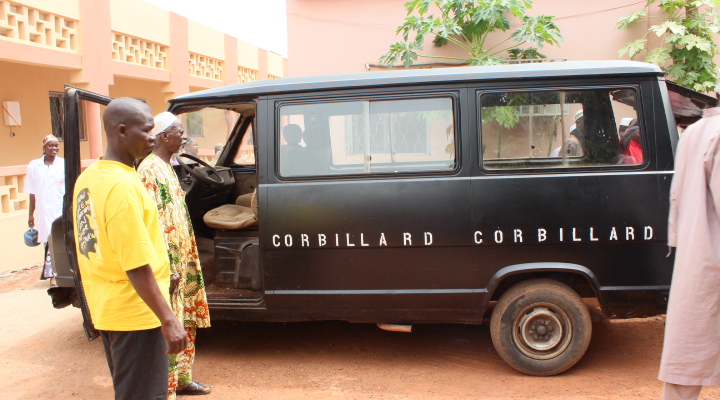
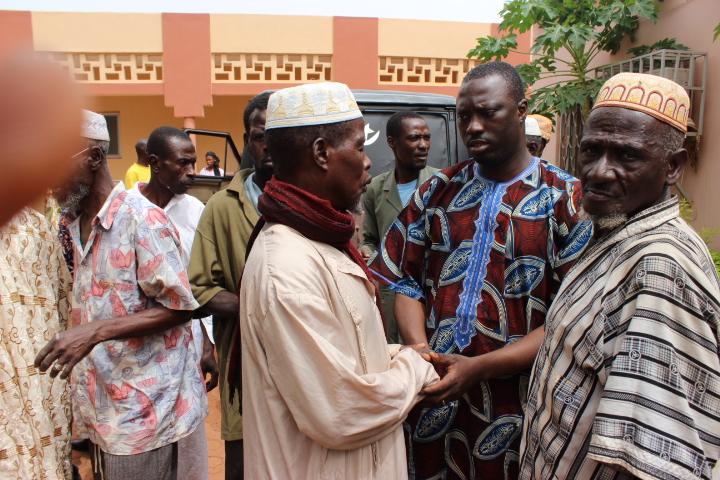
Yeah continues to be busy as ever as Mayor, Director and PACP leader. This past week, there was an inauguration ceremony by the Mayor’s office to donate a hearse to the Ouelessebougou cemetery. As black as this sounds, this will allow the transportation of bodies in a dignified manner. Ouelessebougou is fast becoming a modern city already boasting amenities like running water, electricity and its own bus facilities.
The first hearse in Ouelessebougou
The Imam of Ouelessebougou’s mosque thanks the Mayor’s office for this donation
Party activities continue on a weekly basis as well. Despite the political dilemma Mali finds itself in, PACP membership grows. Their main support comes from the youth and also from individuals like Yeah that are foreign educated and have returned home to Mali. Last week, there was a donation of rice to the residents of Ouelessebougou that were going through difficult times.
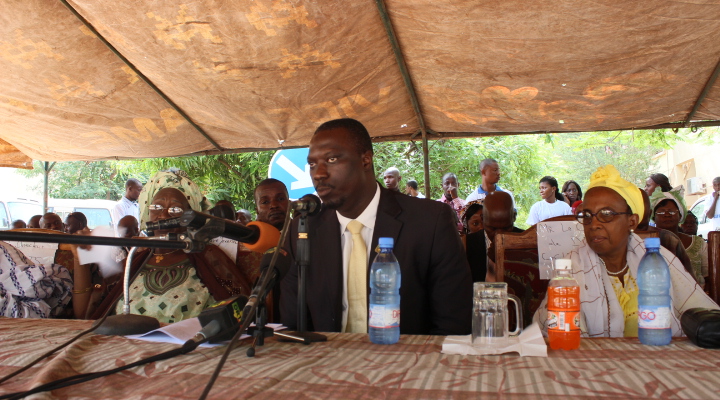
In addition, Yeah continues to work at his foundation MRF. There are two more schools planned for this year. Mali’s education system is struggling at the secondary and higher levels. These schools provide opportunities in villages where children might otherwise not be able to go to school. Just this past week, MRF was honored at The Week of the Students of Social Work in Bamako on June 7th, 2012. The event was held at the Institut National de Formation des Travailleurs Sociaux ( School of Social Work). The theme of the 8th edition of this event was on the humanitarian accomplishments and the guest of honor was the MRF. Yeah, as director, gave a presentation to introduce these students of social work to the importance of activities of a non profit in the field in Mali and encouraged them to work with organizations like this that impact the grassroots level and have the Government’s support. This event, which got media attention in Mali, highlights MRF’s growing importance in the educational and humanitarian arena as well as its visibility in Mali.
A few students of the School of Social Work
Yeah speaks about MRF ‘s work in Mali
All in all a quiet week and an even quieter weekend. Can’t complain about that can we 🙂
This past week has passed in relative calm. The capital has almost gotten back to normal and one would find it hard to believe that a coup ever happened. The junta seems to have backed down completely and it’s probably the sweet deal that Sanogo got for himself that is keeping him quiet. However, I am quite surprised other members of the 500-strong junta have remained quiet, which lends to believe that either Sanogo was really the undisputable leader or the rest of the junta is getting something as well that has been undisclosed. Dioncounda remains in Paris and is supposed to return sometime this week. Life continues in much the same way as it did before. Prime Minister Diarra is attempting to fill his role as leader of the country. He has a great responsibility and many are relying on him to push Mali back on track. Yeah had met with him last week to discuss ideas and solutions on how to get Mali’s issues of leadership addressed as well as the issue in the North. Yeah’s take is that without strong leadership and a plan in the South of the country where the government is based, the North’s issues cannot be resolved.
Last week Yeah also gave an exclusive interview to the well known newspaper L’Independent in Mali where he talked of the struggles in Mali. He advised that Mali should not accept ECOWAS troops on Mali’s soil killing Mali’s people in the North. The solution has to be bred on Mali’s soil. Also Yeah encouraged ECOWAS to work with the political class in Mali. With the issue in the North, Yeah said that it is important to involve well off neighbors like Algeria and Mauritania because ECOWAS does not have the logistics and money to support troops despite them wanting to send troops to Mali. Also the stakes are higher for these countries because if rebels/terrorists overflow across their borders, it could cause instability for them. You can read the entire interview here in English: http://samake2012.com/updates/2012/05/interview-with-malian-newspaper-lindependent/#more-1296 or here in French: http://www.maliweb.net/news/interview/2012/05/28/article,69486.html
For the most part, people are just watching and waiting to see what the non-partisan Diarra will do. As I have said before, as long as their leaders don’t make things worse, Malians will put up with it. Diarra seems to be a calming force amidst the chaos. Malians seem to actually heed his words. For the first time yesterday on National TV, he spoke to Segou soldiers on the issue in the North of the country. “I have always said that I do not support war, because it’s war that makes a child an orphan and it’s war that makes a woman a widow. But if we love our country, we must liberate it even if it’s through war, a war that will end the daily wars. A war that will open the door for peace and security because without peace we cannot have security and without security, there will be no prosperity for this nation,” the PM said. He spoke with the most passion and conviction than I have ever seen him have. He talked of how Mali would not concede any part of its land to the rebels. Talk is all well and good. The thing that is most concerning is that Mali currently does not have an equipped army. The 7000-strong army that is reported by statistics websites like CIA may be correct as far as man count. However, the fact remains that the army lacked the arms before the coup and they continue to lack the arms. To send them into the North without the equipment would be like signing their death sentence. Apparently, Western countries, especially America had given ATT a lot of arms and vehicles to fight off the rebels before the coup. Rumor has it that ATT sold or gifted much of this to the rebels themselves when they initially came over to Mali after Libya’s Gaddhafi fell. There are no reports one way or the other to corroborate the story. Fact remains; the army is defenseless and has the manpower but not the equipment to fight.
What Mali needs immediately is strong leadership in the south that has a plan on how to re-unite the country and ultimately gain back the territories in the North. The Tuaregs are a minority and not even they are in control right now. Control seems to be shared between Ansar Dine, MUJAO, AQIM and MNLA, all terrorist factions. So while the South seems to be gaining some control, the North is struggling with a terrorist problem and a refugee issue.
UNICEF despite increasing the aid it is providing has been warning about the sanitary conditions at the camps as well as the demand outweighing the supply. Ultimately, it will be the women and children that will bear the brunt of this refugee crisis. This refugee crisis started with the drought but has been intensified by the crisis in Mali. The problem has been overlooked long enough as the world’s attentions focused in South Bamako. In addition governments of Mauritania, Algeria, Senegal and Burkina Faso also have to deal with the refugees that fled across the border. One country’s crisis is becoming West Africa’s dilemma. This is just one big mess and it needs the international community to bring light to the growing humanitarian crisis. On the other hand there are terrorist groups operating freely in the North. They are restricting aid and making life very hard for residents by imposing Sharia law. There have also been reports that they are damaging World Heritage sites in Tombouctou that have been around for centuries. Imagine the destruction of the Great Wall of China or the Taj Mahal. As an Indian, I would be angered if anything happened to a symbol of my culture. Even the youth of the North have mobilized themselves, fed up with the lack of leadership from Bamako.
Finally, given ECOWAS’ failed track record to help bring civilian rule to Mali, ECOWAS has designated a new representative from the country of Benin. Let’s hope the new leadership will not bully Mali and cause more issues.
Strong leadership first will allow Mali to resolve this crisis and attempt to resolve the growing issue in the North. The question remains, will Prime Minister Diarra be that stabilizing force that Mali desperately needs and will ECOWAS finally include all political forces in Mali rather than enforcing their will.
This past week has been a huge political muddle. May 22nd was to spell the last day of office for interim President Dioncounda Traoré. A deal brokered by the African nation’s body ECOWAS sought to extend his term for 12 months. Now Dioncounda would have limited powers and the main running of the country would fall in the hands of the Prime Minister Cheick Modibo Diarra.
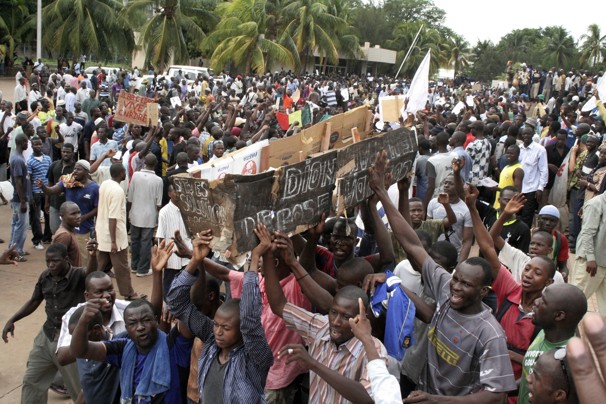
On Monday, protesters unhappy with the forced decision to keep Dioncounda marched on Mali’s palace. There in the heat of the moment, the 70-year old Dioncounda was injured and admitted to the Mali hospital with head injuries. Now people are saying the junta that was supposed to be protecting the President let these protestors in. On the other side, we have also heard that there was a scheduled meeting between Dioncounda and 10 individuals that represented opposing factions. When these 10 individuals came to meet the President and were waved in by the guards, the protesters pushed past as well. Either story while the second may remove the junta’s involvement are hard to corroborate and point to the finer meaning that not even the highest office in the country is safe from protest.
As Bamako watched the news of this attack spread, we were in disbelief. While I am a big believer in democratic process and making your opinion heard, I am also of the belief that human beings need to act like human beings and not animals. In addition, in a society that reveres its elderly, for a 70-year old individual to be assaulted by youth is something that Malians do not take kindly to. That next morning, in secrecy Dioncounda was flown to Paris to be admitted for further testing. That evening, there was another protest held which claimed that Sanogo would be the new President. This protest was only attended by a few 1000 compared to the tens of thousands the previous day. This could mean one of two things. One, many people were shocked that the events of the previous day got so out of hand and also many people felt that Sanogo betrayed them when he took a deal with ECOWAS that bestowed him with an ex-President’s privileges. Sanogo, for his part, other than condemning the violence of the protests, has remained quiet. He as brokered a pretty sweet deal for himself. He would get paid $10000/month (5 million cfa), a house, two cars and a security detail. So the gift he is getting for bringing so much insecurity is very big. In a country so poor, one can only imagine how anyone can get so much money when the average Malian makes less than a $1 a day. The question that also is high on every ones minds is that Sanogo has benefitted but what about the 500+ odd men under the junta. If they feel that Sanogo has betrayed them, then things could get ugly.
This past week Yeah met with the Prime Minister to discuss the ongoing situation. The Prime Minister has condemned the actions of the mob and called on people to be calm using the Bambara word “Sabali” which means “patience” several times in an address to the nation. Yeah also had an opportunity to talk with CNN’s Suzanne Malveaux on the issues in Mali. Take a listen at CNN below. You can also find this on http://samake2012.com/updates/
The North continues to remain in the hands of rebels and the ties that these groups are building are very dangerous to Mali’s stability. Mali’s AZAWAD last week even installed their own President over the North. There has been talk of Mali letting these three regions go. If that happened, I think the outcry in Mali would be huge. These territories not only house the Tuaregs that want their independence but also many other ethnic groups, of which the Tuaregs are a minority. By allowing an independent state to emerge, Mali would be allowing a territory in which groups similar to the Taliban will emerge. In essence Al-Qaeda would be able to get a new playground to harvest various training camps and illegal activities. The entire world will pay the price if the North becomes another Al-Qaeda festering pot. In all this, Malians will pay the heaviest price. With Sharia law already established in Tombouctou, Malians are already being suppressed. Malians in the South need to focus their attentions on the Northern regions. Aid is not the only thing the North needs. It needs freedom from groups attempting to take away civil liberties. If the world wants to get involved it needs to be putting pressure on these groups to pull out. Yeah spoke with CNN’s Erin Burnett about the Northern issue in Mali.
In this entire ruckus, the one thing that remains as forgotten today as it was two months ago is the growing refugee situation. The situation is worse today as the numbers continue to climb. People are living in despicable conditions and while the aid is coming in more now than before, it cannot meet the growing demand. It amazes me that when the earthquake happened in Haiti, the American celebrities put on a great fundraiser and raised a lot of money to benefit Haiti. Probably because Haiti was closer to home. However, the refugee situation has not gained the support of celebrities despite Angelina Jolie being called as a special envoy for the UN High Commission for Refugees. The need is great, the supply is small. Next week, Yeah plans to go to Mopti where some of the refugees are and then later to Burkina Faso. The hope is to assess the growing need and then provide the refugees with some much needed food.
The one thing that never fails to amaze me is the tenacious strength of the Malian people. Through all this, they continue to build their lives, taking in stride the changing forces. As noted before, their faith in their politicians is very low and their belief is as long as the politicians don’t make their lives worse, life will go on. Here it is hard for people to look to the future when their present is so filled with turmoil and hardship. But the Malian people will prevail like they have before. They deserve a much needed break. They definitely deserve better leaders who will give their needs a priority. Mali’s mess cannot be solved by self-serving politicians. It needs honest leadership!
Mali currently stands on the cusp of a big decision to be made. On one side, a deal favored by ECOWAS would be to allow interim President Dioncounda Traoré to serve the next 12 months as President of the transitional government. On the other side, would be to choose a new president during the transition. Mali remains divided on this decision. Many would prefer Dioncounda to leave office on May 22nd as per the Malian constitution. To many, Dioncounda is a reminder of the “old guard” that allowed things to get so bad in Mali, a reminder that Malians would soon like to put behind them.
On May 21st, in response to a forced decision by ECOWAS to have Dioncounda serve as a transitional President, tens of thousands of protesters marched on the palace and brought harm to Dioncounda, who had to be admitted to hospital for head injuries.
Analysis from Presidential Candidate: N. Yeah Samaké
Yeah has always maintained that the solution to Mali needs to come from inside the country. In a Voice of America interview, he said: “Mali needs its partners, but we need to make sure that this is a Malian solution. We cannot make this solution outside of Mali [because] that will be an imposition. We don’t want that and it is not going to be a lasting solution”.
In response to today’s violence, Yeah stated: “These acts are condemnable. However may it serve as a lesson that there needs to be a concerted effort at a solution that is acceptable to all Malians, who believe the act of choosing a President is a sovereign decision. After the violent reactions to the decision made by ECOWAS, we can anticipate a number of outcomes:
1) Follow the status quodecision keeping Dioncounda as the president of the transitional government as his term as interim President ends today. This means that ECOWAS will choose the interim President who will ultimately honor all agreements during the transitional power. The advantage of this decision will save Mali and ECOWAS from the daunting task of bringing Malians together to have a consensual President. It is also conducive to a quick return to an acceptable, seemingly acceptable constitutional order that is a pre-requisite for involvement of the international community. The drawback of the decision would be the sustainability of the solution beyond the 12 months transition. This decision excludes the participation of political leaders who are ultimately going to become the decision makers to upload the agreements made during the next 12 months.
2) The consensual decision. This implies the organization of a national convention that Sanogo and several political players have called for. This will allow for a consensual transitional body that will be accepted by all involved parties. This alternative will ensure a more stable transition supported by all the stakeholders. As a drawback this option may not be warmly received by the international community. As a result, Mali may continue to receive sanctions imposed by bilateral and multilateral partners such as ECOWAS, US, France, World Bank and the IMF. Ultimately the withdrawal of this support would cripple the country from the capacity to resolve the rebellion in Northern Mali.
3) An elected transition President as suggested by ADPS. ADPS is formed with 14 other political parties and their solution would allow Malian political leaders, civil society, and the junta soldiers to be proportionally represented in a 30-person body. Seven representatives of the military, 18 represented from the political parties and five from civil society. This 30-person body will elect the transitional president in their midst excluding the military representatives. This alternative would take the longest to achieve. It may also not receive the blessings of the international community. However the outcome would be the most compatible with the constitutional order. This alternative will offer the most legitimate form of leadership, where the president is actually elected and the remaining 29 members form the legislative body. The legislative body will replace the current Assembly that is reaching the end of its term. This option will resolve the unpopular decision to prolong the term limits of the Assembly which violates the constitution.
So which one is the best option for the Malian people? At the end of the day, Mali as a whole represented by leaders of civil and political society need to come together and decide. Mali’s future cannot be planned by other leaders and countries who are driven by foreign agendas. This solution has to be about the best for Mali and Mali alone.
Yeah would certainly love to hear your comments on which alternative would be your pick.
This weekend has been long and relaxing. With Yeah being back in town, we decided to escape the busy political mess of Bamako for the quiet of Ouelessebougou, where Yeah is still the Mayor. The kids have been extremely excited that Yeah has returned, especially Carmen who now has her teasing partner back. However, life did not get less busy for Yeah as his mayoral duties reclaimed his attention.
The changing weather has aligned with the changing political scene. One day it could rain cats and dogs and the very next day the sun shines so brightly that the idea of rain seems unbelievable. However, the rain has brought some much-needed relief to drought stricken Mali and an early start to Mali’s rainy season.
But while the rain is much awaited and much-needed, the changing political scene has brought about controversial debate. On May 22nd, Mali’s interim President Dioncounda Traoré was to step aside and make way for a transitional president as per the constitution of Mali. Many in Mali’s political circle were in favor of a strict observance of the 40-day rule by DioncoundaTraoré because for many he represented the “old guard” that had failed to protect Mali’s best interest and instead lined their own pockets.
Captain Sanogo congratulates Interim President Dioncounda at his investiture ceremony
For a few weeks, there had been much debate between ECOWAS and the junta. For all their claims of giving up power, the junta has been very much involved in Mali’s political scene, going as far as to arrest politicians they believed to be involved in “threats” against the country. It is interesting to note also that in the past few weeks, journalists have accused them of threat tactics like phone tapping and arresting an editor of a local newspaper. The national TV continues to depict a very strong junta involvement, where they can be seen at events representing the government. ECOWAS was never able to provide the junta with a sense of security that nothing would happen to them if they left power. This may explain the junta attempting to maintain a very strong role in the government.
The debate has now been ended at least temporarily. A new deal was cut yesterday between the junta and ECOWAS. The verdict is that Dioncounda will serve the entire transition as the President until elections are held next year. This makes him ineligible to run for office when elections are held. However, who’s to say this will be honored. His role as President will remain merely as a figure-head. The country will be run by the Prime Minister Cheick Diarra and the transitional government. The interesting thing to note is that Sanogo has come out of this deal better off. As part of the deal, he has been given all the privileges that a former head of state would have like a lifetime salary, a home, bodyguards, and amnesty from criminal proceedings. Given that political leaders have not been involved in the mediation process, should a democratically elected president uphold these agreements?
All the while Sanogo has been stating how the Malian people are first and the minute a deal gets offered that favors the junta and primarily himself, he jumps on it. It is to be noted that the junta was under extreme external pressure from countries in the European Union, the African Union and the US. However, a majority of the Malian people have been adamant that Dioncounda not serve the transitional period as President. He has hardly done anything in the 40 days he has been in power. The North remains as divided as ever and if anything, terrorist groups like AQIM and MUJWA are only making themselves comfortable. The refugee situation gets direr every day and the aid is only getting to the boundaries of these captured zones.
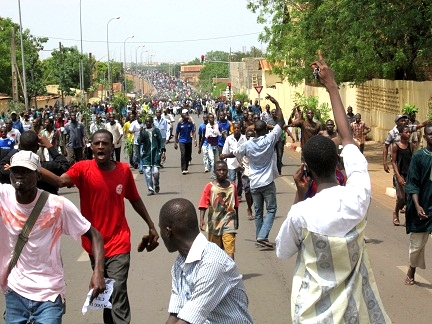
Already, angry protesters have taken to the streets as of Saturday, expressing their discontent with the decision made. Members belonging to groups like APMA and other youth groups have organized a sit in at the monument of independence. Their claim is that they will not leave until Dioncounda leaves power. Today demonstrations continue as people express their discontent. There have been reports of disorderly conduct like burning tires and an atmosphere similar to that after the coup first happened. Dioncounda has been reported to be killed in these protests but there is no verification in that story or the many others that are feeding fuel to the flame. The one thing that is certain is that for most at this stage of the game, it isn’t even about Dioncounda anymore. Many feel like ECOWAS bullied the junta and ultimately most Malians into doing what they wanted done. However some also feel like the junta has let them down by giving in, especially in exchange for favors.
Courtesy of AP reporter Baba Ahmed : Protesters march on the royal palace. Look at the throngs of people
Hopefully, ECOWAS and the international community will correct their mistake quickly for the solution to Mali’s issues needs to come from Mali, not the outside. Only then will true democracy be possible. If the solution is a forced solution where the people feel like Mali’s junta are being held hostage to a decision, then the support will be limited. ECOWAS get Mali’s politicians and leaders involved in our country decisions before it is too late!
On April 12th when Diacounda Traoré was sworn in as Mali’s interim President, the clock started ticking on his 40-day term. His responsibility was to plan when elections would be held and to help resolve the issues of the Northern region in terms of security and the refugees. Diacounda’s inauguration speech was punctuated with severe rhetoric against the rebels of the North, going so far as to even threaten war against them. 30 days into his term, one can clearly see that talk is cheap and that Diacounda has fulfilled very few of the promises that he stated when he was sworn in. This is another reason for Malians to continue to distrust the old guard that has watched over the politics of Mali for the last 20 years.
To be fair, I should say that his task is no easy task. The task remains difficult to reunite a country in which not only the North remains separated by the South, but where different political parties have been reaching out in different tangents. The situation has not been helped by a counter coup attempt by the ex-President’s loyalist forces. Nor has it been helped by threats from ECOWAS on deployment of an army of 3000 foreign soldiers on Mali’s soil to help gain the territory back but more importantly make sure the junta returns to the barracks. These threats have in effect gone against the April 6th agreement between the junta and ECOWAS and have caused great anger among the junta, who see the constitution of Mali being changed by foreigners and power quickly slipping away. By extending Diacounda’s 40-day mandate, the constitution that was quoted when the coup first happened, will in effect be violated. After the whole rigmarole about violating the constitution initially, it seems like a farce for it to now be violated to serve external preferences.
I have seen Diacounda do little in these 40 days other than meet with individuals that cannot influence the course of Mali’s future. The important task of gaining back Mali’s northern territories seem pushed to the back burner. Even more crucial, the refugee numbers have now swelled to 235,000+ with numbers getting higher each day. The US State Department has in effect stated that they hold the junta directly responsible for the mounting suffering of the Malian people. While the junta has contributed to the issue, to blame them whole heartedly seems unfair. There have been many players who could be blamed for the situation in Mali: the old guard ATT, the politicians that have been on the scene for 20-30 years, the junta, the flip-flopping young politicians that go where the power is and also foreign interests.
Now, the one thing that might explain Diacounda’s relative lack of media presence is that the junta still controls the national TV. Each evening the screen is filled with events that seem to embolden the junta’s presence at community events. It is almost as if the stage is being set for them to take over when Diacounda’s 40 days is over. This is something the international community and especially ECOWAS (the body of African countries) would prefer not to happen. By establishing military rule, the junta would be returning the country to a similar period 20 years ago before democracy was established. The events in Mali have already proven that Mali’s democracy was a superficial one with leaders lining their pockets and fulfilling personal ambitions rather than truly answering the needs of those that put them in power. Captain Sanogo, the military leader, has already shown that he has the ability to gain the support from the Malian people that has lacked for so long. However, the constant quashing of the national TV does not bring any comfort and is an early indicator that dissenters could be silenced.
Just last week, I was headed to the PACP headquarters right by ex-Prime Minister Modibo Sidibe’s house. Modibo Sidibé was the one rumored to have stolen a lot of money and used even more to finance his Presidential campaign. He has already been arrested twice by the junta. As I was there, I saw few motorcycles carrying heavily armed guards. They were hunting for Modibo. The first thought that entered my mind was, “Why are you here. Should you not be in the North protecting your people?” It seems more and more that the junta is using the military to advance their personal protection and needs.
Nevertheless, the people of Mali remain embittered by the past 20 years of ineffective democracy and regardless many people see the junta as the lesser of two evils. Especially, since they provide a non-politically affiliated group that ended an ineffective democracy. Sanogo is viewed by many in Mali as a leader, and this is an impression that will not be dispelled anytime soon. I wouldn’t be surprised on May 22nd if the junta reclaims the Presidency and Sanogo remains in power till elections happen next year.
I cannot decide if this is a good thing or bad thing. While this is not an ideal solution, most other solutions will cause further unrest and delay a resolution to the important issues gripping the North. For now, Mali seems to be biding its time with Diacounda, waiting for a true leader to emerge to take the reins of the country. Hopefully the new transition leader will be one that makes more progress than the country has seen in the last 30 days with the least amount of unrest.
10 more days till the hourglass turns once again in Mali to begin the next phase towards determining Mali’s future.
The weekend has passed in somewhat of a peaceful manner despite isolated, unverified reports of gunfire in central Bamako.The ECOWAS rhetoric has now moved from forcing troops on Mali to stating that troops will only be deployed if the Malian government gives the go ahead.
Yeah spent the last week in Salt Lake City trying to raise awareness and also continue to raise funds for the refugees and his campaign. Thank you to Adele Kammeyer and Susan Escalante for helping arrange a meet and greet and a cottage-style meeting respectively! This coming week he heads to New York, DC and Boston to do much of the same, especially meeting with Senators that oversee America’s foreign policy.
As Yeah remains busy in the US trying to meet with individuals and American leaders to raise awareness on the situation in Mali, his party PACP continues to make leaps and bounds here.
As turmoil embroils the lives of the basic citizen, PACP continues to do the things that might improve these citizen’s lives. Today saw such an opportunity. Bamba, a local businessman, spent some time with a group of women teaching them skills that they can then market. For example, he taught them about micro enterprise that would help finance businesses and also how to make fabric and peanut butter.
This kind of entrepreneurship is essential to helping Mali’s individuals make a living for themselves in a country where jobs are scarce and the likelihood of making more than the $1 is incredibly low. May many such meetings happen and may women finally get a break from the hardship that has become their lifestyle.
Join us on our journey as we attempt to affect change for Malians. On July 29th, we will be running for the 2018 Presidential elections in Mali. Be part of our journey at www.yeahsamake.com
You can also Follow our foundation's work at www.empowermali.org








 Moving Mali Forward