RSS

The hope of a nation

This afternoon, as I drove to pick my kids up from school, something caught my eyes. I saw two boys about Keanen’s age (six) hanging outside a private school. These kids had backpacks and to many it would look like these kids were just school kids. However as my car neared, I noticed the baskets these kids had on their heads. The back packs on their backs were not filled with books, but wares as they sold to anyone coming out of the school. To me it was another constant reminder of the sad reality of education in a country like Mali.

Mali is the second poorest country in the world and if one thing has been sacrificed year after year and generation after generation, it is the education system. While many government agencies claim the literacy rate is 46%, seeing the high number of children that beg on the streets or sell items, the number seems exaggerated and inflated.

In a country like Mali, aid organizations are plentiful. And for that I am grateful. However the Malian people are not asking for a handout. Life has dealt them a cruel set of cards and they are doing the best they can. What I, in my heart of hearts, believe is that my Malian brothers and sisters want a hand up. The only thing that will change this cruel fate at this stage is education.

The Malian education system is in shambles. Last year, at the high school and university level, the schools were closed down for more than half the year due to teacher strikes. Not only that, there are not enough schools at all levels to meet the demand. It is not uncommon in Mali to see 100-150 children in one class. In Mali, children don’t worry about what they will wear to school or even if they have the newest Disney backpack. Malian children worry about where they will go to school or will they be able to even go this year since their school is miles away.

It is in answer to this need, that Mali Rising Foundation was created. Two men, Adrian Escalante and my husband Yeah Samake, saw the deep need to have an organization that could answer the growing need for education for our young minds in developing countries. Today, the foundation has built 12 middle schools and 1 elementary school. The Mali Rising school in Lofine, Mali is almost completed and as soon as that is done, they will begin work on the Neways Academy school.

Now, we have the chance to build one more school this year through the Cultivate Wines Give program. It takes about 20,000 bricks to build a middle school in Mali, West Africa. Today, I am asking all my readers to contribute 40 bricks. How you might ask?

One vote= one brick figuratively speaking. Would you be willing to Vote each day till October 31st to help the Mali Rising Foundation win $50,000 to build its next school. Can you help Mali Rising get up to 20000 votes. Its sounds impossible so let’s start with one–yours!

VOTE EVERYDAY @ www.malirisingfoundation.com

The only two prerequisites are that you must be 21 and have a Facebook account.

To whom much is given much is expected. I have been blessed to have a good education. My children, because of my and Yeah’s education, have been blessed into good circumstances. I believe the children of Mali deserve the same opportunity to affect their own future. Please bless their lives.

1 minute of your time will affect their lives for generations. I am not endorsing the product/company but I know that the bigger picture I see has the need for one more school and blessings for one more village.

We all leave a carbon imprint behind. What will yours be?

 
2 Comments

Posted by on September 20, 2012 in Past Posts


Tags: , , , , , ,

Helping affect Mali’s future

Since his appointment as Special Envoy to the Prime Minister of Mali, Cheick Modibo Diarra, Yeah has indeed been one busy man. Yeah’s main goal as he has met with representatives from Bahrain, the US and Mali has been one and that is to create a common understanding of Mali’s current situation and how the present government is planning on creating political stability.

Yeah met with the Ambassador of Mali to the United States in DC, Al Maamoun Baba Lamine Keita, sharing his insight into the Malian situation and the reasoning for the removal of the previous President ATT. They also discussed the need for increased collaboration and understanding between the U.S. and the new government in Mali in the hope of removing sanctions against Mali, so that aid could once again start flowing to the people that desperately need it.

Yeah also met with two members of the U.S. Senate. First, he met with Senator Michael Lee, a member of the subcommittee on African Affairs. Then, by recommendation of the U.S. Ambassador to Mali, Yeah also met with Gregory Simpkins, a staff member for the U.S. Congress and a prominent journalist in African Affairs.

In August, Yeah visited Bahrain which is home to the US 5th Naval base, where he was received by members of the royal family. His visit allowed him to inform Bahrain of Mali’s situation and the need of investment leading to the creation of a bilateral agreement between Mali and Bahrain. Upon return to Mali, Yeah extended an invitation to former U.S. Ambassador John Price, who has been very engaged in African politics.  Ambassador Price visited Mali from September 6th-12th.

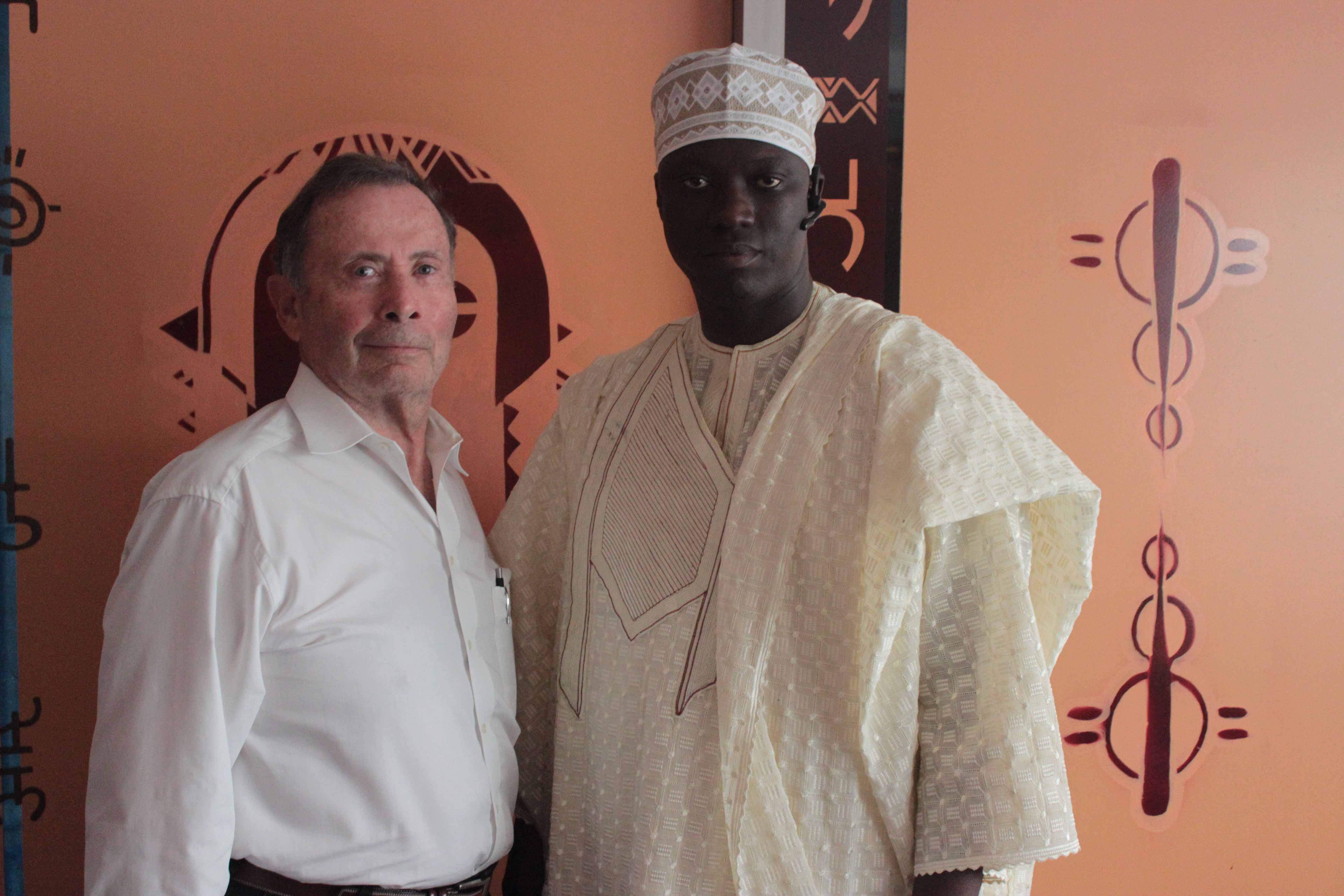
Ambassador Price with Yeah

Ambassador Price’s visit was indeed an important one as it is important for people in the West to actually experience the situation in Mali rather than just read about it. Ambassador Price and Yeah got to meet with many key government officials in the defense, foreign and judicial sectors. Yeah was also able to secure a meeting with the man responsible for the mutiny back in March 2012, Captain Sanogo. You can read more about Ambassador Price’s opinion on this and other meetings on his blog: http://www.ambassadorjohnprice.com/captain-amadou-sanogo-a-hero-or-mutineer/2362/

Yeah and Ambassador Price also had the opportunity to visit the Malian refugee camp in Mentao, Burkina Faso. The visit will allow for a better foreign understanding of Mali’s actual situation and not as perceived by the media.

In Mentao, Burkina where we hope to distribute some aid soon

This past week has seen Mali put in a formal request for foreign troops from ECOWAS to come assist in the North. There seems to be a split opinion among Malians about whether ECOWAS troops are welcome on Malian soil. There has been a report stating that Sanogo and people close to him are against the decision by the President to invite foreign troops. The truth however is far from it, as Sanogo himself, appeared on national TV in an attempt to dispel these rumors. I guess time will show how the situation plays out. For now, there is no way for the Malian refugees to come back unless the North has been ridden of rebels. Each day there are fresh reports coming out that show atrocities in the North. Everyone is too afraid to go to that region and would rather desert everything for safety.

These past two and a half months have been busy as Yeah continues to reinforce the diplomacy and presence of Mali throughout the U.S. and other countries. The work is not over. It has barely begun and will continue until Mali once again is a democratic country.

We need your help. We cannot continue doing the things essential to restoring democracy without expending financial resources. If you can help support our work, then please help at http://www.samake2012.com. Mali deserves its chance at democracy and freedom.  

( Thank you to Liz Jessop for helping me write this post :))

 
1 Comment

Posted by on September 16, 2012 in Past Posts


Tags: , , , , , , , , , , , , , , ,

What’s in a name?

This past month, my driver Zhu added a baby boy to his clan of 10 kids. The name he gave to the boy was Niankoro Yeah Soumaoro, in honor of Yeah. It made me reflect about the importance of names, especially last names, in Mali and one of the finer distinctions of the Malian culture. In Mali your name means everything.

Mali is a culturally diverse country comprised of many ethnic groups. The Bambara form the majority group and their language is the dominant language in Mali. The Malinke (Maninka) and Khassonke occupy the West. The Fulani/Peul/Fula people are nomadic herders. There are Senoufo and Manianka in the South and Songrai, Dogon and Tamashek in the North. With all this diversity, one can only imagine the cultural richness and different pasts that have been merged into one to give you beautiful Mali. Your ethnicity determines your name. Diallo, Bah, Barry, Diakite, Sidibe and Sangare are all Fulani names while Dembele, Sissoko, Diarra, and Traore are shared among the Malinke and Bambara. Coulibaly is also another common last name. My last name, Samake, is a common Bambara name. Certain family names are also best known for certain things. For example, the Koites are griots, record keepers of Mali’s rich history. Dansockos and Bagayoko are best known as blacksmiths.

The most interesting part, however, are joking cousins. Sinankuya is the relationship between “sinankus” (joking cousins). In Mali, it is common to hear joking insults based on your name. It is believed that in the 13th century, King Sundiata Keita created the joking cousins as a way to reduce tensions between the different clans and ethnicities. Who knew that it would carry this far and is one of the reasons for the peacefulness between Mali’s many ethnic groups today. The insults may appear childish to a foreigner, but to truly master them is a sign of cultural integration and acceptance. Bean jokes are very common. You might wonder what is so funny about beans. Well, beans make you pass gas and fart jokes seem to be universally funny. Samake means male elephant and so sometimes you can be teased for being fat like an elephant. Keitas are teased for being peanut farmers.  The Coulibalys however are teased by everyone. Even calling someone a Coulibaly is considered a joking insult. When you first meet someone they will usually ask you your last name to determine if you are a joking cousin. A conversation may go something like this:

Me: Good morning.

Coulibaly: Good morning. What is your name?

Me: Fanta Samake.

Coulibaly: You Samakes are bad. You eat too many beans. You need to be a Coulibaly.

Me: Oh no. We Samakes are good. All Coulibalys are our slaves. You are my slave.

The conversation breaks down at some point mixed with laughter. Conversations like these are common, non-personal and non-threatening, and beautifully unique to Mali. Foreigners who come to Mali are usually given a Malian name. When I first came to Mali, I was given the name Fanta Samake after Yeah’s aunt.

By being able to participate in such a joking conversation in Bambara, I have learned that it quickly gets you farther in Mali. Malians see it as a cultural acceptance of their way of life. There in forms a mutual understanding. And a sense of belonging.  

 
4 Comments

Posted by on August 26, 2012 in Past Posts


Tags: , , , , , ,

Progress for Mali: A unity government is formed

These past few months has seen Prime Minister Cheick Modibo Diarra’s government struggle to gain the support of other parties and political leaders who felt that they could do a better job. There has been a general feeling among the political class in Mali that Diarra is incompetent. The crisis that Diarra gained is one that cannot easily be solved. He may, however, be the one reason that this country has not collapsed further and seen more internal damage after the President was attacked by pro-coup supporters. Interim President Dioncounda reaffirmed his faith in the Prime Minister by calling on him to present his suggestions for the unity government.

Two days ago, in a step towards returning Mali to democracy, the new unity government was announced. The new government still includes PM Cheick Modibo Diarra but has been expanded to include 31 ministers, four of whom are women and five that are Captain Amadou Sanogo loyalists. The goal of this new unity government remains the same as before. First to regain the lost Northern territory and second to organize elections. The government formed is a mixture of different political parties and members of civil society. While there was an interim government in place led by PM Diarra, the political parties’ infighting caused much harm to possible progress. It is hoped that the unity government which will be accepted by the African Union will work towards regaining Mali’s North. Already talks are underway with ECOWAS to deploy a 3000-strong army to the Northern regions.

What does this mean for Mali? The one thing that stands clear through this whole occurrence starting with the coup, has been the Malian people’s desire for democracy to be restored. Just last week, there was a 50000 strong rally as people called for the unity government to be formed. The unity government is a positive step in the right direction. Let’s hope that they will be the force needed to regain the North.

Meanwhile, Yeah remains committed to continuing the fight to return Mali to democracy. Each week, his party PACP holds meetings. Attendance has grown since the coup. The meetings are a reinforcement that Malians want to be part of the political process and they want a leader that will not abuse power. PACP was called upon to offer its suggestions for ministers to serve in the unity government. Mali is on the right track. Now more than ever, we ask for your support

If you can support us as we continue this fight, please do so at http://www.samake2012.com. Every little bit helps us continue the meetings and rallies to keep the Malian people informed of their rights.

This slideshow requires JavaScript.

 
1 Comment

Posted by on August 22, 2012 in Past Posts


Tags: , , , , , , , , , , , , ,

Aw Sambe Sambe!

As we drove back to Ouelessebougou this past weekend, we were looking forward to celebrating the end of Ramadan, a month of fasting for Muslims. The traffic and the high number of cattle being sold were a tell tale sign of the upcoming celebration as Malians busied themselves preparing for this important event.

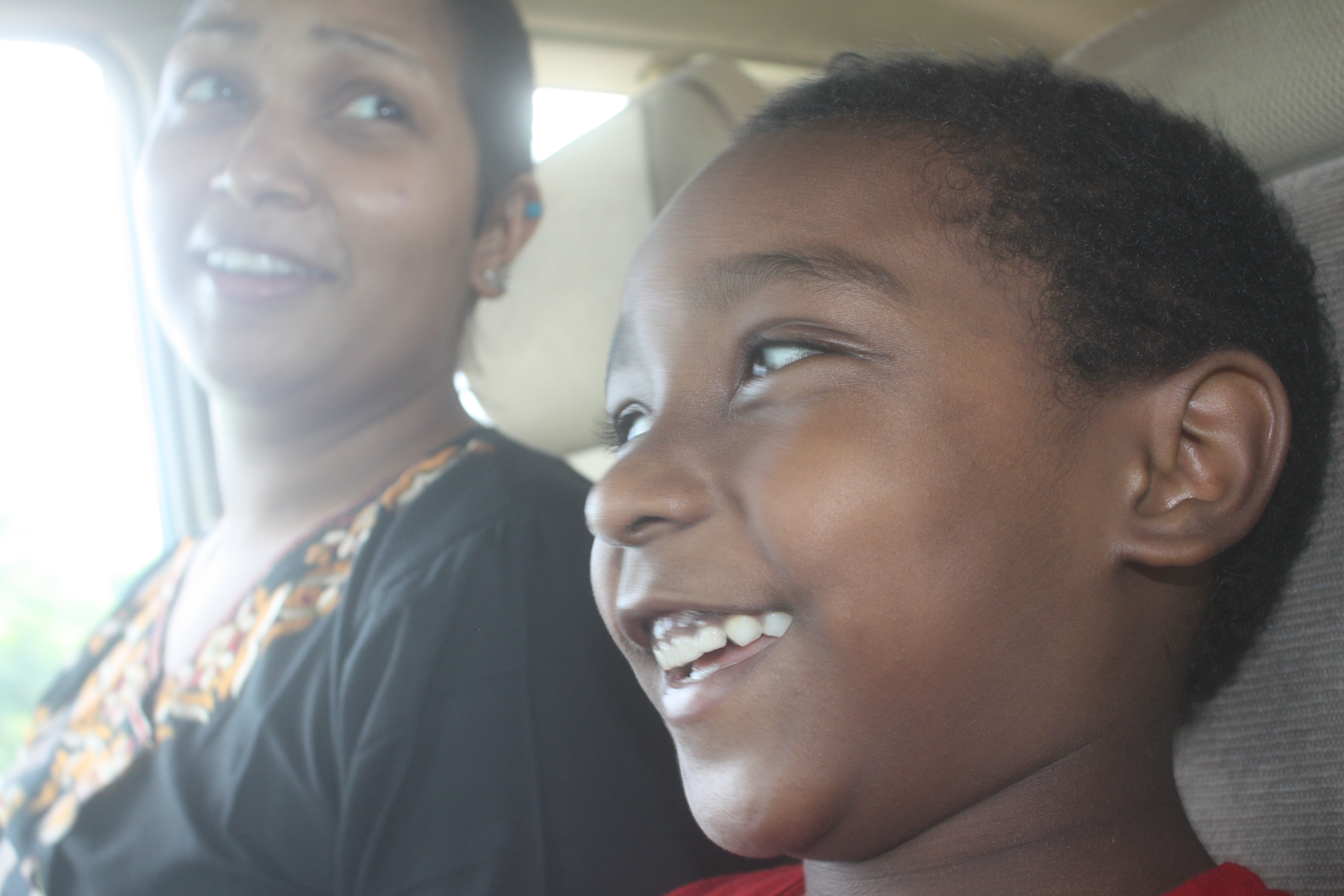
On our way to Ouelessebougou. All smiles.

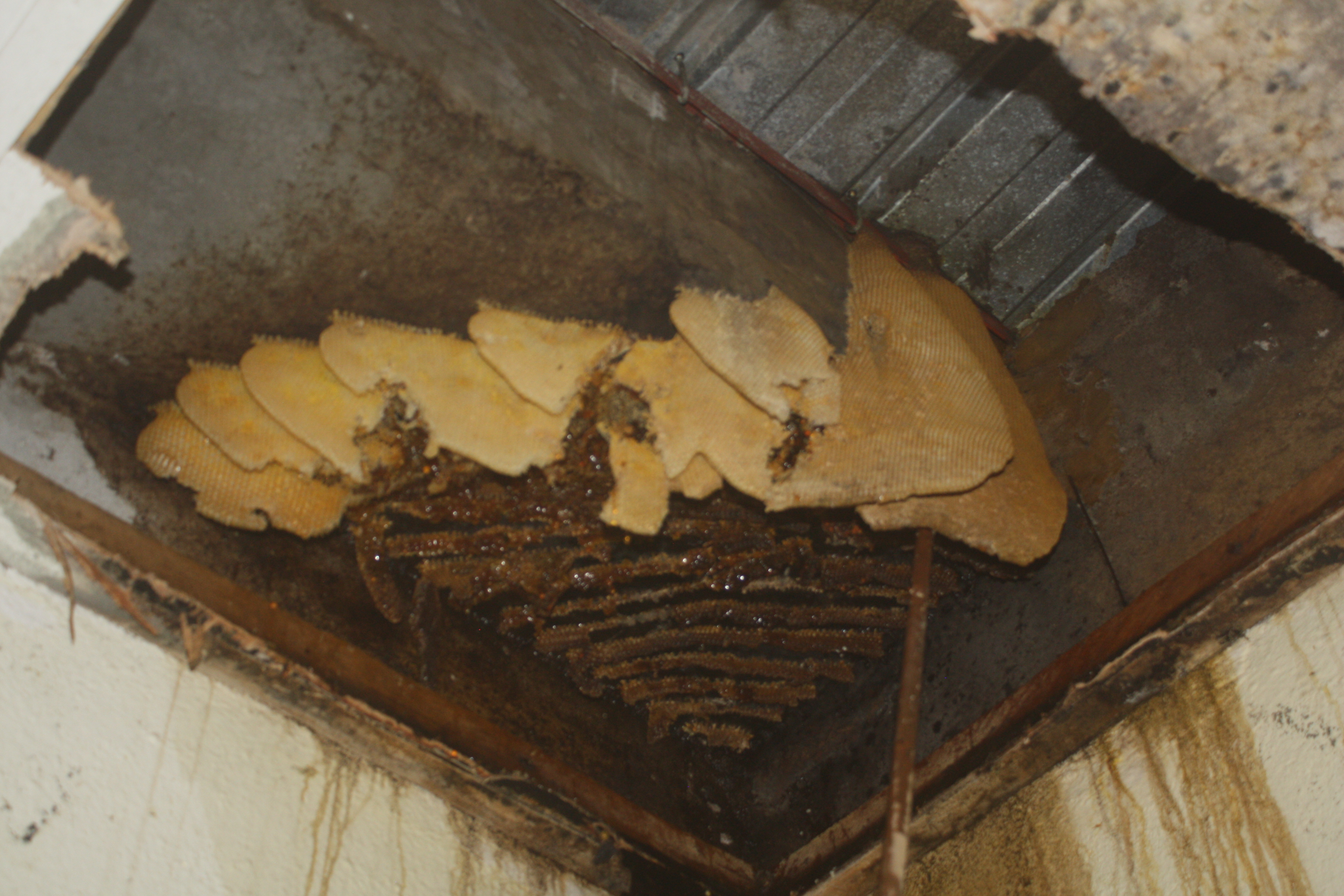
he first thing that greeted us at our house in Ouelessebougou was a collapsed ceiling. The high amount of rain in the past month, while a welcome break for drought stricken Mali, had caused one room’s ceiling to fall in. That was not even the worst part. As the carpenter took the roof apart, the room filled with a swarm of bees. There had been a hive in that part of the roof. Within minutes, the buzzing of bees could be heard through an open window in the house. Being the eve of the celebration and the 100s of bees, the carpenter was unsure of whether he could fix the roof in time before nightfall. It looked like we would be returning to Bamako. However, a little insecticide took care of the bee problem and the carpenter Sunkalo was kind enough to come back and fix the roof even though it took him till 10 pm to do it. My driver Zhu and the boys that help me Dra and Nouman made a feast of the hives and honey. I guess one man’s cast offs is another man’s treasure. 🙂

Enjoying the honey

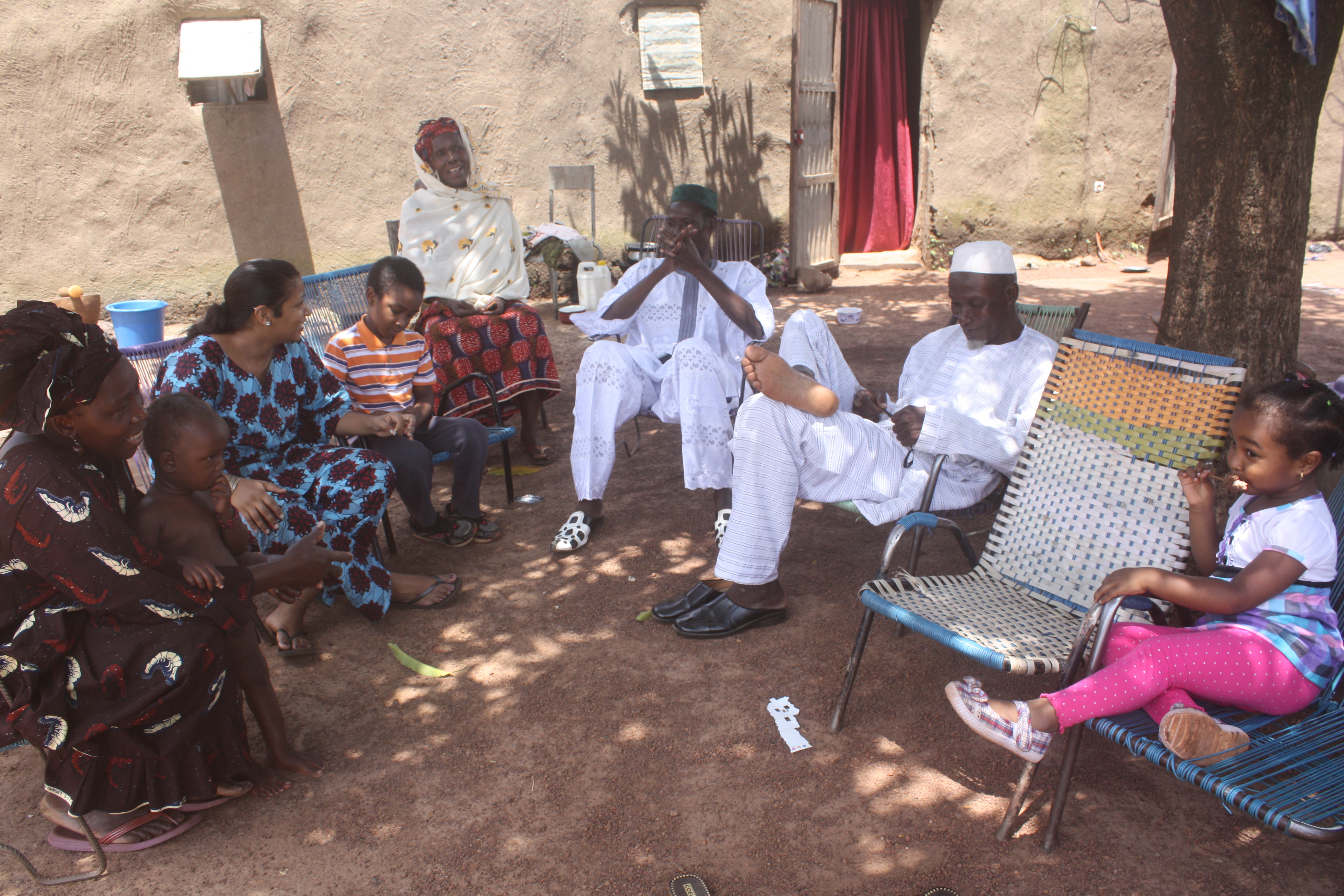
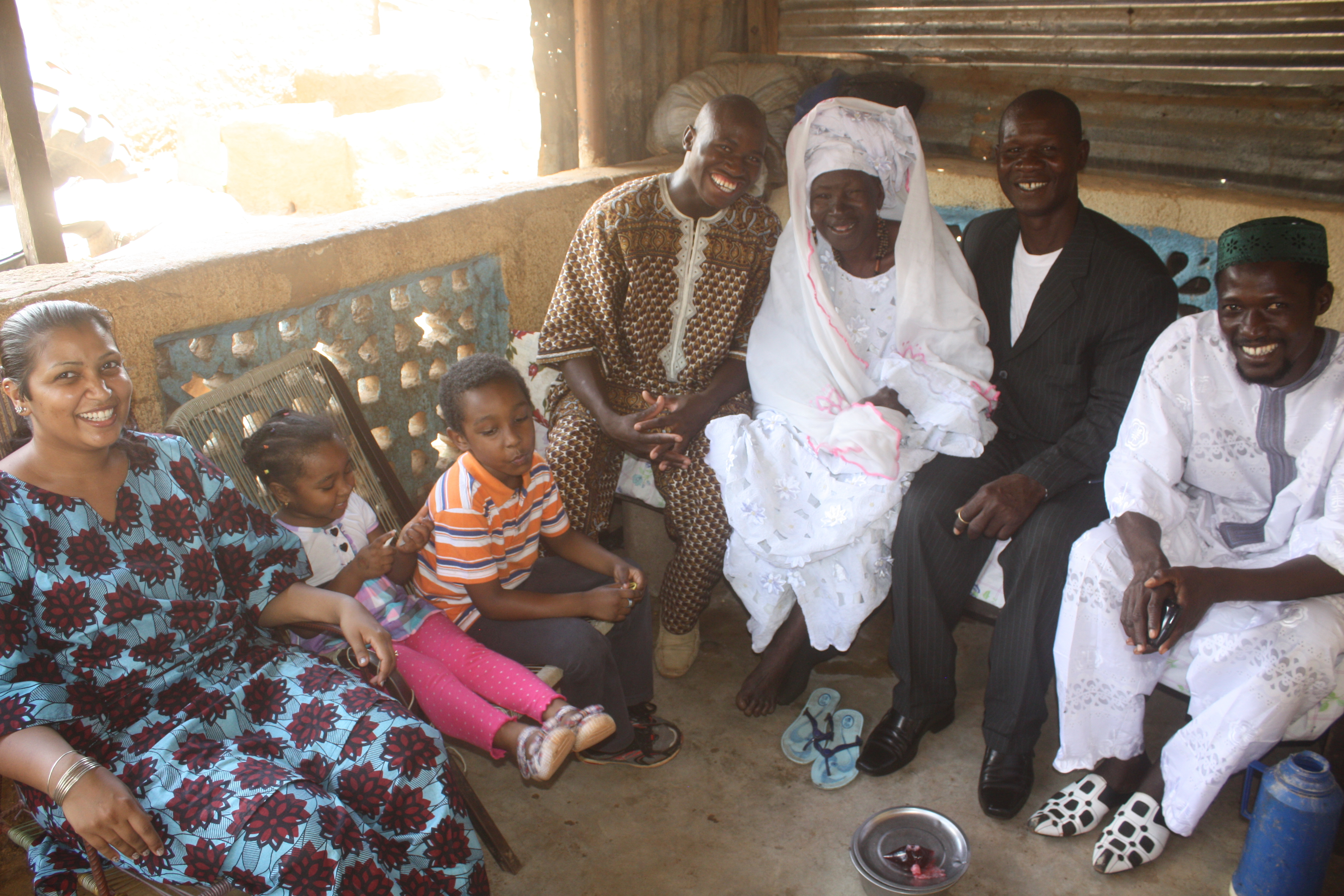
The next morning proved to be a beautiful one as millions of Malians woke up to celebrate the ending of Ramadan. The greeting of “I Sambe Sambe” and blessings accompanied by jovial teasing between family members could be heard ringing through the streets of Ouelessebougou. We celebrated the day with my brother-in-law Bei and his family. I had not seen them for a few months so it was nice to catch up with Momuso (Yeah’s second mom) and Tenemuso (Yeah’s aunt). I can always tell how much the kids and I are missed and loved by the look in Momuso’s face when she sees us at the compound gate. Regardless of the fact that she does not understand the kids, they have taken to her and her to them. The day was spent with greetings and visits to other family member’s compounds. The idea of family and its importance in Malian culture is so evident during feast times. Any money you give to one family member goes to the whole family. Also family member’s children are usually given money while all other children usually get just candy. Families celebrate by eating together and the day is one for visiting and paying your respects to different members, young and old. It is beautiful to be drenched in family and blessings and I have realized how much I have come to love and accept this new tradition.

Talking with Momuso( which means Grandma in Bambara) and Tenemuso( which means Aunt in Bambara)

Visiting Yeah’s uncle

Visiting Yeah’s third mother

Popsicles for the hot day

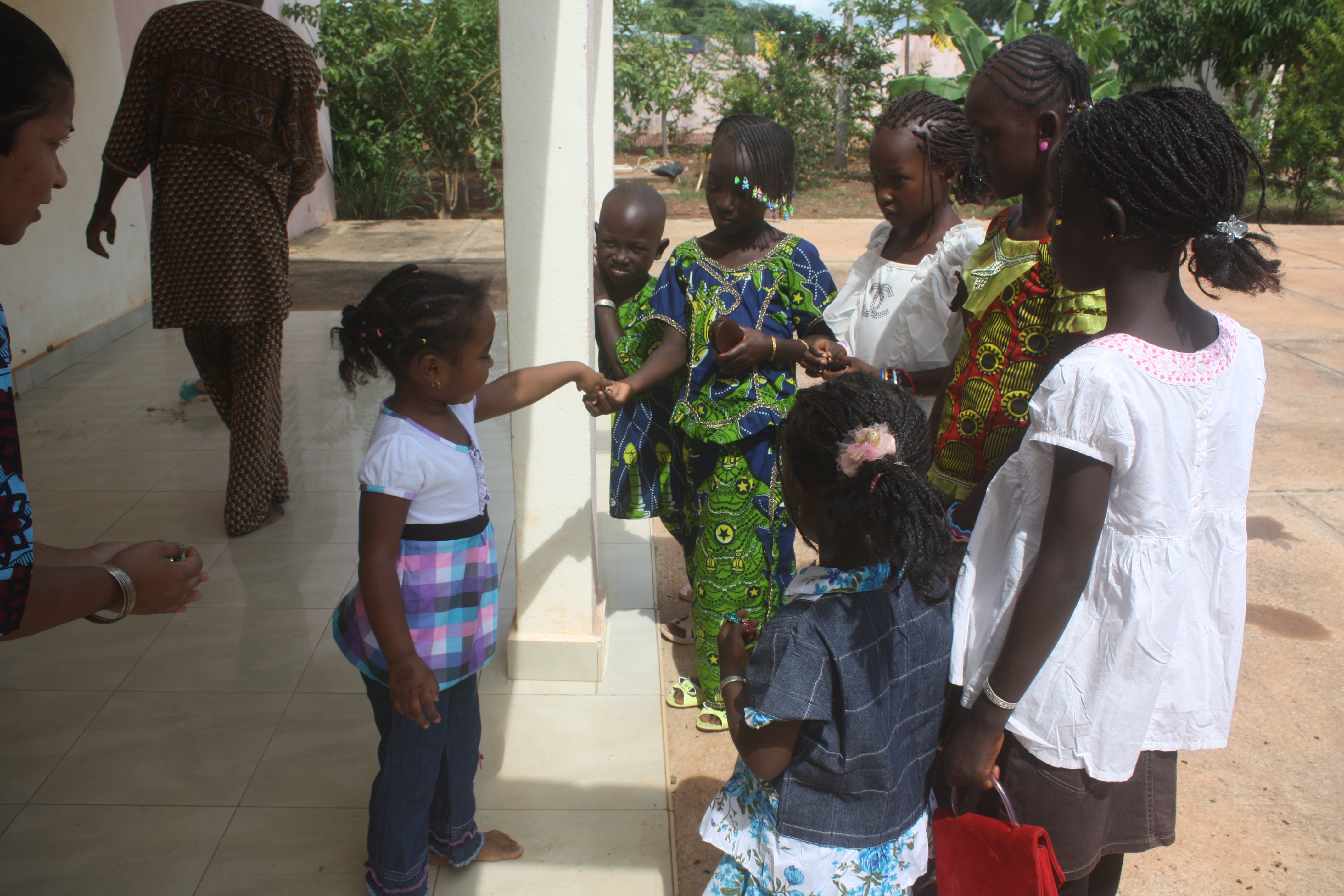
When we got home, there was a steady procession of young kids that came to pay their greetings and spurt out blessings in return for money and candy (almost like Halloween). Keanen and Carmen had a blast handing out the candy. The experience highlighted for me how much they have grown in just one year. Last year, they would not have heard about handing out candy. This year they were volunteering! Even fiery little Carmen! At Bei’s compound, they ran around like the other kids chasing chickens, eating brochette (meat on a stick) and exploring for treasures. The experience in Mali has taught them much. However, I think, because of how much they are blessed with, in their own childlike way they acknowledge the stark difference in the fortunes and are happy to share. May their kind hearts rub off on me so that I may learn to be as generous. Mali is teaching my children to remember how blessed they are and how they should try and share those blessings.

Handing candy out to the kids.

To my Malian brothers and sisters, I wish you: “Aw Sambe Sambe. ‘Ala ka san wɛrɛ yira na’ May next year be better than last; ‘Ala ka hɛrɛ caya’ May God increase your peace; ‘Ala ka batow mine’ May God answer your prayers’; ‘Ala ka kɛnɛya soro’ May you be healthy. Ala ka san caman yira an kene la (May God give us many years of health); Ala ka yaf’u ma (May they forgive us); Ala ka yafa an bema (May we be forgiven)

This slideshow requires JavaScript.

 
1 Comment

Posted by on August 19, 2012 in Past Posts


Tags: , , , , , , , , , ,

Coming Home

In December 2002, I left my home in Bahrain to go pursue my college education in Utah, America. At that time, I did not think I would be gone for more than a few years. However, that was not to be. As life, love and two kids happened, trips to Bahrain were postponed. Each year, I said to myself, next year. I will make it next year. Each year, something happened that postponed the hope. This post is filled with words like “amazing” “great” and “awesome”, and to be honest there are few words that could describe this trip.

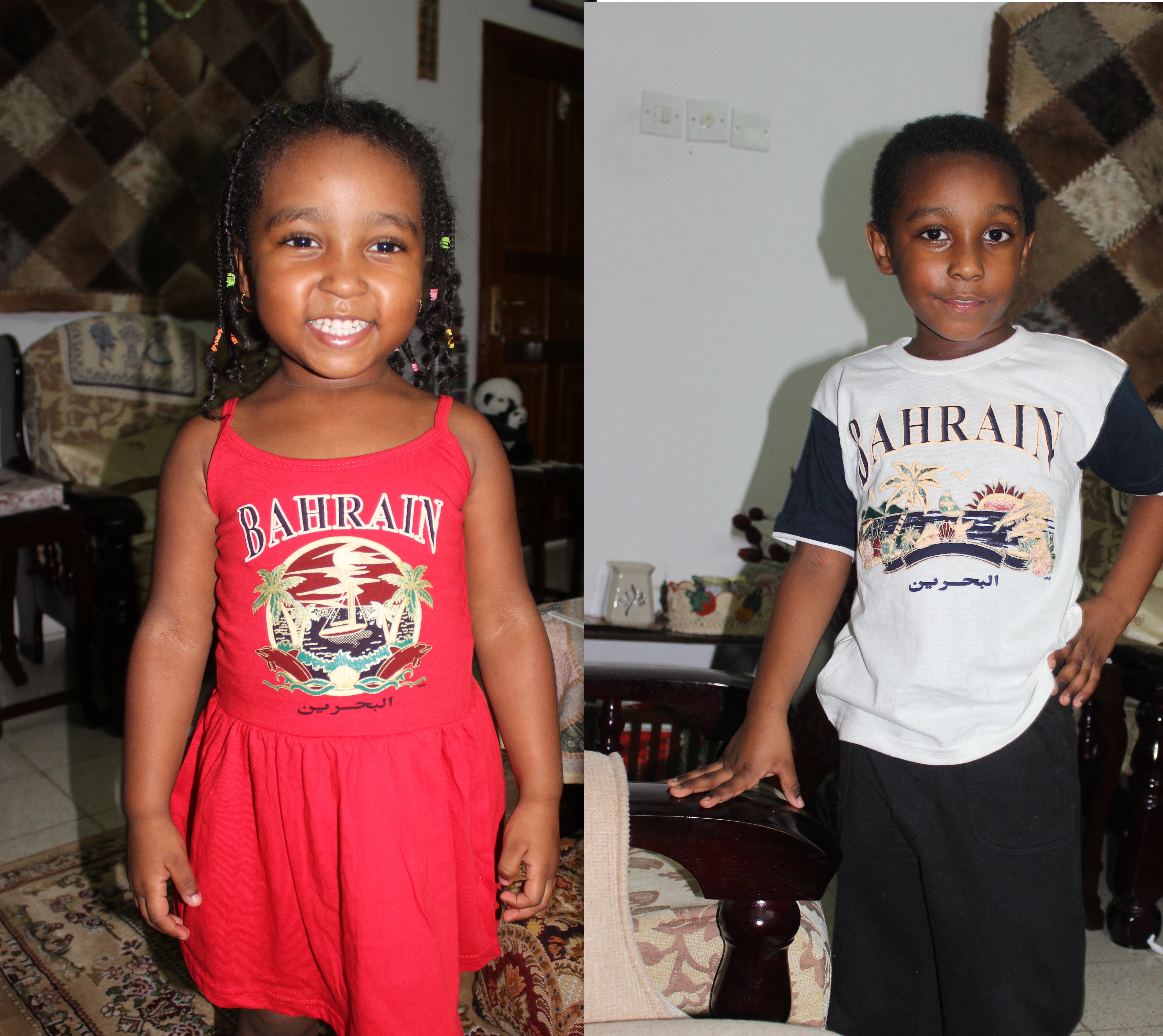
Last month, I finally returned home. I was so happy to see the country I had been born in and spent my growing 20 years in. More than that however, I saw my dad again after 10 years. The trip was very reminiscing for me as I saw places and people that I had not seen for a very long time. It was amazing too to finally introduce Yeah to my life so that he could see the past that had made me what I am today. The kids too had never been to Bahrain and had met my mom when they were much younger and never met my dad. My parents were so excited to see their only grandchildren and needless to say spoiled them rotten. The kids had a wonderful time.

Grandma Margaret

Grandpa Moses

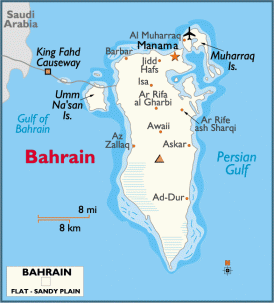
Bahrain has changed immensely since I left. The country, which is home to the US Fifth Naval base, is also oil rich. Bahrain is known as the Pearl of the Gulf for its beautiful cultured pearls. It houses a rich mixture of people from many countries and the expatriate community remains the majority compared to the Bahrainis. Growing up, I had the wonderful opportunity to mingle with people from different cultures and countries. The scene has not changed much in terms of Bahrain’s diversity. If anything it has intensified. Bahrain’s own culture has been very much affected by the explosion of people from different countries that call Bahrain home.

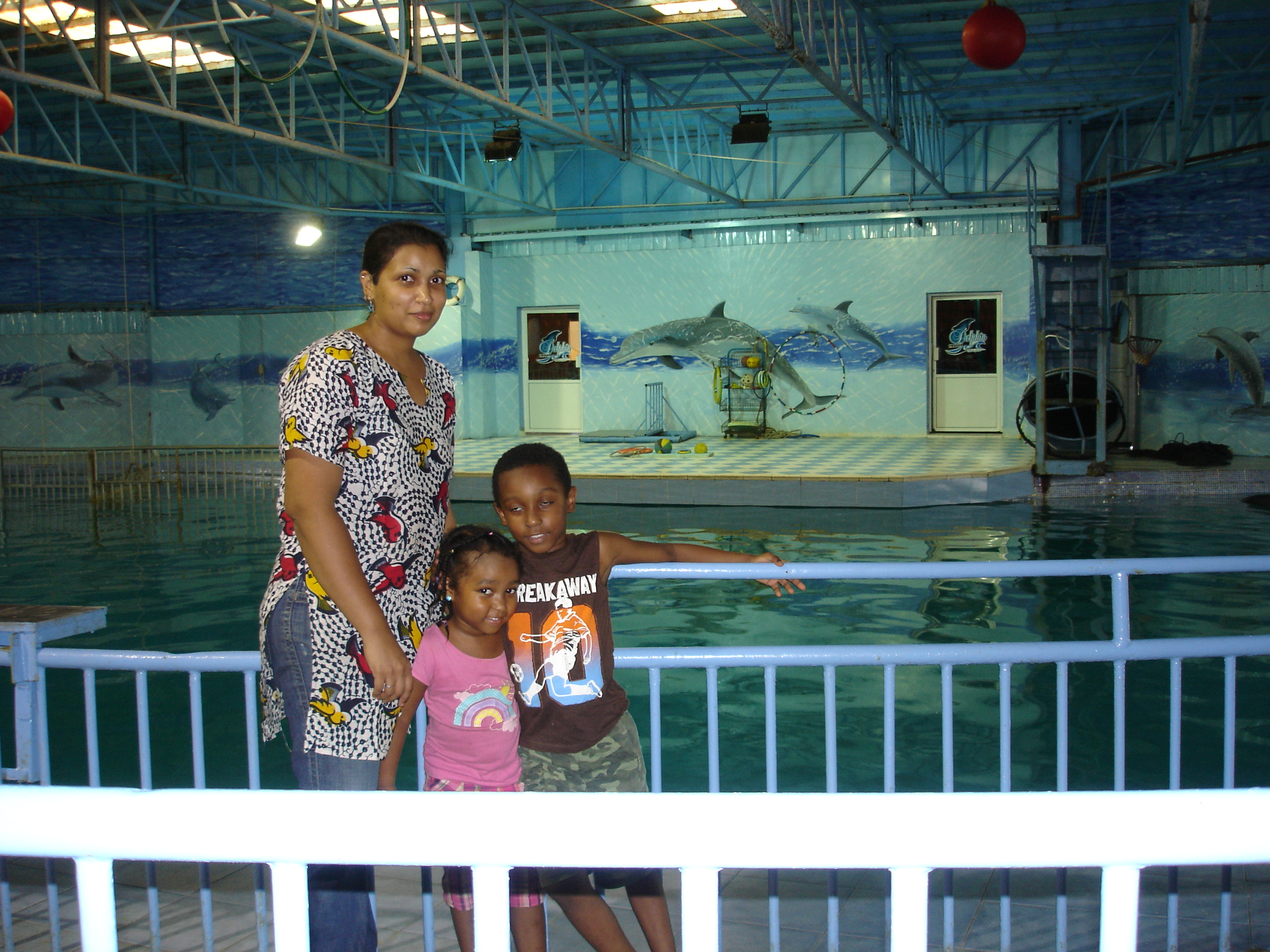
Despite the temperatures climbing easily to 43°C(110F) and 27% humidity, we kept ourselves occupied with visiting my parents and friends. We also got to go to a dolphin park, the Al Areen wildlife reserve and some ancient ruins in Bahrain. Visiting Bahrain’s only public beach Zallaq (Al Jazaer Beach) brought back a lot of fun memories and it was a beautiful thing to share that experience with the kids.

At the Dolphin park in Bahrain

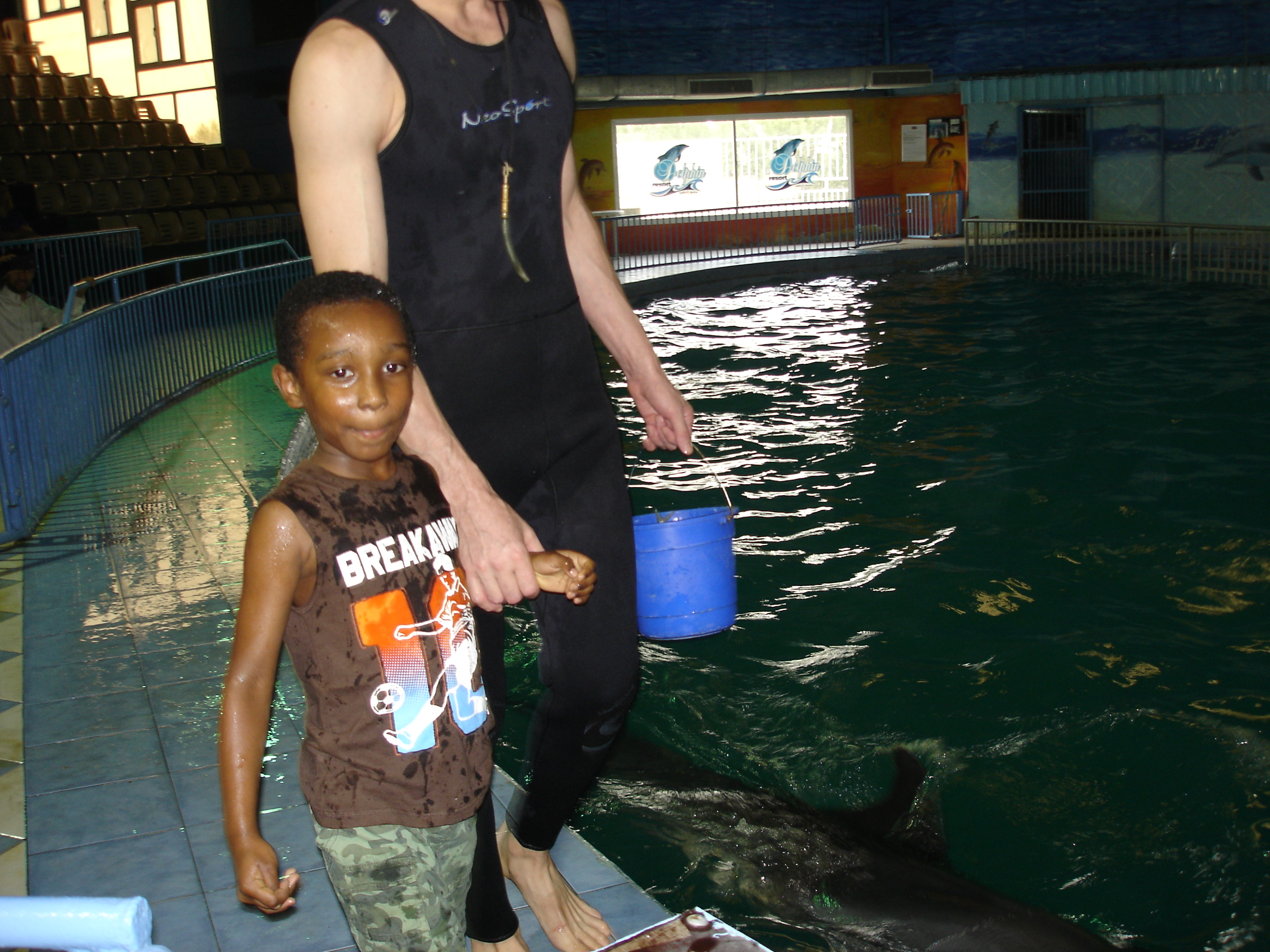
Keanen had the unique opportunity to feed and touch a dolphin. An experience of a lifetime 🙂

Enjoying cotton candy

Posing with the pelican at Al-Areen Wildlife Park. These birds are allowed to roam free. Its amazing!

Splashing at the beach

Exploring the ruins of Saar village and the “Saar Temple”

Dilmun Burial mounds, some as old as 4000 years old

Oil field at Bapco. Can you believe it costs half a dollar per gallon of gas? A Toyota corolla can be filled up for $6!!

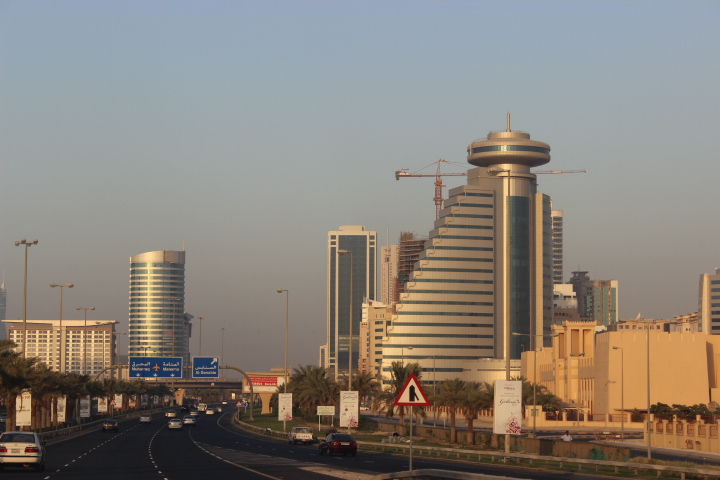
The skyline of capital Manama, Bahrain. This view at night is breathtaking!

I also got to celebrate my 29th birthday and Carmen’s 4th birthday. Needless to say we were spoiled rotten, especially Carmen who got a princess cake.

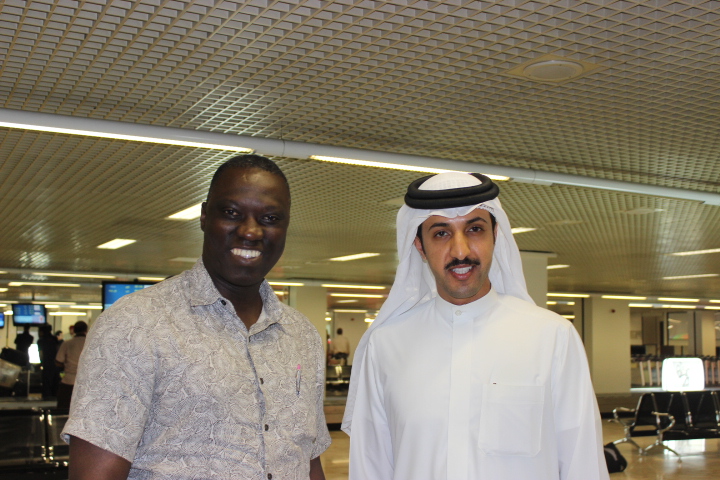
Yeah was recently appointed as a Special Envoy to represent the Prime Minister of Mali. A warm welcome and meetings were kindly arranged for him by the Bahrain American Council President, Dr. Al Khalafalla. Dr. Al Khalafalla has been an amazing support to Yeah. Yeah was received at the airport by a member of the royal family, Sheikh Abdulla, whose kindness throughout his trip displayed the warmth of the Bahraini people to visitors.

Welcome by Sheikh Abdulla, member of Bahrain’s royal family, at the airport

On the 29th of July, Yeah was presented with an award for his work in human rights by the Manama Center for Human Rights. While in Bahrain, Yeah met with key Bahraini officials like Bahrain Foreign Ministry’s Bilateral Relations Director Dr. Dhafer Al Umran and Khaled Abdulla Al Merbati at the Bahrain Chamber of Commerce & Industry(BCCI) in an attempt to strengthen Mali’s ties with Bahrain and also encourage increased Bahraini investments in Mali. In addition he gave a number of interviews like this one: http://www.dt.bh/newsdetails.php?newsid=300712191005&key=301110213450

Interview with Bahraini journalists

Now we are back in Mali. We were very sad to leave. The kids are ready and excited to start school. This will be the first year for Carmen as she attends preschool. We are ready to continue our fight to push Mali back on track to democracy and help our people return home.

This was an amazing trip and words cannot adequately express my joy that I could finally return home and link my past to my present. All I can say is it will not take me 10 more years before I return home.

This slideshow requires JavaScript.

 
3 Comments

Posted by on August 12, 2012 in Past Posts


Tags: , , ,

Interim President of Mali returns to Mali with new plan

As the world was finally starting to sit up and pay attention to Mali’s strife in the North, its interim President, Dioncounda Traore, who had been wounded by pro-coup attackers on May 21st returned to the South after a two month stay in Paris during which he received treatment for head injuries. During his absence the Prime Minister, Cheick Modibo Diarra, has attempted to resolve the crisis in the North.

The Northern situation has become worse with Islamic rebels asserting outright Sharia law and almost imprisoning Malians in the North into their way of life. Their crackdown has caused even more Malians to flee the North increasing the refugee count. Just earlier this weekend, a man and woman accused of committing adultery were stoned to death in the northern town of Aguelhok. I wonder, what is the price to pay for murder?

Yeah has been working tirelessly to raise the world’s attention on Mali’s strife and the humanitarian crisis. He has been meeting with leaders at the UN and also those in US that are over Africa’s foreign policy. To shed fresh media coverage on Mali, Yeah assisted CNN’s Erin Burnett and her team with visas, contacts, and travel plans so that they could bring a larger attention on the refugee situation and the human tragedy happening in Mali. You can view Erin’s coverage at: http://outfront.blogs.cnn.com/2012/07/24/why-mali-matters-al-qaeda-on-the-rise/. Yeah has remained a supporter of PM Diarra’s government and is adamant that now is not the time to put in a new government and delay any solution for Mali’s unity. As President of PACP, he has cautioned fellow politicians that no further delays should happen to hamper Mali’s return to democracy. It is time for the politicians in Mali to get over self interests and support the government.

The world is finally starting to sit up and notice the struggles in Mali. Most recently the US had staunchly opposed interfering. However on July 26th, Michael Sheehan, the Defense Department’s assistant secretary for special operations, said that they cannot allow Al-Qaeda to exist unchecked.  Even France that had maintained its distance has showed concern over the unchecked Al-Qaeda movements in Northern Mali. It’s amazing it had to come to this for the world to notice Mali. And even then, it’s not even about the lives being destroyed. I understand that each government concerns itself with what will be beneficial to its national interests. However, we might not even be in this position however if the first foreign interference mistakes were not made with Libya.  There is talk about a 3000-strong army made up of mainly Malians and military forces from Niger, with logistical support from the US and France. But if we continue talk, the North as we knew it may not exist. Already monuments have been destroyed, people have fled. What next before something actually gets done?

The attack on Dioncounda worked more in his favor than anything. He was not looked upon favorably as he was believed to be part of the old guard that had allowed ATT to rule unchecked. However the attack on him became to Malians an attack on Malian culture and traditions.  Attacking a 70-year old man, no matter what he has done, is simply not acceptable culturally. In an address to the nation, Dioncounda spoke vehemently of his forgiveness to his attackers. He focused his speech on how Mali must move forward to regain its territory and people.  He urged the Malian people to focus on how Mali can regain its territorial integrity. Dioncounda, spoke with urgency, that partners like the US and France cannot become enemies. This is interesting as many Malians regard former colonizer France with a degree of suspicion and even believe that they may have been responsible for supporting the rebel Tuaregs in the first place. Dioncounda called on all Malians to pay back their debt to Mali and become part of the solution.  And that Mali must move on stronger and unified. He then moved on to propose a transition plan.

The proposed plan outlines the following amendments to the agreement made between the coup leaders and ECOWAS.  In his speech Dioncounda outlined them as follows:

“In order to complete the institutional architecture to better suit the socio-political realities, the tasks of the transition, in the spirit of Article 6 of the Accord-cadre agreement, I propose:

1. High State Council (HCE) composed of the President of the Republic and two Vice-Presidents assist the President in carrying out the tasks of the transition.

— One of the Vice-Presidents represent the forces of defense and security and as such he will chair the Military Committee followed the Reform of the Defense Forces and the Security and take care of all military matters relating to Northern Mali;
–The other Vice-President shall represent the other components of the kinetic energies of the nation.

2. Government of National Unity: where are represented all parts of the Forces Vives.

Consultations leading to its formation will be led by the President of the Republic.

3. National Transition Council (CNT) with an advisory and comprising representatives of political parties present or not in the National Assembly and representatives of civil society.

It will be led by Vice-President representing the military services.

4. National Commission for Negotiations (CNN): meets the wishes of Heads of State of ECOWAS formulated in paragraph 18 of the final communication of the second meeting of the contact group on Mali.

This commission will engage with the armed movements in northern Mali peace talks in connection with the ECOWAS mediator to search through dialogue, negotiated political solutions to the crisis.

5. Motion in the direction of ECOWAS (the African Union and United Nations) based on the findings of the mission which visited recently in Bamako.

The Vice Presidents shall be appointed and the National Council of Transition (CNT) will be established as soon as possible and in any case within two weeks following the implementation of the Government of National Unity.

Furthermore it is understood that neither the President nor the Prime Minister nor the Ministers will participate in the next presidential election.” Will these restrictions also apply to the Vice Presidents, given they will play an important role in the transitional process?

The interesting thing about his address to the nation is the current Prime Minister was not mentioned in it. Why is this interesting? During the entire time from when Dioncounda was attacked to the time he was flown to Paris for treatment, PM Diarra has stood by Dioncounda, calling on people to let the political process play out. In fact, it could probably be attributed to him that Mali did not erupt into a civil war when the attack on Dioncounda happened. So it is interesting that he is not mentioned or acknowledged for the work that he has been doing. There is dissent among some of older political class in Mali that Diarra has been slow in getting the country back on track. Much of the dissent is coming from Dioncounda’s own party, ADEMA, which feels that they should be involved as much as possible in the running of the country. Many believe Diarra to be the coup’s puppet given that he has been appointed by the coup and also 3 major positions are held by the coup leaders.

However, now is not the time to play political games. Every day that these dissenters choose to make it harder for Diarra to operate, what they are doing is not just harming him, but more importantly, they are delaying a resolution to bring Malians much needed relief.  At this time national unity needs to become evident rather than just a song being sung. Even with Dioncounda, it is hard to say what will happen next. Given this address, it is hard to see where the PM will fit in and how all the political forces will indeed coordinate to create a stable, unified front. Without a strong base in the South, it will be hard for the army to follow a steadfast course. What Mali needs now more than ever is a government that sticks together and shows that Mali’s needs surpasses their own partisan interests. Additionally, Mali’s neighbors have given Mali a deadline of July 31st to create a unity government or risk facing sanctions again.  This seems unlikely at this point, but Dioncounda’s plan is a step in the right direction to make that happen. If what Dioncounda says is true, now that he is back, he could be the binding force that is needed as he shows that he is willing to coordinate with the coup leaders choices of leadership.  ECOWAS has been prompt at adding ten more days to the deadline to allow Dioncounda Traoré enough room for negotiations.

Elections have been set for May. Items to be resolved remain: checking out the rebels, restoring order in the North, bring home the refugees and holding elections. At the end of the day, a speech is all well and good, but actions speak louder than words and the question remains, can Dioncounda and Diarra pull it off for the greater good of Mali.  It remains clear, given Dioncounda’s return, that Malians will expect remarkable progress in the near future from these leaders.

 
2 Comments

Posted by on July 31, 2012 in Past Posts


Tags: , , , , , , , , , , , , , , , , , , , ,

Guiding Mali forward

If you had told me a few months ago what would happen in Mali, I would not have believed it. The events that have unfolded since the March 21st coup were an awakening. An awakening that Mali was not as stable a democracy that everyone in Africa seemed to think it was and that Mali had fallen the hardest when it seemed the most stable. Since then Mali’s way of life and the uncertainty in government has moved Mali back 20 years. It is unbelievable that one man could change so much. There seems to be little political drama these days and calm seems to be on the surface. The African Union has since disregarded the agreement that was signed with Sanogo giving him ex-Presidential privileges. However it remains to be seen how much power they have to even enforce it.  It is easier to give something than to take it away once given. The ripples of dissent are there. People are unhappy with the way things are playing in the North. The latest attack on Mali’s national treasures has caused such anger that it makes me question humanity a little. Mali has gotten more attention from the West with the destruction of Tombouctou’s mausoleums to its Sufi Saints, a UN World Heritage site. If sites/things can get this much attention, how come 250000 displaced refugees cannot get a similar reaction. Have we come to a time in our history where human life is cheap and dispensable but historical artifacts are not?

The refugee situation is becoming worse and the situation will continue to degrade unless the security is restored in the North. People flee when conditions are not safe. The Malian government has been unable to re-secure Northern territory. In addition the destruction on World Heritage sites and the increased punishment under Sharia law has made people desperate. People are so frightened that they are willing to leave homes, land and family behind. Just last week, a woman carrying her baby on her back who was getting water was flogged by Islamists. Her crime? Her head scarf had fallen as she tried to fill water. Today, she and her child lie in a hospital. In other incidents, young men have been flogged for stealing or associating with women. The young men of Tombouctou and Gao are so angered by the situation that they have taken to the streets with clubs and machetes. However while they are bigger in number, they are no match for Ansar Dine’s men that are equipped with guns.  Something has to happen soon from the Government of Mali. We cannot lose the future of Mali. Ansar Dine has proven its original mission of its own state to ensure the Tuareg’s well-being is polluted with an agenda of terrorism.

In yet another move to progress Mali back to democracy, Prime Minister Diarra advised ECOWAS of a roadmap to ending Mali’s two big issues: terrorism in the North and ability to hold credible elections after the one year transition. There is talk of creating more opportunities for political actors from other parties so that government can indeed be more diverse. Diarra has said that he would welcome the 3000 ECOWAS troops only if they were to rid the North of terrorists.  If all is kept on schedule and the new plan accepted then Mali would be on course to hold elections in May 2013. One of the biggest issues in Mali today is most political parties feel excluded from the government; hence instead of supporting Diarra they are constantly opposing his policies. If a government were created that held no majority, while it would bring in differing agendas, it will also give political parties the chance they seem to be asking for to make a difference. Hopefully, it will not become yet another political circus. Yeah has constantly called for a national unity government to be formed but has also cautioned against furthering personal agendas. He said in a recent debate:” When a nation is faced with its survival it must act in unison. The quarrels of interest will always exist but the existence of our territorial integrity must come before our partisan interests”.

Many people have asked us whether we plan on dropping out of the campaign. Giving up on Mali is not an option for us. Our efforts will be focused on making sure the right things happen for the Malian people in terms of getting refugee aid and contacting governments to advise them of how they can help.

It is essential that national unity be achieved first so that international support will return. Then a better equipped army can be deployed that has confidence in their leaders. After that the North can be regained and the terrorists kicked out. If we don’t do that soon, it may be too late. The time has run out and enough is enough. Once security and safety returns to the region, the refugees will return home.  Mali cannot afford another blunder. We are on the right path, but it is moving slowly

 
1 Comment

Posted by on July 18, 2012 in Past Posts


Tags: , , , , , , , , , , , , , , , ,

Join Yeah Samake at an event in UTAH!

Billy Hesterman, from the Daily Herald in Utah, did a story on the situation in Mali and what Yeah Samake is doing to make a difference. Click on the Link below or read the story posted in the Daily Herald in Utah.

BYU grad’s bid to be president of Mali on hold

The situation in Mali is bleak.

Just this year Mali’s military staged a coup on the national government because they claimed they were not receiving enough support to fight the al-Qaeda supported rebellion in the northern part of the west African country. More than 300,000 Malians have fled from their homes to avoid being ruled by the rebels and the country is losing foreign aid as it goes deeper into conflict.

The country was supposed to hold elections this year in which Brigham Young University graduate Yeah Samake was hoping to take over as the country’s president. But with a major conflict taking place and the government being overthrown by the military, that election has been put off until May 2013 so that the country can get its affairs in order.

Currently an interim government has been established and work is being done to strengthen the army that overthrew the government. But the slow-moving process is leaving people without food and sufficient hygiene supplies while they wait for the military to reclaim areas in the northern part of the country.

Samake though isn’t just waiting for the military to act or for his election to come around, he is trying to do something to bring help to his country. He is in the United States right now giving leaders an insider’s view of the situation. He has met with U.S. Sen. Mike Lee, R-Utah, to brief him on the status of the country and also met with state department representatives and United Nations officials to inform them about his country’s struggles.

“There is significant human suffering going on right now in Mali. People are hungry. They can’t provide meat for their families. They sit and watch their kids and worry about providing daily meat to them. As a father and as a mother that hurts,” he said.

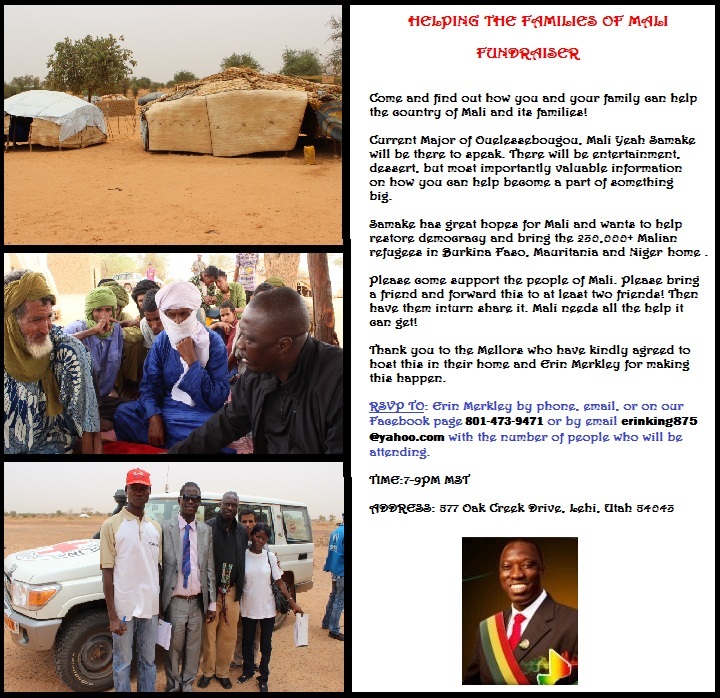
In addition to his briefings to leaders about the status of his country, he also has traveled to Utah to raise money to support the refugees that are suffering in Mali. On Monday he will be in Lehi to host an event that is aimed at raising money and awareness about his people’s situation.

“One of the reasons I am here is to help women and children in those situations,” Samake said. “I’ve been in the refugee camps. I’ve met with the people. I’ve talked with the Red Cross and UNHR and have tried to find the needs of the people. Truly food shortage is significant. But tents are lacking, as well as hygiene kits. And the children that are out of school, they also need a playground and toys to play with.”

So far local businesses have stepped forward to support Samake in his efforts. Nu Skin and Overstock.com have offered their support to him and Lehi resident Erin Merkley is organizing the Monday night event that is open to the public to help support those suffering in Mali. Those wishing to attend the event should contact Merkley at erinking875@yahoo.com.

“Utah can make unique contribution to this because of the connections and ties that so many Utahns have with Mali,” Samake said.

Samake remains hopeful for his country’s future. He also remains optimistic about his chance of becoming the country’s next president. He hopes his current efforts will show the Malians that he genuinely cares for his country and that he has the ability to get things done to get his country on the right track.

“People are looking at me. And this struggle is an opportunity for me to rise up as a leader for my people to see what I can do for the country,” he said.

Just more than 14 million people live in Mali. The annual salary of a skilled worker there is about $1,500. The nation is equal in land size to Texas and California combined.

———————————————————————————————————————————————————————————

WANT TO MAKE DIFFERENCE? NOT DOING ANYTHING MONDAY, JULY 16TH? THEN COME JOIN YEAH IN UTAH AS HE SPEAKS ON HIS FIRST EXPERIENCE MEETING THE DISPLACED MALIAN REFUGEES THAT HAVE NOW FLED TO BURKINA FASO.

CAN’T COME? PLEASE TELL 10 FRIENDS IN UTAH ABOUT THIS EVENT. ALSO, IF YOU CAN, PLEASE DONATE ONLINE AT WWW.SAMAKE2012.COM TO SUPPORT THE REFUGEES.


Together I believe we can make a difference in the lives of the refugees that have been displaced. I pray that soon our Malian brothers and sisters will come home. I cannot imagine the conditions they are being subjected to. The shelter they have is no match for the hot, humid weather mixed with rain showers. The food cannot meet the constant pains of hunger. Imagine sitting 15-20 hours without doing anything, day in and day out. The supplies are running out soon and we need to help continue the aid till we can bring them home. This is not a life and I would never wish it even on my worse enemy.

Please help if you can today. Donate at http://www.samake2012.com

 
2 Comments

Posted by on July 15, 2012 in Past Posts


Tags: , , , , , , , , , , , , , , , , , , , , , , ,

Mali’s Northern mess

In some aspects of life, Mali seems almost normal. There is few things in the South that suggest that only a few months ago, a coup happened that changed the lives of Malians in this generation and for generations to come. The prices of food remain elevated and the increased presence of security are few of the signs that indicate the unrest of 4 months ago.

The story in the North seems to be a different story altogether. With two different operating standards and governments, Mali has indeed been divided. Till last week, Mali’s North was governed heavily by the Tuareg rebels. For centuries this nomadic group has waged its war for independence. It success in Mali came at a weak moment for the Malian government, but it came none the less. With no recognized security in Northern Mali and a weak Malian army, no ground has been made in regaining the North. Last week, Ansar Dine, overtook the region and became the major players. At least with the two sharing power, it seemed that the Tuaregs in Tombouctou would still get their hope to lead themselves. However that was not to be. Last week, the Tuaregs were ousted by Ansar Dine or the “Protectors of the Faith”.

So how dangerous is Ansar Dine? With Ansar Dine being corrupted with elements of AQIM and Boko Haram, Ansar Dine is indeed a tremendous danger to returning stability to the region.  The main aim of Ansar Dine is to make North Mali another depot for extremist Islam. And so far they are having much success. Areas, especially Tombouctou, are teeming with Islamic extremists. While Islam was the practiced religion of the region, it was practiced with moderateness. In fact Tombouctou was known for its age-old monuments that depicted broad-minded Islamic teaching. With Shariah in place now, Islam has become the imprisonment for the people of North Mali. Religious freedoms are no longer allowed, alcohol banned, women made to clothe themselves from head to toe despite the summer heat of 130F and men and women not allowed to mix.  Almost reminds you of prison, doesn’t it?  Many of these individuals have grown up free to practice Islam and their way of life. They have been part of something bigger when they were part of Mali. Now they are dispensable pawns in an extremist Islamic agenda. You know how they say; the grass is always greener on the other side. Sometimes when you get to the other side, you realize the sun must have been playing tricks on your eyes. Now, don’t get me wrong. I would be the first to advocate independence for a group that believes their rights have been infringed on. However, I also believe in happiness of the majority. The Tuaregs are a minority (6%) compared with other ethnicities that call Mali home. By giving the Tuaregs a separate land, the Mali government would be condemning another ethnic group. If the Tuaregs had stood with the Malian army and defeated the Islamic rebels, then the North would probably not be in this state. Yes, the initial failure was the coup, but the domino effect could have been halted by the Tuaregs. Instead, in a moment of personal gratification, we now have a fallen state that has been impossible to regain because of the buildup of rebel groups, each group crazier than the one before it.  Mali’s failure has come from groups that believe in their personal agenda, first the politicians of old, then the junta and now the Tuaregs. The Tuaregs have long distrusted the Malian government believing that they have been marginalized. Other groups in Mali like the Bambara on the other hand believe that the Tuaregs are given special preference over other ethnic groups that Mali has a higher majority of like the Songhai and Peul and believe this is unfair. This was the perfect storm that could have gone either way. Standing with the Mali army would have strengthened the trust relationship.  Standing against them was opening the door to a stronger group taking over.

That is exactly what has happened with Ansar Dine. Now, in addition to the increased humanitarian crisis afflicting the Northern regions of Mali, there has been an attack on century old history. Part of Islamic extremism preaches that people should be focused on Allah (God) alone. Nothing should take his place and there shouldn’t be a distraction of other things or places that Muslims worship. This ideology has seen Ansar Dine destroying the tombs of the Sufi saints that have been there for centuries and setting fire to the contents inside the tomb. They have also broken the gate of a famous 15th-century Sidi Yahya mosque. The door is considered sacred and was to remain closed until the end of the world. In their minds, Ansar Dine is removing the symbols that will distract Muslims in the North from Allah. The destruction has brought about worldwide and UN condemnation, for these places fall under the UN World Heritage sites. Malians, North and South, too are united in their anger by this destruction.  It is angering and dreadful that history has been destroyed and by continuing to destroy these sites, our future generations are being deprived of the things that symbolize culture and tradition. Imagine if the Statue of Liberty or the Washington Monument was attacked and destroyed. When the twin towers fell, the sadness was unspeakable. The loss of life unbearable. The same is happening on a smaller scale in Mali and it is only a matter of time before it worsens.

This has gone on too long. Time is the one thing Malians do not have. We do not have the time to let Ansar Dine get comfortable. To do so would spell doom for Mali’s Northern territory and people. To not do anything would allow terrorism to flourish. This is a war, not just Mali but the world cannot afford to lose.

 
2 Comments

Posted by on July 6, 2012 in Past Posts


Tags: , , , , ,