RSS

The youth movement!

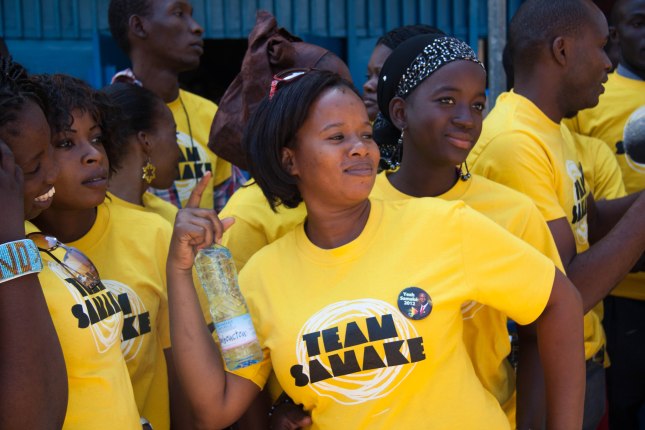
Team Samake

“Young people should be at the forefront of global change and innovation. Empowered, they can be key agents for development and peace. If, however, they are left on society’s margins, all of us will be impoverished. Let us ensure that all young people have every opportunity to participate fully in the lives of their societies.” — Kofi Annan

One of the most essential parts of the Samake campaign in Mali is the youth movement. The success of our campaign so far in Mali has been because Yeah has been able to get the youth involved and encourage them to become part of the Mali solution. And they should be. From a recent survey done, Mali’s youth population is the 3rd largest in the world with 47% of the 15.1 MILLION population between the ages of 18-24. (http://world.bymap.org/YoungPopulation.html). Some other studies quote even higher percentages. The youth need a voice. And Yeah has been giving that voice to them.

On a daily basis I see people who give up of their time and efforts to benefit the campaign. A few of them have been with this campaign since its inception in early 2011.

Most recently, 25 different leaders over youth associations all over Bamako banded together to form Association des Jeunes Leaders pour le changement et de la Decentralization du Mali (Association of Young Leaders for Change and Decentralization in Mali). Their goal was to use their Association and their voices among the community to help Yeah spread the message of change. As one of our volunteers, Dramane Bagayoko , reports: “We created this group to better support Yeah Samake and to spread the word about his political party PACP all over Mali. Mr. Samake spoke to us about his biography. What motivates us is that it is a powerful, incredible biography of one man who came from a village but has the vision to change Mali. We are ready to fight for Yeah Samake’s victory. We are ready to support an honest leader like Yeah Samake.The President of our Association decided that he would lead the association to fully support Yeah. We , the youth, understand that we need a person who has helped the youth and will continue to help youth. We know that Mr. Samake will create the educational opportunities for the youth so Mali can be a great country filled with many opportunities. To start our activities, we will host a number of soccer matches among the different districts in Bamako. This will allow us to raise alot of attention about Yeah Samake as these matches will be well attended by all the university students in the area. We will continue to give our voice to this leader as we believe in his efforts and we believe that he is the best chance for Mali.

Every day, new groups like these are being formed. Every day in a different region of Mali, a new group vows to help Yeah bring change to Mali. We know that this fight is not over. In fact it has just begun. Mali’s time and resources have been wasted too much by the old political class. It is time that someone gave back to Mali and Malians everywhere.

All these supporters have become a vital lifeline to Team Samake. A 24/7 commitment is not what drives Team Samaké. All our volunteers have full time jobs and commitments and still find the time to lend their voices and talents to this campaign because of their faith in the country Mali can become with a leader like Yeah. Check out the stories of our volunteers and what they are doing on behalf of Team Samake and Mali at www.isupportyeah.com. If you have a story about Yeah, reasons why you support him, or thoughts about a recent Samaké2013 event that you would like to share please email us at teamsamake@gmail.com to share your experience.

Those of you who have met Yeah know of what he is capable of and what he has already done for his people. Those of you who haven’t have read of his journey and his contributions to Mali. Yeah has the ability to change Mali for the better. Without the volunteers, this campaign would have been hard. Never underestimate the value of yourself and what you can offer. If you believe that this campaign is an effort to break the chains of poverty, illiteracy and poor healthcare, then support us. The people on the ground in Mali need change. If every person we knew donated the money they used for one morning coffee or soda, we could easily raise a $1000 in an hour. A $1000 helps us hold a rally in a big village. A $1000 can fill the gas tank of 50 motorcycles to reach the distant villages and towns. Support does not have to be financial. The power of the human voice is unmatchable. Tell a friend. Tell 100 friends. Post it on Facebook, Twitter and any other outlet you can think of. We have the ability to win this for Malians everywhere. But we cannot do this without you. This isn’t about winning the election on July 7th 2013. However the election is the first step to creating a secure Mali of equality and better living conditions. Can I count on you?

maliheart

 
1 Comment

Posted by on April 5, 2013 in Past Posts


Tags: , , , , , , , , , , , , , , , , ,

French Ambassador Rouyer makes historic visit to Ouelessebougou

Ouelessebougou and the surrounding communities welcomed a very special guest to their commune on March 26th, 2013. The visit was the first of its kind by a dignitary of this magnitude in this region of Mali. Given the recent circumstances in which France has extended solidarity to Mali, Yeah, in his mayoral capacity, invited the Ambassador of France to Mali, Ambassador Christian Rouyer, to see Ouelessebougou and experience the many developments ongoing in the region. Ouelessebougou already shares a sister city relationship with Pontivy in France. Through it many great projects in the areas of water and education has become a reality for Ouelessebougou.

Ambassador Rouyer and the French delegation were received with great pomp as he and his delegation entered the city of Ouelessebougou. The air was thick with excitement as such an event has not seen for as long as many could remember. The people of Ouelessebougou and the surrounding villages turned out in droves to meet the French delegation.

Ambassador Rouyer in his speech was very appreciative to the people that came out to welcome him so warmly. In his speech he expressed gratitude to the people of Ouelessebougou and also their leader Yeah. He has been very appreciative of the leadership role that Yeah has played since last year’s coup. Regarding the situation in Mali, he said it was France’s obligation to help Mali. For during the Second World War, it was many Malians who paid the price of freedom with their life as they fought for France. Now it was France’s turn to help Mali combat terrorists. About governance in Mali, Ambassador Rouyer bluntly stressed that “Mali is not condemned to poverty, corruption and rebellion. It’s just a question of governance. It has all the capacity and potential to remain strong among the great nations of the world. In any case”, he added, “the majority of Malians aspire to a profound change. To do this, the Malian people must take their destiny in hand through a high turnout in elections to elect men and women to meet their aspirations.” This was amazing to hear as it was a reaffirmation of what Yeah has been saying all along. Mali’s many problems come not from the lack or inability of Malians, but rather from the leadership that has failed them.

Mayor Yeah Samaké then presented the Ambassador with a flag of Mali as a token of appreciation. This is the same flag that Yeah was presented with by Colonel Keba Sangare in Tombouctou last week. Colonel Sangare is a Red Beret and paratrooper commando and is the current commander over the 5th military region in the North. He had presented Yeah with the Malian flag as an appreciation for what Yeah has done for Mali. By giving the same flag to Ambassador Rouyer, Yeah was extending the military’s appreciation for the French forces now fighting on Mali’s behalf.

This slideshow requires JavaScript.

After the speeches and an afternoon filled with cultural richness, Ambassador Rouyer and his delegation joined the dancing. Malians love music and love to dance. For Malians to see “white” people dancing is indeed unique, but also it warms their hearts, for to them it is an acceptance and embracing of the Malian culture. The visitors were not shy. They seemed to truly enjoy the Malian culture that is often hidden in the city life of Bamako. Many of these diplomats will not venture past the main cities because their duties usually keep them in these areas.

The evening ended on a high note as Yeah led the delegation to look at all the development projects and achievements Ouelessebougou enjoys today. Ouelessebougou enjoys the spot as one of the top 5 cities in terms of development and management. Many people in Ouelessebougou have not been as affected by the economic crisis in Mali as other villages and cities. This is apparent in the level of development projects present and the life style of the people of Ouelessebougou. As they toured the solar panel field, high school, the hospital and water tank, there was great, genuine, appreciation for how far Ouelessebougou has progressed in comparison to other areas.

The date that this took place is also a memorable date for Malians. March 26th marks the anniversary of the martyrs that lost their lives for democracy in Mali. On March 26th, 1991, after days of fighting, displeasure over the military dictator Moussa Traore’s government reached its peak. Many university students especially lost their lives as riots seized the streets of Bamako. I remember Yeah telling me, that back in those days, he was a student at ENSUP. He remembers going to join the movement against the dictator. However with the death toll mounting, his father came all the way to Bamako and pleaded with him not to join. Soon, the army lead by Lieutenant-colonel Amadou Toumani Touré (the same President who was overthrown last year), refused to fight the civilians and instead with a team of 18 other soldiers they arrested and overthrew President Moussa Traore. Malians have long celebrated those that gave their lives for the democracy movement. This year, this day holds more significance for it is a caution that those deaths should not continue to be in vain. That the democracy that they fought for should not be forgotten and that Mali must return to a government where the people are represented.

Ambassador Rouyer expressed his genuine gratitude for this memorable event. It comes at a time, when his tour of duty in Mali comes to an end. A Sarkozy appointee, he will return to France soon and he will be replaced by Gilles Huberson. He has been an outspoken advocate for the French military intervention and had been posted in Mali since 2011 and had cautioned about rebels in the North long before they took over.

This is a memorable event for Ouelessebougou as well. It comes at a time when Ouelessebougou is enjoying its own successes and growth. It is hoped this event will only bring more development opportunities to Ouelessebougou and the surrounding communities.

It is at times like this, that I pray that people will see the great work that Yeah does. Yeah doesn’t do it because he will personally gain. The successes of his people and his community are paramount to any political ambitions. However we realize that it is only through our political ambitions that we can spread the successes of Ouelessebougou to all of Mali.

I have read comments that try to downplay Yeah’s popularity. I would urge all these naysayers to actually venture past the walls of Bamako and gain a true perspective of the 80% population and what they say about Yeah Samaké. What Mali needs is a leader that is trustworthy and dependable. A leader that will guide Mali to greatness and Malians to a better standard of living. A leader that has actually done something for his community and given rather than taken away from Mali.

This all is possible. Two words: YEAH SAMAKE.

This slideshow requires JavaScript.

 
2 Comments

Posted by on March 29, 2013 in Past Posts


Tags: , , , , , , , , , , , , , , , , , , , , , , , , , , ,

MALI COUP: The coup that brought democracy to its knees

Today, Malians will remember a very controversial day in its history. Today, Mali marks the one year anniversary of the coup that ended 20 years of a stable democracy.

I remember the day, a year ago, like it was yesterday. My heart is still scarred with the pain that surged through me as I watched the panic grip Mali. My stomach still recollects the feeling of fear and apprehension of the unknown. I still remember clearly, the days after as all of Mali seemed gripped, not knowing what to do or who was right.

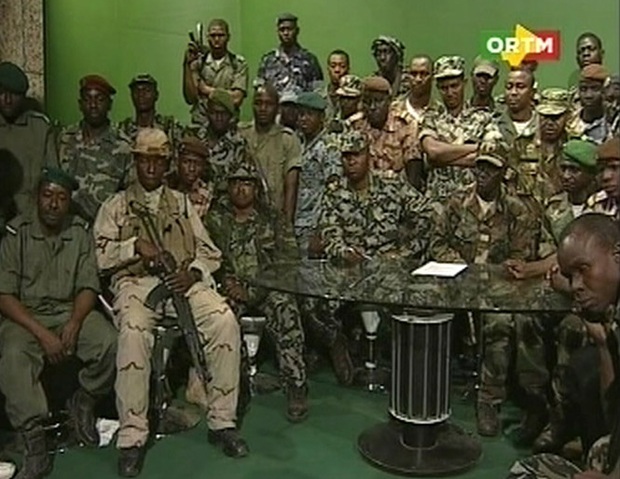
On March 22nd 2012, the actions of a few would re-write Malian history. On March 21st, mid afternoon, a few junior officers, disgruntled with the regime’s inaction in the North of Mali against rebels, stormed the National TV station. For a day, the station’s channel stayed black interrupted only by hours and hours of Mali’s music. The air resounded with intermittent gun fire. Then at 4am on March 22nd, Mali’s immediate dilemma became apparent as the TV zoomed in on a group of officers with guns surrounding one man: Captain Amadou Aya Sanogo. Here was a man, Mali knew nothing about and in one fell swoop, he became the man of the hour. Till today, the controversies exist. Malians remain divided on where loyalties lie. Many Malians believe that Sanogo saved them from the plots of the government. Soon after the coup, rumors circulated that the deposed president Amadou Toumani Toure had in his possession the money and materials to promote and rig an election in favor of one of the candidates, Modibo Sidibe. This rumor was spread far and wide and is a common story given by those who support Sanogo and his actions. There are others that remain loyal to the previous regime believing that the soldier’s duty is to defend their country but under Sanogo’s watch, Mali lost a huge portion of its territory.

The announcement on March 22, 2012

The announcement on March 22, 2012

In the days that followed, the streets of Bamako reflected the days of the deadly student revolution of 1991. There was looting of the government offices and the presidential palace. Soldiers were confiscating vehicles and cars. In fact, some tried to stop the car Yeah was in but Yeah advised his driver to keep moving. The soldier was infuriated by this action and shot a round in the air, but that only made them drive faster. Political leaders joined the fray and Sanogo’s office was filled with many leaders that wanted favors in the new government.

Sanogofirstmth

March 22nd 2012: Yeah Samake meets with Sanogo to ask him to return power to the people of Mali

In all this, Yeah remained true to what he stood for. He recounts the day he met Sanogo for the first time: “I came walking through the crowd and went and stood in front of the office of the captain.  And he was just walking into his office and he said Mayor Samake!  He recognized me with perfect English, and I said ‘Captain, I have been waiting to get to see you for an hour’. And he said ‘Come with me.’  He said, ‘What has brought you here today?’  I said I came to ask him to turn the power back to civilians.  That power belonged to civilians and he needs to turn that back.   He looked at me and said, ‘Why have you come here to tell me that?’  To which I replied: “Because I know you love this country—you’re wearing the uniform. No matter what your motives are, I know you love this country.  And I love this country—I have sacrificed for this country.  So I am here to help you make things right.  If there is anything I can do, I’d be happy to help. He looked at me and said, ‘How? How do I do that?’ I said, ‘I don’t know, you will figure it out.’  As I walked out, he asked me if I would say something to the national television that he was in control of.  He brought in the camera and microphone and asked me to say something and he was probably expecting me to say something else.  I told to the microphone exactly what I had told him—that he needs to give the power back to the civilians and reorganize the military quickly so that Mali can defend itself.   He didn’t like that-he didn’t show that, that was censored. But this built a very trustful relationship between me and the captain.  He respects me, till today, that I had come and said this.  And he has turned to me several times, as a political leader, to solve some urgent problems that he couldn’t, or the military couldn’t.  So, he knows that everything I’m doing, I’m doing it for the love of the country, not for my own sake.”

Sanogo’s actions in the last year seem disjointed. While his initial actions seem to indicate a desire to rid the country of the old, corrupt politicians, his actions in the months that followed raise questions. The weeks that followed the coup were filled with many political arrests. At first we did not know who was getting arrested and on what basis. We did not know whether given his political status, Yeah would be next. All we knew was now was not the time to give up. If we gave up now, then we were not fit to lead this country.  Soon we found out that the people being arrested were former politicians that had stolen money from the country and army officers that had colluded with the deposed president. Through all this Yeah encouraged Sanogo to let these people go and ensure that Mali’s justice system handled it. Some were let go, and others fled in fear that they were next.

As Mali’s neighbors closed their borders, the country became afflicted with a fresh crisis. No one could get out and no one and nothing could get in. With the economic crisis looming, Sanogo was forced to let go of leading the country. After multiple backroom deals and with growing pressure from the West African neighbors, Sanogo announced he would step aside and allow the Assembly President to become the interim President as per the 1992 constitution. This was probably the best time to ensure that a government was put in place that would truly handle the needs of the Malian. What instead happened is the old guard, that was responsible for Mali’s growing economic and development issues, were put back into power under a different puppet. The current interim government is filled with the old guard of Mali’s failed democracy and continues to display the very reason why the coup happened. It is filled with bureaucracy and inefficiencies.

As part of stepping aside, Sanogo would receive full benefits as an ex-President, including but not limited to a house, constant security and money each month. For me, this was the part that first created some disillusionment about Sanogo. Here was a man who was saying he was doing this for Mali and suddenly, here he was taking from Mali. What separated him from the corrupt President he helped overthrow?

In the months that followed, Sanogo would show the country and the world just how much power he really had. The silent arrests continued to happen. In fact in December 2012, he demonstrated this power when he removed the Prime Minister (PM) Cheick Modibo Diarra from office. The reason explained was that the PM was attempting to run in the elections and was using his office and the country’s limited resources to do so. One of the pre-clauses of the interim government that Sanogo required was that no participant in the government would be allowed to run when elections were held in 2013. In a way, these actions restored some confidence in Sanogo. To Malians, he demonstrated that he had their best interests at heart and wanted to make sure the leaders in place continued to be held accountable.

To me when you think March 22 in Mali these days, Sanogo is the name that comes to mind. Most Malians regard him as a hero, regardless of what has happened. For me, I am more divided. Maybe it because I personally associate the rebels taking the North and the issues that followed as a byproduct of the coup.

All I know now, is that Mali cannot afford a failed government. Mali cannot afford another leader that takes away more than they give. Today, my heart cries when I see how the people of this country continue to suffer for the actions of a few. It breaks my heart to see how the deplorable economy continues to take away from the ordinary Malian. Before the coup, Malians were already suffering. After the coup, a year later, the suffering is intensified. Life has become harder for everyone. But the one thing I love about this country is its resilience and ability to continue to live life as fully as possible. Malians have and will continue to make ends meet the best they can. The coup awakened Malians to the realization that they had become too silent in allowing their government to run things.

Today the mood has shifted in Mali. There seems to be eagerness among the youth and the middle aged citizens, a majority in Mali, to stand up and fight for democracy in Mali. The elections in July are a sign that Mali and Malians are ready to return their country back to the people.

We are ready for this fight. The victory is not the elections. The victory will be getting Mali back on track and helping it attain greatness for itself and its citizens. Mali can be a great country. Malians have suffered enough and it’s time to get rid of the leadership that is dragging our country back into the pits.

Today, I celebrate the resilience of all Malians. I celebrate the possibility of a return to democracy. I celebrate Yeah Samaké, a symbol of a new democracy in Mali.

We have a proven track record. All Yeah has ever done is give to Mali and Malians from schools to scholarships to medical missions to building a successful community in Ouelessebougou, which is ranked in the top 5 cities in all of Mali in terms of development, transparency and government.

We are fighting for Mali and Malians everywhere. Join us in our fight for this beautiful people and this wonderful country! Visit us at www.samake2013.com to find out how you can become part of the #MALIMOMENT

yeahsamake

 
1 Comment

Posted by on March 22, 2013 in Past Posts


Tags: , , , , , , , , , ,

Journey to Tombouctou

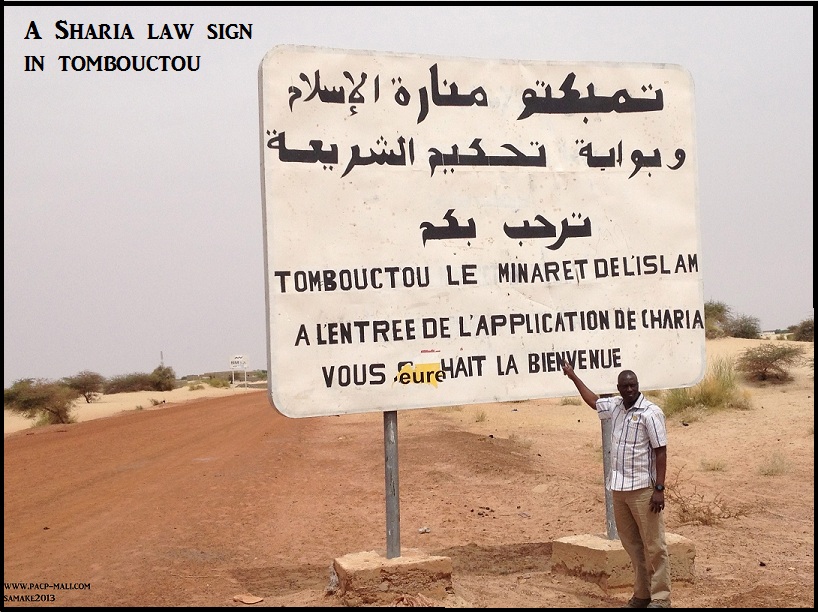
Hope, destitution, order semi-restored, a lack of medical aid, a recovering region. These are just some of the feelings that besieged Yeah as he entered the gates of Tombouctou, Mali. The past year has seen a region that was once Mali’s poster child for tourism and history crumble under the harsh Sharia law and Islamic radicalism.

When the coup happened in March 2012, no one could have predicted that Mali’s northern region would be taken over and then raped of all her history and cultural richness. It did not stop there. Many Malians living in the region fled to escape Sharia law and the fighting. In January 2013, the first hope of freedom came when French forces entered the North in an attempt to fight back a growing Islamist threat. The fabled town of Tombouctou was once again free.

IMG_6091

This past week Yeah did the unthinkable. He and some foreign partners decided to visit Tombouctou so they could assess needs and see how to best bring in the aid needed. Very few people, other than military personnel, have gone to the region.

The idea behind the trip was not politically motivated. The hope was to extend to our brothers and sisters in Tombouctou solidarity and also truly find out what could be done to help restore hope for the people and the region to its previous glory.

With no options into Tombouctou, Yeah and his group resolved themselves to a 15 hour drive on bumpy roads interrupted only by moments when the driver had to carve their own way through the desert sand. There was a collective sigh of relief as they finally made it to Tombouctou.

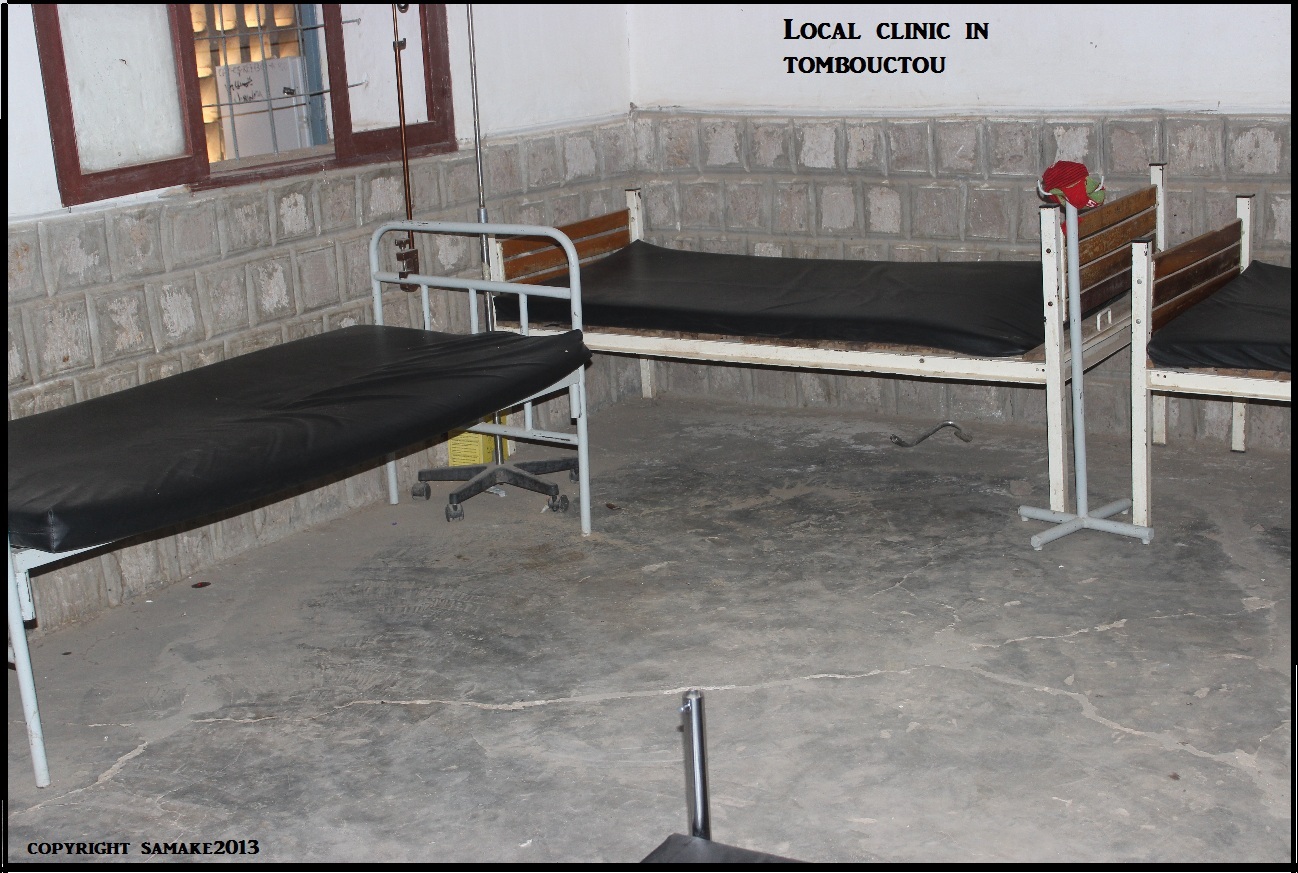
Once there, the actual work began. The Mayor of Tombouctou, Hallè Ousmane, is based now in Bamako, so Yeah met with the Deputy Mayor Drawi Maiga. They discussed the issues of security, the reconstruction plan and the general living conditions of the people in the area. Maiga stated that the number one priority was the restoration of basic service provision in the town, including healthcare, water and most importantly the economic recovery of the city. The deputy mayor was very grateful to see the first visitors since the French military intervention, claiming it brought some hope that tourism would return to the region. Yeah advised him that he had come to express his support for the freedom of religion and tell the rest of the world that all of Mali embraces democratic values.

Under the guidance of a doctor from the local hospital, Yeah and his team visited the hospital and community clinics to assess the need and conditions. When the Islamists had taken over the region, many basic supplies and needs fell to the wayside.

localclinic

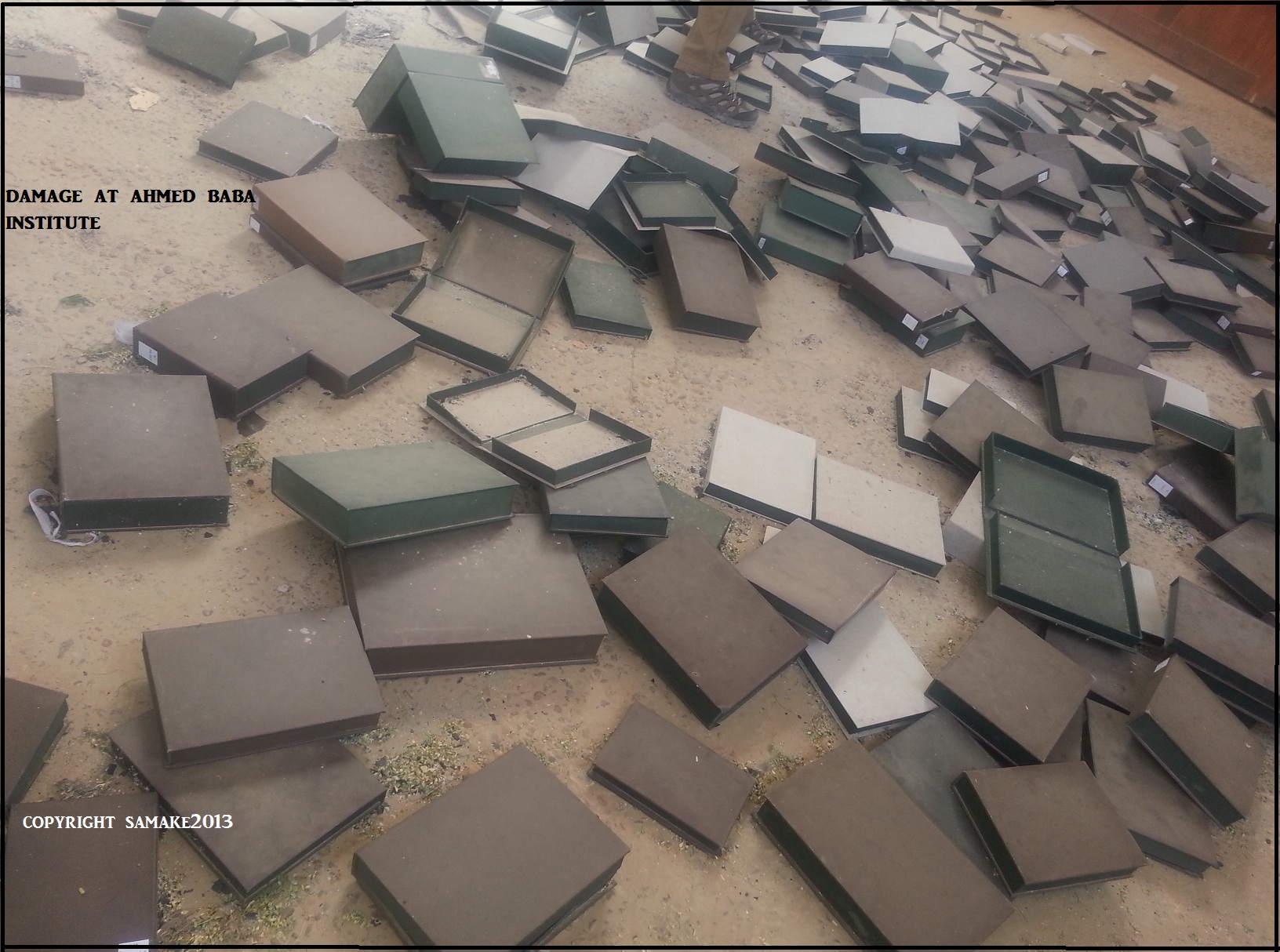
Yeah also visited the Ahmed Baba Institute, a library and research center, which held almost 60,000+ ancient manuscripts many of which were destroyed by the rebels. He was filled with a deep anger and sorrow that the physical proof of Mali’s history and its heritage had been destroyed by the selfish actions of a few. While few manuscripts have been destroyed, many remain intact due to the brave actions of the people living in the area.

AhmedBaba2

AhmedBaba

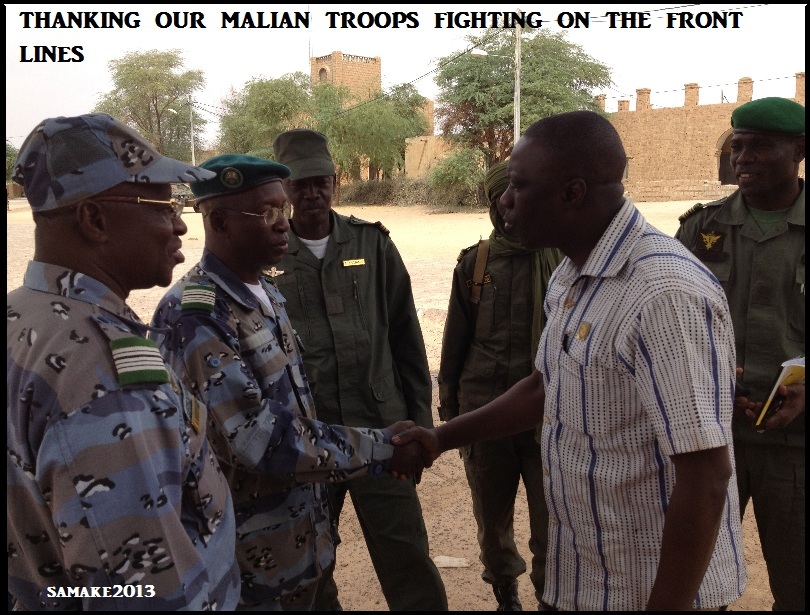
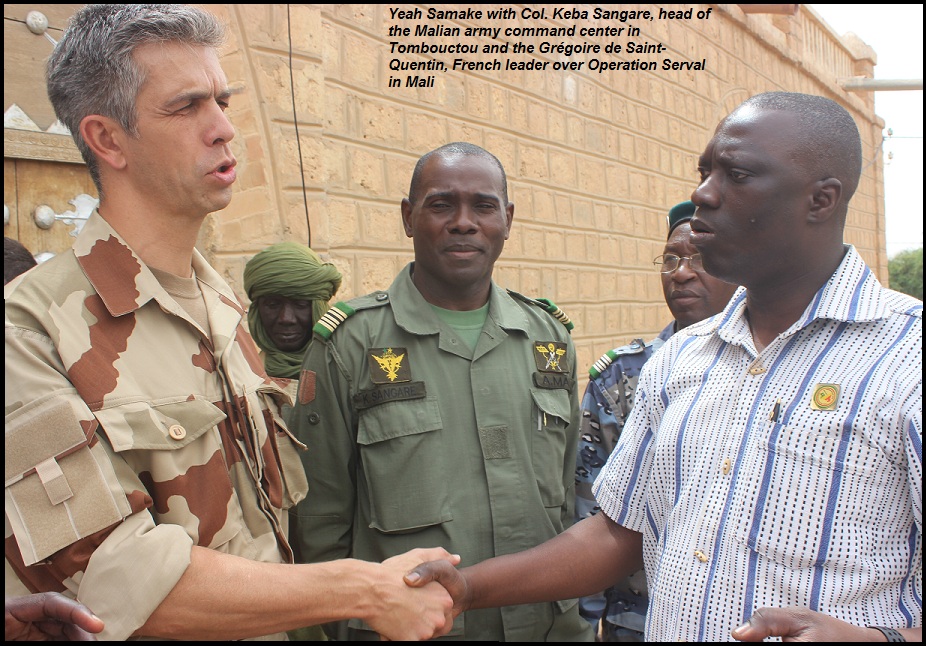
One of the key meetings Yeah had an opportunity to participate in was with Colonel Keba Sangare, the head of the Malian army command center in Tombouctou and the Commander of Operation Serval, General Grégoire de Saint-Quentin. The French general was meeting with the Malian military authorities in Tombouctou and local leaders to assure the support of the French troops and in turn called on the locals to help support their efforts. Unlike Gao, Tombouctou has not been hit by suicide bombers. This is due in part to the cooperation of the people in the region with the military forces. Yeah met with the leaders over the Malian forces thanking them for their service to our country.

ColBerthe

Meeting

In the last leg of the trip, Yeah and his team traveled to the remote towns of Diré and Bourem Sidi-Amar. While it is evident that these areas have returned to a normalcy, they continue to fight to make ends meet. It was interesting to see walls still plastered with Samaké posters and the overjoyed, welcoming faces of the men, women and children, and the village elders that wore their Samaké campaign buttons with pride. Standing in the town’s public square, Yeah restated his commitment to help the refugees, who have fled these areas, return home. The people were touched to see a fellow Malian coming to visit. Many Malians have stayed away from the area because of it being a high risk zone. Here was a man that was coming not only to extend his greetings but more important to ask how he could help. “To lead is to serve, nothing more, nothing less”.

Bourem

Meetingppl

This was a very successful trip for Yeah. It allowed him to connect with his brothers and sisters in Tombouctou who have been isolated from the rest of Mali. It allowed Team Samaké to assess the immediate needs and to bring the story back of what life is like in Tombouctou. Things are getting better. But they haven’t reached their peak. With proper leadership, economic development and growth can be brought to the region. With the right resources, the children and people of the North can enjoy the same benefits as their brothers and sisters in the South. Democracy must be restored. That was one message the people wanted to make sure the outside world knew. They want democracy!

Help us help the people of Mali. Help us make sure the things happen that will make democracy a reality for the people of Mali. Read more about our campaign at http://www.samake2013.com

 
1 Comment

Posted by on March 7, 2013 in Past Posts


Tags: , , , , , , , , , , , , , ,

Happy 44th Yeah Samake!!

happybdayyeah

Today is a very special day. Today, my life partner and the man I trust to lead Mali to prosperity is celebrating his birthday.

This past year has indeed been a challenging time for Mali. It has seen a coup, a country divided and a people plagued by economic hardship. Despite the many challenges, Yeah and his party have continued to work hard to overcome the many challenges. Over the last year, Yeah has spent much time in multiple countries raising awareness to the issue of Mali’s territorial integrity and our refugees. I sincerely don’t know how he does it so tirelessly and without wavering. It is no small task and Yeah has earned every last one those gray hairs 🙂

Growing up, Yeah did not have a chance to celebrate any birthdays. In Mali, most children do not get to celebrate their birthday.  Most children barely remain children as they are sucked into the hardships of Mali life. Today, not only do I want to celebrate Yeah’s birthday, but I would also like to celebrate all Yeah’s achievements and his steadfast courage and hope for Mali.

We are in the final stages of this almost 2-year campaign. On July 7th 2013, elections are scheduled to happen. These next five months will be a dash to the finish. We believe that this is the Mali Moment. The time for change and innovation, but that has to begin with the right person who does the right things at the right time, whether it is in the face of opposition or support. I believe that person is Yeah.

Today, I ask you to help me wish Yeah “Happy 44th. To celebrate this special day, I call on all our supporters to make a memorable donation at http://www.samake2013.com in a denomination of 44 – $4.40, $44, $440, etc. or another amount that is comfortable for you.

The money raised will allow us to continue to work hard to win these elections so that Mali can once again be the great, prosperous nation it deserves to be. I believe with you on our journey, we have the chance to finally make it right for Mali.

Thank you for your support. We cannot do this without you!

————————————————————————————————————————————————————————————

Donations can be made at http://www.samake2013.com

 
2 Comments

Posted by on February 27, 2013 in Past Posts


Tags: , , , , , , , , , , ,

Mali Elections Announced!

Mali has received more than its fair share of news coverage this past year. While initially, it was for all the bad things happening in Mali, now there seems to be a light at the end of the tunnel. French and African forces have joined the Malian army to eliminate the rebel threat. While all previous rebel-held territories have been freed, the rebels have melted into the population and the surrounding desert, making it more tedious to find them. However, the forces are not taking this task lightly. Security must be restored fully so that these rebels cannot start up again once the foreign troops have left. The Islamist threat in Mali has been a wakeup call to the world. The reality is the world cannot afford to have a country at the mercy of the Islamists.  And we got into the hands of the Islamists, not because the people of Mali believe in this, but because the government failed them.  The hopes and dreams of the people have been completely drifted because of the lack of government support.  So we have to rebuild the institutions, we have to give the people of Mali a leader that believes in embracing all religions, embracing all of the democratic values, and making sure that development and the basic services are provided for the benefit of each and every citizen of Mali.

It will be essential that Mali’s military be rebuilt. The last 10 years has seen all foreign money intended for this purpose being used by the leaders to line their pockets. The weaponry possessed by the Malian army does not even compare with the weaponry a homeowner would have in the West.

So what’s next for Mali? While these forces tie up some last minute threats, the attention has now moved to what needs to happen next in Mali’s recovery plan. And that is the elections to choose the next President of Mali.

After almost a year of non-democratic rule, Malians will be given the chance on July 7th to elect their new leader. The way elections are run in Mali is in two parts. The first run off will be on July 7th. If no one party holds more than 50% of the vote, then the two top candidates will run off again on July 21st. The French are already asking the UN to provide election observers to ensure that the vote is fair and the leader will be democratically chosen.

As Mali edges closer to this date, we continue our mission to ensure that elections do happen. This past month has been hectic as Yeah has been flying coast to coast in the US to try and continue to raise awareness to the challenges Mali will face in the near future. More importantly, he is attempting to guide the debate so that key decision makers in the Western world and Mali will understand how Mali can overcome the many challenges it faces and will continue to face for a while.

Yeah had the opportunity to meet with leaders at UN about the intervention in Mali. Last week he was able to attend Congressional hearings about the situation in Mali and meet with leaders like Assistant Secretary of African Affairs, Ambassador Johnnie Carson who emphasized that the US “supports the territorial integrity of Mali.” This is important because the US has remained largely disengaged from operations in Mali, providing only C17s, despite the threat that AQIM could pose to the US in the future.

This slideshow requires JavaScript.

Most people are so quick to point a finger at the Mali military for the present day issues. They are quick to state that all these issues started because of them. The issues of Mali have been present longer than the coup. While the military played a role that prolonged the issue, the time had come for the bubbling pot of discontention with Mali’s leaders to boil over. As Yeah advised: “The current crisis in Mali is not a military problem. It is a problem of ungoverned areas, porous borders, weak central government, weak institutions and poor governance, exacerbated by the lack of economic opportunities, tribal or ethnic division, the extremism, anarchy, and a good dose of corruption increasing poverty. If someone tries to tell you that the North is a separate issue and should be treated, isolation is considered too narrow a solution to accomplish what really needs to be done in the long term. The long-term stability, security and peace are the goals, not just a military victory over a group or organization. When you look at the problems listed above, it is clear that a platoon or battalion cannot solve this crisis. Certainly, they can address and support some of them, but first and foremost it is a question of legitimacy and governance.”

The #Mali Moment is now! If Malians wait longer to hold its leaders accountable, the time for change will pass. If Malians don’t elect someone who is honest and truly has done a lot for the country, then we will see the last 10 years of leadership replayed again. This is an opportunity to actually turn the page on the old political class and renew this class with new ideas.

Yeah is the man for the job. We believe that Mali needs the honest, innovative leadership that Yeah can offer. As Yeah has so often stated, “With exceptional skills, valuable experience and moral principles that I have acquired, I am prepared to make Mali a land of freedom, opportunity and prosperity. As a leader, I will promote the belief that it is in the spirit of entrepreneurship, local governance and citizenship that Mali will find his illustrious colonial prosperity.”

We cannot do this without your support. You may not be able to vote for Yeah. However, the resources you donate will help us fight for Mali to hold clean, effective elections.  Help us to share our message of hope and our aspirations for the people of Mali.

They deserve to see the day when they are free of the burdens of poverty and poor leadership. They deserve to see the day when their children are educated and not lose them due to poor healthcare. They deserve better paying jobs and a stable economy. But most of all they deserve a leader who can make all these things possible.

They deserve Yeah Samaké!

MALI WITH YEAH SAMAKE AT THE HELM

MALI WITH YEAH SAMAKE AT THE HELM

Find out how you can be part of this incredible journey at www.samake2013.com.

You can keep current on our journey on my Facebook page: http://www.facebook.com/pages/Marissa-Samake-Journey-in-Mali/263354780407524 Twitter @marissasamake and this blog!

 
1 Comment

Posted by on February 19, 2013 in Past Posts


Tags: , , , , , , , , , , , , ,

Come meet Yeah in Utah

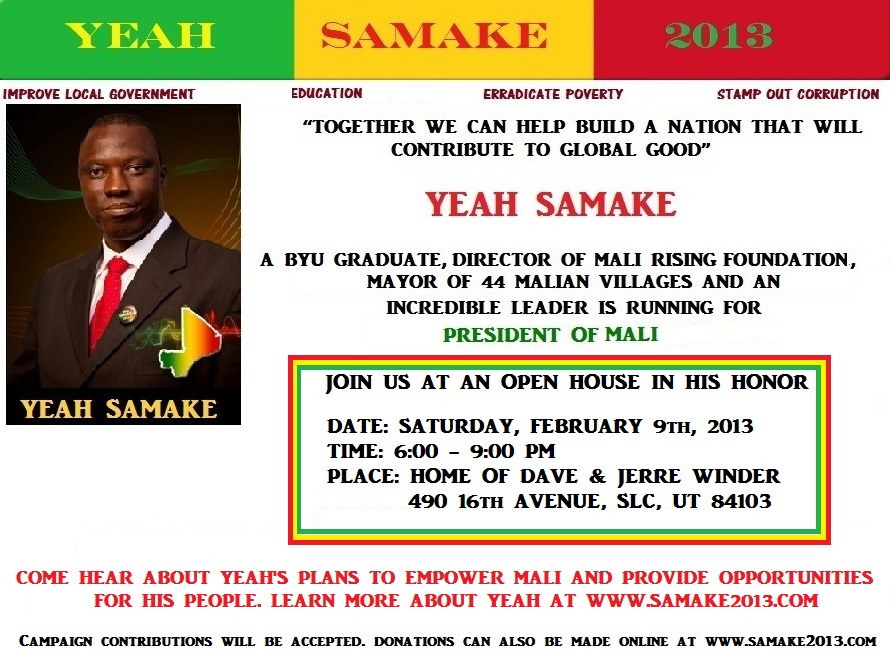
Are you going to be in Utah on February 9th, 2013? Dave and Jerre Winder have kindly offered to host a meet and greet for Yeah at their home in Salt Lake City.

If you are in the area, Yeah would love to see you. Yeah’s unique history has prepared him to be the leader for Mali today as he intimately understands the needs of his nation while having the reputation, integrity, and skills needed to enact change at the highest levels of public office.

Come and meet Yeah, hear his story, and learn of his vision for the people of Mali. Light buffet is provided. It will be casual dress. Please feel free to bring friends.

DATE: Saturday, February 9th, 2013
TIME: 6:00 pm – 9:00 pm
PLACE: Winder Home, 490 East 16th Avenue, Salt Lake City, Utah 84103

Flyer_Samake2013_DaveWinderevent

 
2 Comments

Posted by on February 6, 2013 in Past Posts


Moving Mali Forward

The last month has certainly been one filled with challenges for Mali. In a way, however, the events that have played out and the results broke the deadlock and inaction in Mali.

On January 6th 2013, rebels took over the town of Konna and started an offensive that predicted doom for Bamako, the seat of the Malian government. If Bamako had been overtaken, Mali as we know it would become Al-Qaeda’s newest playground. The French reacted immediately to the threat and deployed troops to secure the South and then in a bold move, together with the Malian army they pushed the rebels back. First Gao, then Tombouctou and finally Kidal. While Kidal still remains in question since MNLA is controlling it, other rebel groups like AQIM are reportedly not present. The French are refusing to get involved in Kidal and maintain that talks need to happen between MNLA and the Malian government. MNLA is mainly made up of Tuaregs from Mali’s northern region. This might explain why France wants to distance itself from getting involved in a civil dispute between MNLA and the government of Mali. However, it also “rumored” that France has in the past supported the MNLA. Nevertheless, the sentiment among a majority of Malians is that the MNLA exacerbated the initial issue in the North by teaming up with other rebel factions like Ansar Dine and AQIM (The Al-Qaeda faction in Northern Mali).Most Malians feel that no negotiations should happen with MNLA. However if Mali is to succeed, talks must definitely happen with the people of the North to ensure that they do not continue to feel marginalized by the people/government of the South. This issue runs deeper and is old as Mali’s independence.  

Now that Mali is once again whole, another serious issue is the refugee issue. It has been reported that the refugee count now stands at 350000 refugees in bordering countries and 200000 plus refugees inside Mali. When Yeah had visited the refugee camps in Burkina Faso last month, there was a woman whose main plea was to return home. Conditions in these camps are terrible and there is not enough supply to meet the growing demand. With the regions in the North now secured, refugees can start to return home. However, there is fear because of an increased report of reprisal killings by the military. Since it was mainly the Tuareg leaders that deserted to the rebel factions there has been a backlash against this ethnic group. In addition, many of the rebels have simply melted away into the desert and also the civilian population, a very common guerilla war tactic. While one can understand why the reprisal killings are happening, these issues need to stop. There needs to be a level of discipline and leaders of the army have strongly addressed that their members need to focus on securing the areas and protecting the citizens.

The faster elections happen, the better chance Mali has of starting its recovery and ensuring its growth and stability. Democracy will also reopen the doors to the West where all negotiations had broken down since a military coup derailed elections and split the country.

Hope has returned to Mali. People are returning back to a way of life they knew a year ago. The past 12 months has affected not only the North, but people in the South too. I hear certain groups condemn the French for interfering, but what they don’t understand is if the French had not intervened Mali today would be the hub of Al-Qaeda and within arm’s reach to Europe, the Americas and Asia. That threat had to be stopped and instead of sitting and discussing it like other countries in the world, the French acted with quickness and agility. The war has been temporarily won. However the battle for restoring a nation back to stability is on.

Now, more than ever, I believe in Yeah’s ability to lead his nation. Mali’s issues are many and the country is probably in a worse off state than at its independence. I believe Yeah has the ability to restore true democracy in Mali and rebuild the economy. I believe Yeah is the hope for the dawning of new opportunities, better life and security for the Malian people.

MALI WITH YEAH SAMAKE AT THE HELM

MALI WITH YEAH SAMAKE AT THE HELM

If you believe like I do, then please support us. A donation to the campaign ensures that our work can continue. Now more than ever it is essential that democracy be returned to Mali. A donation can be made online at www.samake2013.com

Also, this past week, Yeah shared his opinion on what Mali must do to now move forward. His opinion was published in the Washington Times. You can access it at this link or read below: http://www.washingtontimes.com/news/2013/jan/28/the-way-forward-for-mali/

THE WAY FORWARD FOR MALI

“It is critical to stability in the Maghreb and the Sahel region that terrorism in Mali be dealt with, both militarily and politically. The current situation in Mali cannot be separated from the issues in the Maghreb and the Sahel.

Extremists are breaking down the traditional tribal cultural bonds that have held society together in the Sahel region. This breakdown has far-reaching consequences for future generations. If we do not begin to reverse this trend immediately, we will have an exponentially greater problem to deal with in the near future, and much more serious long-term effects. It is critical that we apply equal pressure across the entire region in order to deal with terrorism.

As French forces have promptly intervened to help avert the movement of Islamists toward the south of Mali, there is a growing concern that the militants will spread into neighboring countries. Regional forces have been deployed alongside the French troops, which gives hope that the military campaign will succeed. There is also hope that the United States might soon restore direct political engagement with the Malian government.

The recipe for restoring and maintaining a democratic Mali requires holding elections, the return of Malian administration and army in the north, political stability and accountability, and the homecoming of displaced Malians. The way forward in Mali will begin with a Sovereign National Conference similar to that of 1991. This national dialogue will put in place the right political environment as a precursor to free and fair elections. Malians have a tradition of picking leaders through electoral processes, not by consensus, even when the outcome is less than perfect. When the country is unified, the authority of the state will need to be strengthened to allow cohabitation with decentralized local governance.

We must also consider the humanitarian situation. Humanitarian efforts should be balanced with the need for displaced Malians to return to their homes. They have been driven to camps because they do not want to live under Shariah law. After a successful military intervention, it is important politically that they become part of the solution by returning to their residences. Humanitarian assistance must be balanced in this regard.

There is a legitimate and valid need for the international community to continue to engage on the holding of elections. The current transitional government has shown no great eagerness to hold elections that might remove them from power. Deadlines must be established and commitments to those deadlines. Leverage can be found for both the military and political solutions required to restore Mali to a fully functioning democracy.

Recovering the north is not merely a logistical support effort. In the post-coup environment, there are still some political levers that need to be applied. Support for the Malian army requires not just logistics and training, but also restoring some of our critical relationships.

A group of generals ousted in the coup could play a critical advisory role in retaking the north. In particular, the former Malian Joint Chief of Staff Lt. Gen. Gabriel Poudiougou had a good working relationship with Maj. Gen. David Hogg, commander of U.S. Army Africa, and is well respected by the U.S. Embassy. He was recognized to be a good player with U.S. Army Africa and had not been tainted by some of the corruption that was apparent elsewhere. He should be brought back into the process of taking Mali forward militarily. It is imperative that some of this lost leadership be leveraged back into the process.

The political and military process must be inclusive, not exclusive. This inclusiveness in a small area will be necessary for the political aspects that must drive the re-unification of northern Mali.

Accountability must be the principle that underpins our support. Political corruption was what led to the coup. Military corruption followed that political corruption. As Mali receives material support, it is imperative that the United States, as a major stakeholder in the process, should have a mechanism in place to monitor the flow of this equipment and material to ensure that corruption does not subvert the effort.

Deadlines for an election tied to material and other support for the military effort, along with necessary reforms, will start us down a productive path toward restored democracy and reformed accountability. This road is complex, but it is worth traveling, and it is a journey that must begin immediately.”


Leave a comment

Posted by on February 2, 2013 in Past Posts


Tags: , , , , , , , , , ,

Mali’s future

The year 2012 has been a challenging one for Mali. Mali is already the second poorest nation in the world with issues in many sectors like healthcare, education and government. And if that is not bad enough, the coup last year has made matters worse. While Sanogo seems nowhere in the picture, it is not hard to see that not much happens without his approval. The Interim President Dioncounda is a President in name and more power lies with the Interim Prime Minister Django Sissoko, who so far seems as ineffective as his predecessor. December 2012 saw the resignation of the previous Prime Minister Cheick Modibo Diarra as allegations circled that he was advancing his own political agenda instead of focusing on resolving Mali’s territorial integrity and helping prepare Mali for elections. After months of negotiations, the UN Security council finally backed a resolution to send an African led force to Mali to unseat the rebels in the Northern regions. Unfortunately we have seen more Islamist attacks on areas that were previously held by the Malian army. Yesterday, it was reported that there was an intense battle in the town of Konna, a small town by Mopti.Today reports show that the Malian army was able to successfully regain control of Konna.

So what does 2013 hold for Mali? One only has to be living among Malians to know that Mali is suffering internally. While Sanogo was hailed as a hero immediately after the coup, public opinion in his favor is starting to waiver. The cost of day to day goods has risen significantly and in an economy that already had a 35% unemployment rate before the coup, things seem bleak. Tourism has suffered dramatically and many hotels/restaurants are feeling the pinch. The people in the North are suffering under the imposition of Sharia law. In addition, the refugee crisis seems forgotten. It has become an issue that has been put on the back burner while Mali’s inefficient government tries to figure where it is going and what it is doing. Yeah’s most recent trip to the camps in Burkina Faso last week revealed degrading conditions. One woman in the camp told Yeah that the refugees were tired of the situation and the conditions and just wanted to return home. A home of a united Mali, not a North run by extremists.

The international community is requesting elections in April 2013. Is this doable? Many politicians, who were running prior to March 2012, have now been imprisoned or have fled the country in fear of the junta. The large parties have had to find replacements that are relatively new and unknown. In addition, some of the prior candidates are serving in the current interim government making them ineligible to run in the next elections. Finally, much of the collected campaign funds were utilized prior to the coup and so more fundraising needs to happen to replenish this fund to campaign. Despite these reasons, it is good to see that many of the old corrupt politicians are nowhere in sight to run in the next elections and that much of what is left are younger politicians with newer ideas on how to improve Mali.

However, if we don’t have elections soon, we will not have a government that is recognized as a true democracy. When you have too many players determining policy, fighting to regain the North will become harder. When you have a central leader recognized and elected by the people and a government that responds to that leader, then you have a unified front to represent Mali and regain the North. With all the forces involved from the junta to the interim President to the interim Prime Minister, you have too many faces trying to call the shots and assert authority. Elections mean one authority, one government and a stronger face against terrorism. So if that means April, we will have to be ready.

Mali cannot afford another failed government. I believe strongly, that Mali needs leadership. The issues to date have been caused by a lack of leadership. First, by the former President ATT who was overthrown and who for 10 years failed to raise the level of living. Then by Sanogo who let key parts of the country fall to rebels, while he asserted control. Then by a puppet government which has not truly led. We need to look at what is being done for Malians. While so-called Malian leaders were floundering in their self importance, it was Yeah who was meeting with other Malian politicians trying to reach a consensus on where Mali needed to go. It was Yeah educating key African and Western figures on understanding the situation in Mali from Mali’s perspective and about what was needed for Mali. It was Yeah who was bringing attention to the refugee crisis and reaching out to external organizations to send food and medical care.  Malians need a leader who isn’t self serving. They need a leader that has proved that a Malian’s life is more important than lining their own pockets. Now it is just a matter of allowing Malian voices to be heard so that free and fair elections will be held.

People ask me all the time. Why are you here? Aren’t you afraid for your family, for Yeah? I would be a fool if I said I did not fear for my family and Yeah’s well-being. I do worry, but if we don’t take this opportunity to make a difference, then the fate of 15 million people lies in the balance. Our comforts and tension is nothing compared to the suffering that Malians undergo daily.

The only hope for Mali now is to hold elections and create a strong, unified government. If Malians continue to hope the solution will come from outside, it will be too late. The economy cannot take another year of bad news.

I believe that Yeah can bring change. I believe that this campaign is not about just becoming President of a country. Rather I believe that this campaign has become a quest to restore integrity to a nation and bring hope to a people that are suffering. Too many years have passed with the Malian people being marginalized. Things need to change. Yeah possesses the skills, education and integrity needed to lead Mali. He possesses the strength and diplomacy to unify the government and restore his country.

If you believe like I do, then support us. Become a part of Team Samake and see how you can help us in 2013 to unite a country and raise hope for the people of Mali. www.samake2013.com

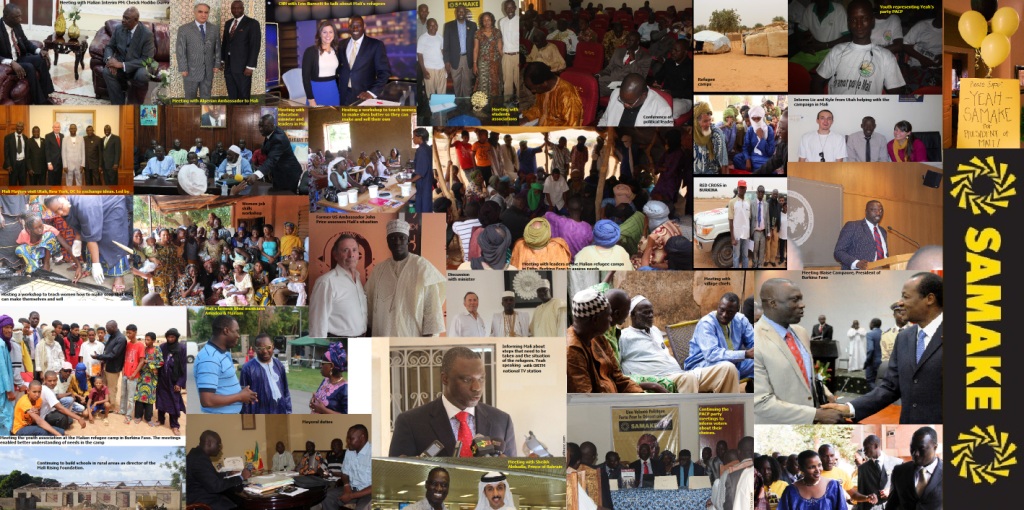
The Samake2012 year in review

The Samake2012 year in review

 
3 Comments

Posted by on January 11, 2013 in Past Posts


Tags: , , , , , , , , , , ,

One of the things untouched by the coup in Mali…

As I drive through the streets of Bamako, or visit a restaurant or the markets, the absence of foreigners or the “toubabs”( white people) seems evident. It would be fair to say that the coup has destroyed this country in more ways than one. The tourism industry crashed overnight as foreigners fled Mali for safer havens. A few weeks back when I visited the artisan market where sellers of Malian handicrafts will gather, the lack of foreigners was evident. From seller to seller, the story was the same. Business was almost non-existent. Most hotels have shuttered due to business dying down and most restaurants that cater to the foreigners have had to reduce hours and staff.

But in the face of all this downturn of the tourism industry, the one thing that has surprised me is the Malian entrepreneurial spirit. That is the one thing the coup failed to destroy. As I drive down the streets it is not hard to find the people selling their wares on the roadside or as they walk with baskets on their head. In fact the number has seemingly grown in the last few months. Goods are more expensive, but Malians are in a way taking their future in their own hands.

Entrepreneurship is nothing new to Africa. One can actually say that you will find more African entrepreneurs than any other continent. In fact, women seem to be taking the charge on this. Everyone here has an idea of how they want to make it big and many will sacrifice much to ensure that it happens. And that is what Mali needs at this critical time. The government has already shown how ineffective it is in stabilizing the economy. The rising food prices seem indicative of that. As a foreigner here, I myself find the food prices more expensive than they were a year ago. It seems only right that Malians take matters into their own hands and dictate how they get to make their impact on the economy.

The one thing I love about Mali is its entrepreneurial spirit. Everyone here can make money if they are willing to work hard for it. I have always said about Mali. You can find someone to do anything or make anything you need/want. Mali has no shortage of hard workers. Empowering Malians to affect their future is one of the reasons we did the soap and shea butter project a few months back. There will never ever be a shortage of need for these two items in Mali.

The coup did not damage the Malian spirit of entrepreneurship. It emboldened it.

Hopefully, the same spirit that you will see on the streets of Bamako will affect the leadership in Bamako. The delayed action in handling the Northern situation and the ongoing refugee crisis are just two the things the government is delaying handling appropriately. It is a hope that the elections in May 2013 will bring forth a leader that can actually do what they say and not high talk and low ball. Mali needs hope from top down and it needs stability to return to all sectors of Mali.

Mali’s hope is Yeah Samake. We can sit all day long and talk about what Mali’s leaders are pretending they do. Or we can look at a record of a man who has done much for his community in Ouelessebougou and continues to bring foreign attention to Mali’s refugee crisis. A man of the people. Yeah Samake.

 
2 Comments

Posted by on November 21, 2012 in Past Posts


Tags: , , ,