RSS

Tag Archives: donate

Impacting Governance at the local level

On March 16th a delegation of Malian mayors and municipal leaders left hot, sweltering Mali for Utah. The goal was to attend a 3-day governance summit in Salt Lake City, Utah.

One of the key things that Yeah hopes to offer as President of Mali is further training and exchange between Malian leaders at the local level and local leaders in other countries, so that an exchange of ideas and best practices can happen. This falls in line with one of the key platform points of the Samaké campaign: decentralization of power. No one knows better how to solve the problems of the Malian people at the local level than the Malian leaders that govern them locally. By providing them the tools to make better decisions and implement different ideas, we are stretching minds to the endless possibilities that can give Malian people a better life and it all starts with educating and empowering local leadership.

The summit and the trip were made possible by a partnership between the Utah based foundation Empower Mali and Utah League of Cities and Towns. Yeah, as the Mayor of Ouelessebougou, Mali, led the delegation of local leaders. The really cool thing about this delegation is that its members hail from 5 of the 8 regions in Mali, even war torn Tombouctou.
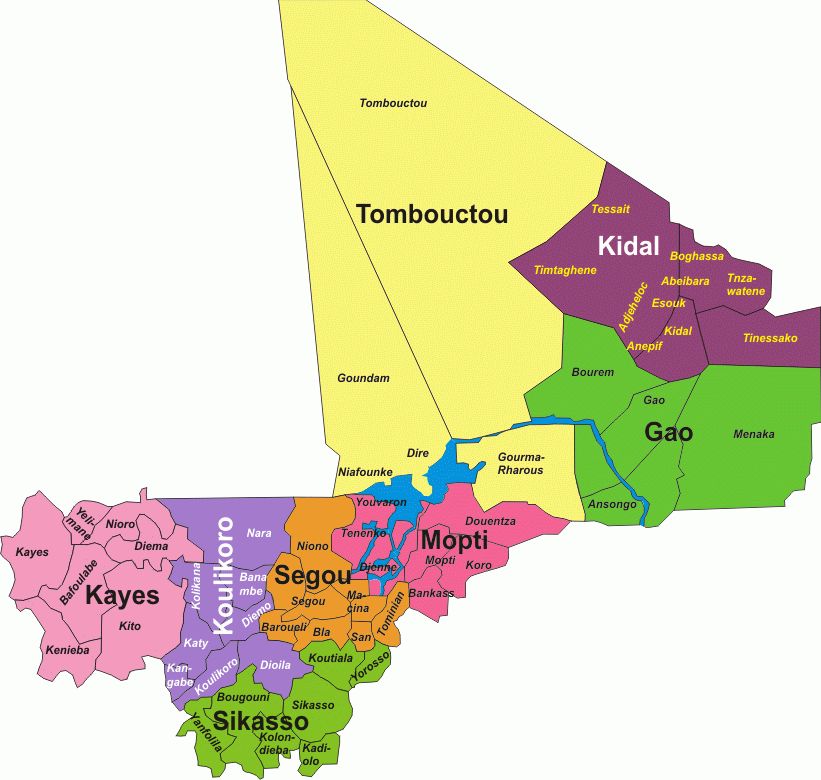
maliregions

The delegation includes members from different political parties. It included the following members:
• Nampaga Coulibaly, Mayor, Misseni (Population: 45,000 people, Sikasso Region)
• Diarha Diarra, Mayor, Moribabougou (Population: 29,000 people, Koulikoro Region)
• Sekou Boubacar Doucoure, Mayor, Tele (Population: 2,078+ people, Tombouctou Region)
• Malik Guindo, City Council Member, Doucoumbo (Population: 13,000+ people, Mopti Region)
• Malick Keita, Mayor, N’Gabacoro (17,000+ people, Koulikoro Region)
• Ousmane Kouyate, City Manager, Ouelessebougou (Population: 44,000+ )
• Birama Traoré, Mayor, Kirané (Population: 40,000+ people, Kayes Region)
• Barakatoulahi Keita, Partnership Coordinator, Association of Malian Municipalities
• Mamadou Tangara, Mayor of Kénédougou, Sikasso City ( Population: 230,000+, Region of Sikasso)
• Delegation led by Yeah Samaké, Mayor of Ouelessebougou (Population: 44000+, Koulikoro Region)

The 3-day summit was jam packed with visits and discussions all over the state of Utah from Logan to Provo. City Councilman Carlton Christensen greeted the delegation on behalf of UCLT. The delegation also received a warm welcome at a luncheon hosted by the Hinckley Institute at the University of Utah. The Mayors were impressed with the student’s commitment and involvement in government studies. Prominent figures like Mayor Mike Winder and Director of the Hinckley Institute, Kirk Jowers expressed hope that a partnership between local leaders in Utah and Mali would be solidified through this exchange. The energy was high and this was a great start to the three day summit in Utah. The delegation, despite being extremely tired and jet lagged, was excited at the endless possibilities of what they would take away from this experience during the next few days.

During the remaining days, the delegation also visited facilities like the UTA Trax Station, Sandy City Fire Department, Waste Management Transfer Station, Salt Lake Valley Landfill, Parleys Canyon Water Facility and Salt Lake City Waste Water Facility. These are all new experiences for the group. These kind of high end facilities are not available in Mali. That is not to say there is no fire, waste or police facilities in Mali. The difference is that the level of resources committed does not even begin to compare. The delegation was impressed by the organization of these facilities, especially the police station, water and waste plants. They asked many questions on how these facilities worked at a local level to handle the State’s needs. The mayors discussed the significant differences between waste and water management in Mali and waste and water management in the U.S. and what measures they can take to improve access to and quality of water and handling of waste in their own communities.

The delegation also had a unique opportunity to visit with the Sandy City, South Jordan and Ogden City councils. This gave them the opportunity to compare these councils and their functions against similar councils in their own regions. Each of these mayors works together with the city council in Mali in their respective regions to determine things like budget and requirements within the city limits. So it was nice to see some similarity of a process and observe how things are done in the US vs. Mali. The delegation also met with the African representative Franz Kolb at the Utah Office of Economic Development and Lew Cramer, President of the World Trade Center. The key topic of discussion was how to realistically implement a partnership between the cities in Utah and the cities represented by the delegation.

A good starting point was determined to be via the school systems in Utah and the primary schools in their cities. The delegation was pleased and impressed by the discussion and with the prospect of business partnerships between cities in Mali and cities in Utah.

The trip to Utah also included a visit to beautiful Temple Square. The delegation had a meeting with Elder Robert Gay of the Quorum of the Seventy of the LDS Church. Elder Gay is in charge of employment, education, and new business startups worldwide. At this meeting, they discussed the role of the Church in helping young people to find work after they have graduated. Elder Gay also emphasized that if education is only in the cities then the youth will come to the cities and never go back to the villages. The organization Unitus that Elder Gay helped start up is in the process of building apps that can be used on tablets and phones to help educate individuals in the rural villages. They are also focusing on water innovation in rural areas, primarily in Africa. Elder Gay asked the delegation to send him an official invitation to Mali to for his education application pilot program. The group also visited Welfare Square where they looked in amazement at the scale of services offered to the needy through the thrift store and employment program.

The final high note was a visit to none other than Costco. It is amazing the things we take for granted. Seeing so much food and items in one place can be overwhelming. The delegation loved it! I remember Yeah telling me when he first went to Costco back in 1999 when he first went the US, the feeling of awe that went through him and the realization that all the food there could help feed his own people back home.

All the delegation members wished the trip in Utah could go on longer so that they could see more and learn more. That is definitely something we will implement next year when we invite yet another batch of municipal leaders and mayors to come to Utah and other parts of the US for an exchange. The delegation was pleased with the trip and spoke of plans to act on what they had seen and learned, particularly in regards to partnerships.

I am thankful to all the wonderful people in Utah who helped with the delegation, especially the Utah League of Cities and Towns for arranging the meetings, the Empower Mali Foundation for arranging everything on the Mali side, our volunteers who translated and helped where they could, Jen Leahy our amazing photographer and Brett Van Leeuwen who kindly arranged lodging for all the delegation members in beautiful Alpine, Utah. It is support like this that makes what we do a possibility. We are grateful for your support!

The delegation is currently in NYC where they had the opportunity to visit the United Nations and the current Ambassador of Mali to the US Al-Maamoun Baba Lamine Keita. Also NYC hosts a strong population of Malians. The delegation was excited to meet with and mingle with many members there. The Malians in NYC showed great hospitality to the delegation, a tradition not forgotten or absolved of even though they are many miles away from Mali. The Malian delegation will return back to Mali this week.

It is opportunities like these that will empower our local leaders to effect change in their own communities. Yeah has often said: “A mind once stretched can never go back”. Yeah, through his public policy education at Brigham Young University, Utah has learned many things about governance. He has been able to apply the things that will work and has moved Ouelessebougou from the bottom 10 cities in Mali to one of the top five cities in terms of development and transparency. He talked last year with the Sutherland Institute about how his education has helped him . You can watch that video here: https://www.youtube.com/watch?v=h8nFS7AwrpU

It is essential that leaders be given the opportunity to see the endless possibilities and then pick and choose what will work to better their communities’ lives and livelihood. We want Mali to be a strong nation with a prosperous people. It is for that reason that we create opportunities like these. We hope that through these conferences and summits, that we can affect change at the local level. It is a possibility that can be made a reality with the right kind of leadership and implementing the right processes for change. Ouelessebougou, Mali is proof of that and the track record of Yeah Samaké displays that he is the leader of good, honest change and can make Mali a great nation.

This slideshow requires JavaScript.

 
Comments Off on Impacting Governance at the local level

Posted by on April 24, 2013 in Past Posts


Tags: , , , , , , , , , , , , , , , , , , , , , ,

Helping affect Mali’s future

Since his appointment as Special Envoy to the Prime Minister of Mali, Cheick Modibo Diarra, Yeah has indeed been one busy man. Yeah’s main goal as he has met with representatives from Bahrain, the US and Mali has been one and that is to create a common understanding of Mali’s current situation and how the present government is planning on creating political stability.

Yeah met with the Ambassador of Mali to the United States in DC, Al Maamoun Baba Lamine Keita, sharing his insight into the Malian situation and the reasoning for the removal of the previous President ATT. They also discussed the need for increased collaboration and understanding between the U.S. and the new government in Mali in the hope of removing sanctions against Mali, so that aid could once again start flowing to the people that desperately need it.

Yeah also met with two members of the U.S. Senate. First, he met with Senator Michael Lee, a member of the subcommittee on African Affairs. Then, by recommendation of the U.S. Ambassador to Mali, Yeah also met with Gregory Simpkins, a staff member for the U.S. Congress and a prominent journalist in African Affairs.

In August, Yeah visited Bahrain which is home to the US 5th Naval base, where he was received by members of the royal family. His visit allowed him to inform Bahrain of Mali’s situation and the need of investment leading to the creation of a bilateral agreement between Mali and Bahrain. Upon return to Mali, Yeah extended an invitation to former U.S. Ambassador John Price, who has been very engaged in African politics.  Ambassador Price visited Mali from September 6th-12th.

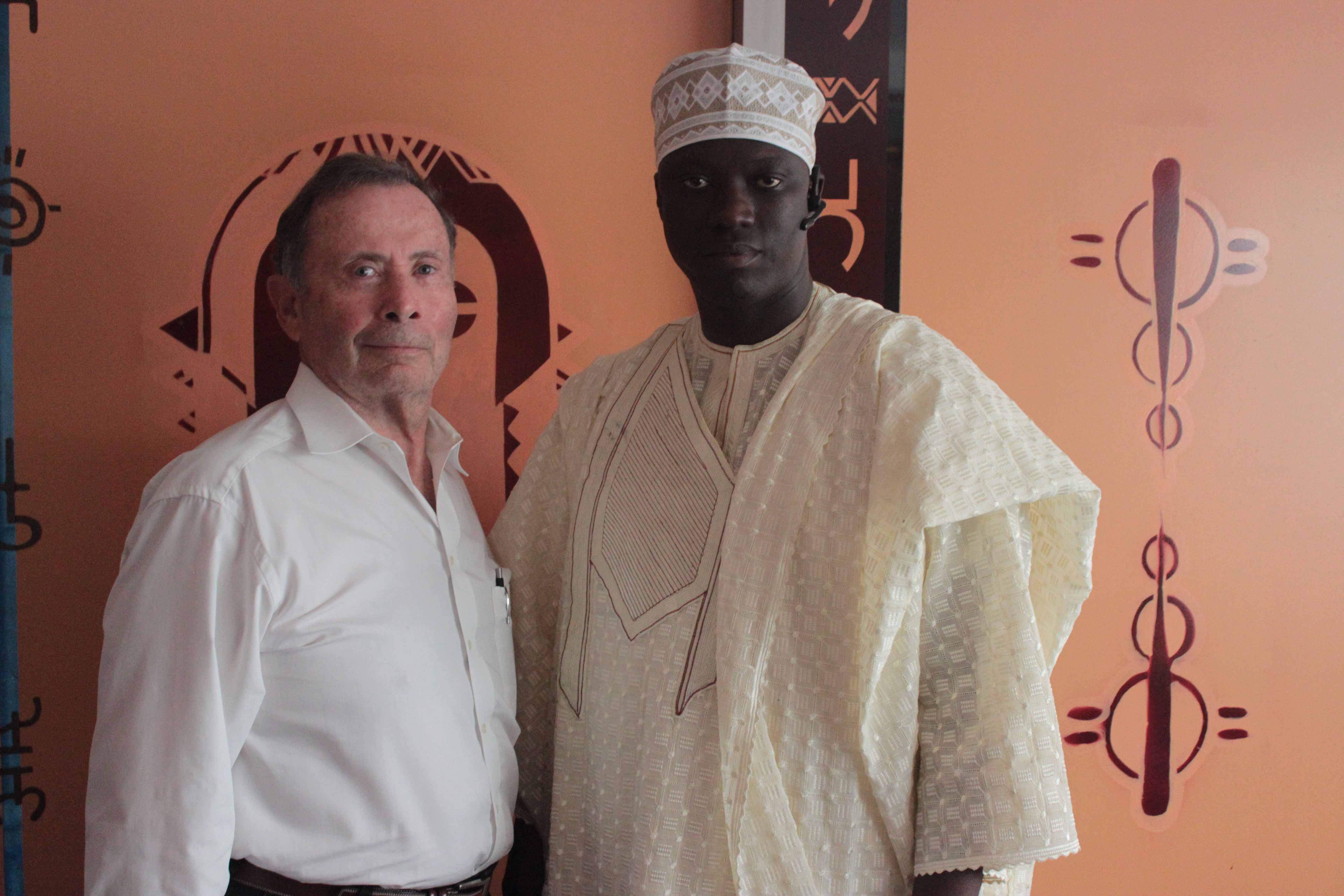
Ambassador Price with Yeah

Ambassador Price’s visit was indeed an important one as it is important for people in the West to actually experience the situation in Mali rather than just read about it. Ambassador Price and Yeah got to meet with many key government officials in the defense, foreign and judicial sectors. Yeah was also able to secure a meeting with the man responsible for the mutiny back in March 2012, Captain Sanogo. You can read more about Ambassador Price’s opinion on this and other meetings on his blog: http://www.ambassadorjohnprice.com/captain-amadou-sanogo-a-hero-or-mutineer/2362/

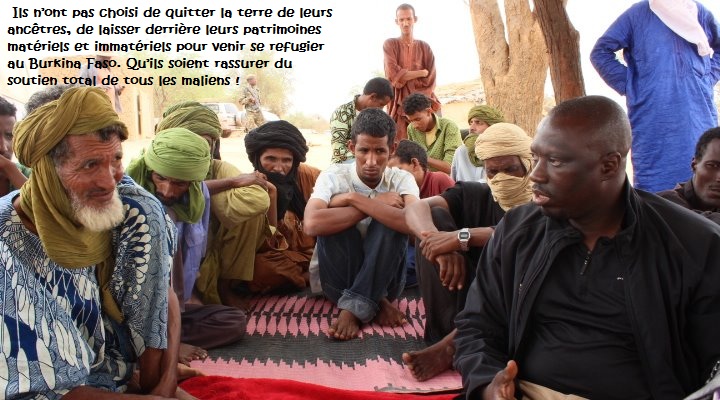
Yeah and Ambassador Price also had the opportunity to visit the Malian refugee camp in Mentao, Burkina Faso. The visit will allow for a better foreign understanding of Mali’s actual situation and not as perceived by the media.

In Mentao, Burkina where we hope to distribute some aid soon

This past week has seen Mali put in a formal request for foreign troops from ECOWAS to come assist in the North. There seems to be a split opinion among Malians about whether ECOWAS troops are welcome on Malian soil. There has been a report stating that Sanogo and people close to him are against the decision by the President to invite foreign troops. The truth however is far from it, as Sanogo himself, appeared on national TV in an attempt to dispel these rumors. I guess time will show how the situation plays out. For now, there is no way for the Malian refugees to come back unless the North has been ridden of rebels. Each day there are fresh reports coming out that show atrocities in the North. Everyone is too afraid to go to that region and would rather desert everything for safety.

These past two and a half months have been busy as Yeah continues to reinforce the diplomacy and presence of Mali throughout the U.S. and other countries. The work is not over. It has barely begun and will continue until Mali once again is a democratic country.

We need your help. We cannot continue doing the things essential to restoring democracy without expending financial resources. If you can help support our work, then please help at http://www.samake2012.com. Mali deserves its chance at democracy and freedom.  

( Thank you to Liz Jessop for helping me write this post :))

 
1 Comment

Posted by on September 16, 2012 in Past Posts


Tags: , , , , , , , , , , , , , , ,

Aw Sambe Sambe!

As we drove back to Ouelessebougou this past weekend, we were looking forward to celebrating the end of Ramadan, a month of fasting for Muslims. The traffic and the high number of cattle being sold were a tell tale sign of the upcoming celebration as Malians busied themselves preparing for this important event.

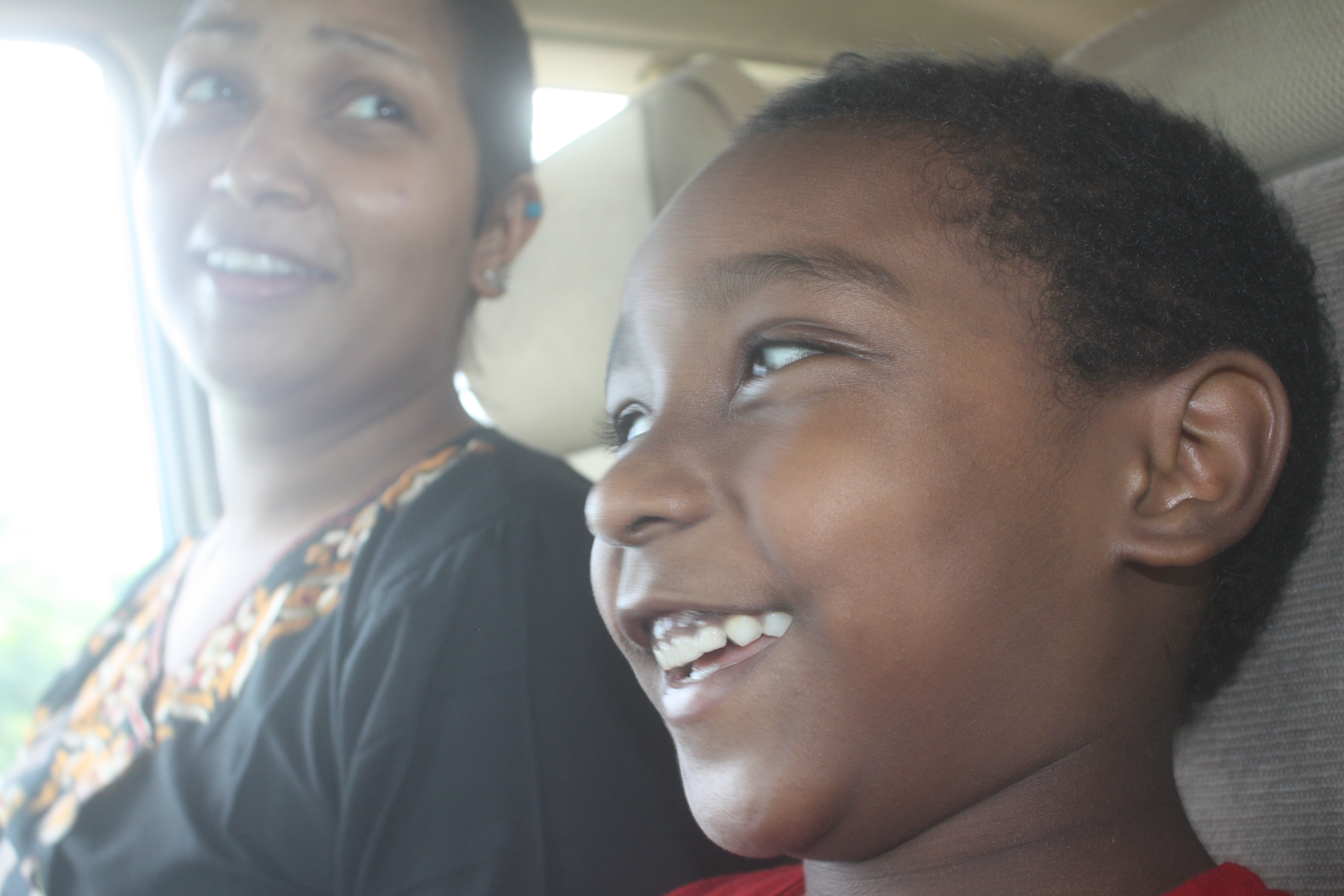
On our way to Ouelessebougou. All smiles.

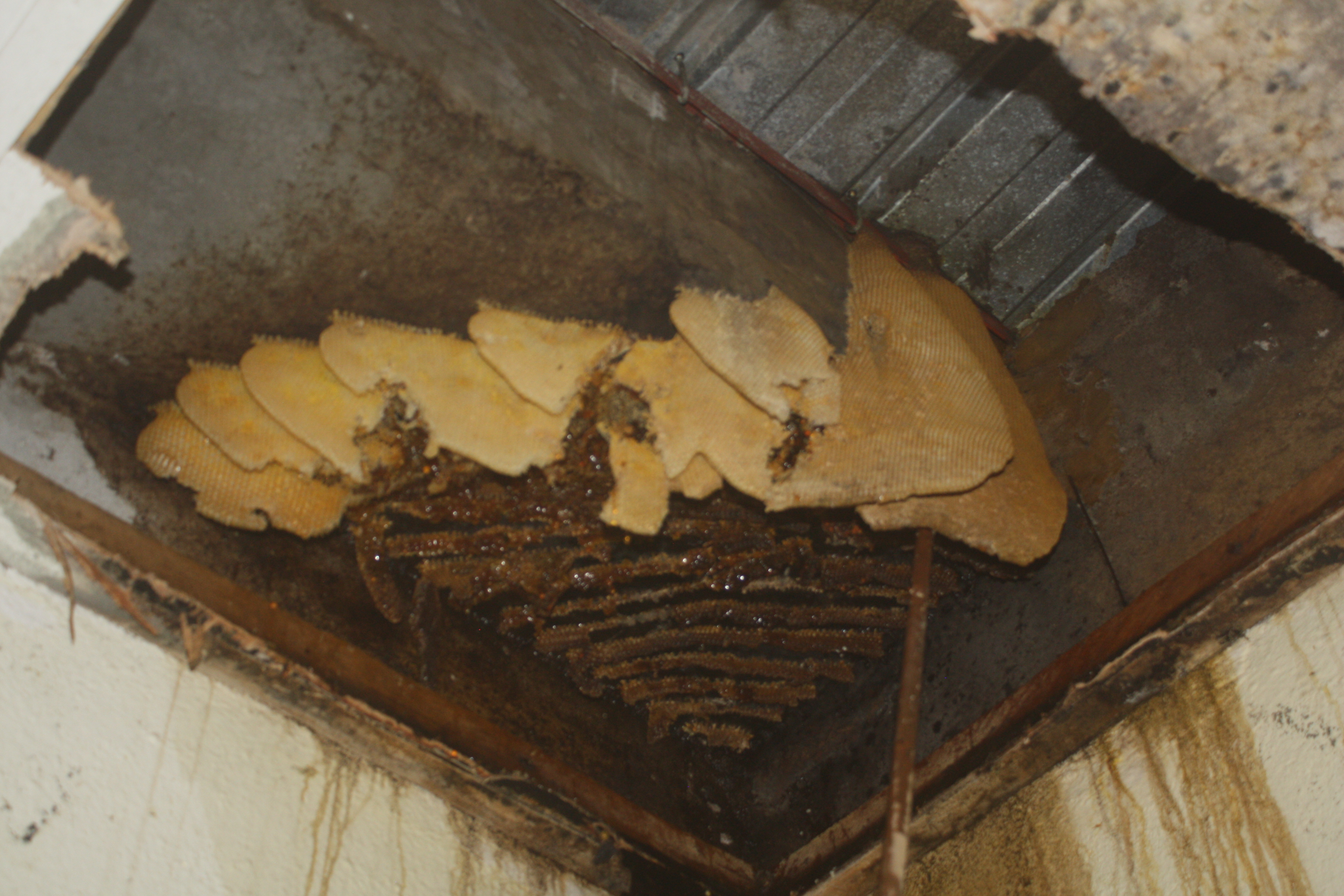
he first thing that greeted us at our house in Ouelessebougou was a collapsed ceiling. The high amount of rain in the past month, while a welcome break for drought stricken Mali, had caused one room’s ceiling to fall in. That was not even the worst part. As the carpenter took the roof apart, the room filled with a swarm of bees. There had been a hive in that part of the roof. Within minutes, the buzzing of bees could be heard through an open window in the house. Being the eve of the celebration and the 100s of bees, the carpenter was unsure of whether he could fix the roof in time before nightfall. It looked like we would be returning to Bamako. However, a little insecticide took care of the bee problem and the carpenter Sunkalo was kind enough to come back and fix the roof even though it took him till 10 pm to do it. My driver Zhu and the boys that help me Dra and Nouman made a feast of the hives and honey. I guess one man’s cast offs is another man’s treasure. 🙂

Enjoying the honey

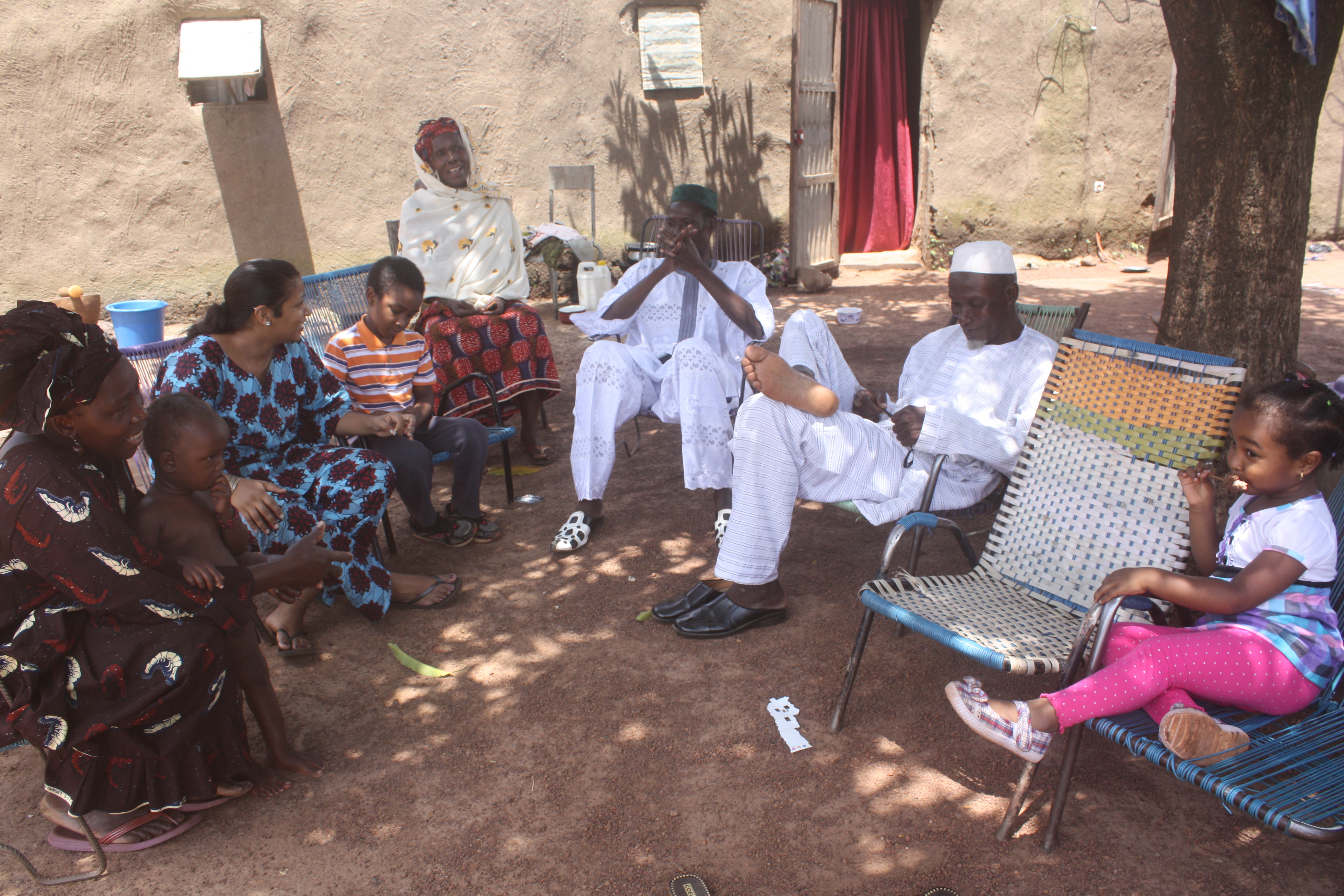
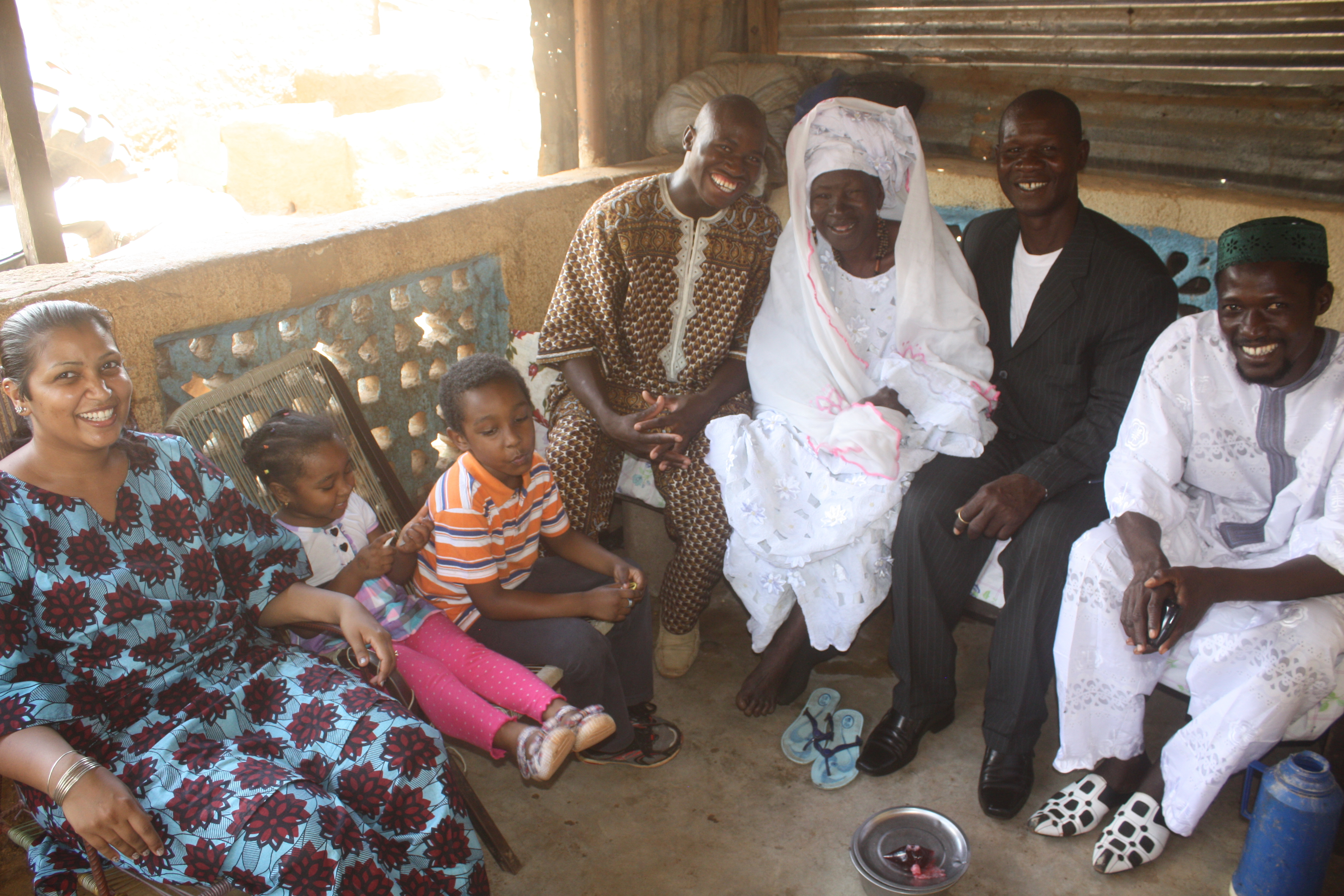
The next morning proved to be a beautiful one as millions of Malians woke up to celebrate the ending of Ramadan. The greeting of “I Sambe Sambe” and blessings accompanied by jovial teasing between family members could be heard ringing through the streets of Ouelessebougou. We celebrated the day with my brother-in-law Bei and his family. I had not seen them for a few months so it was nice to catch up with Momuso (Yeah’s second mom) and Tenemuso (Yeah’s aunt). I can always tell how much the kids and I are missed and loved by the look in Momuso’s face when she sees us at the compound gate. Regardless of the fact that she does not understand the kids, they have taken to her and her to them. The day was spent with greetings and visits to other family member’s compounds. The idea of family and its importance in Malian culture is so evident during feast times. Any money you give to one family member goes to the whole family. Also family member’s children are usually given money while all other children usually get just candy. Families celebrate by eating together and the day is one for visiting and paying your respects to different members, young and old. It is beautiful to be drenched in family and blessings and I have realized how much I have come to love and accept this new tradition.

Talking with Momuso( which means Grandma in Bambara) and Tenemuso( which means Aunt in Bambara)

Visiting Yeah’s uncle

Visiting Yeah’s third mother

Popsicles for the hot day

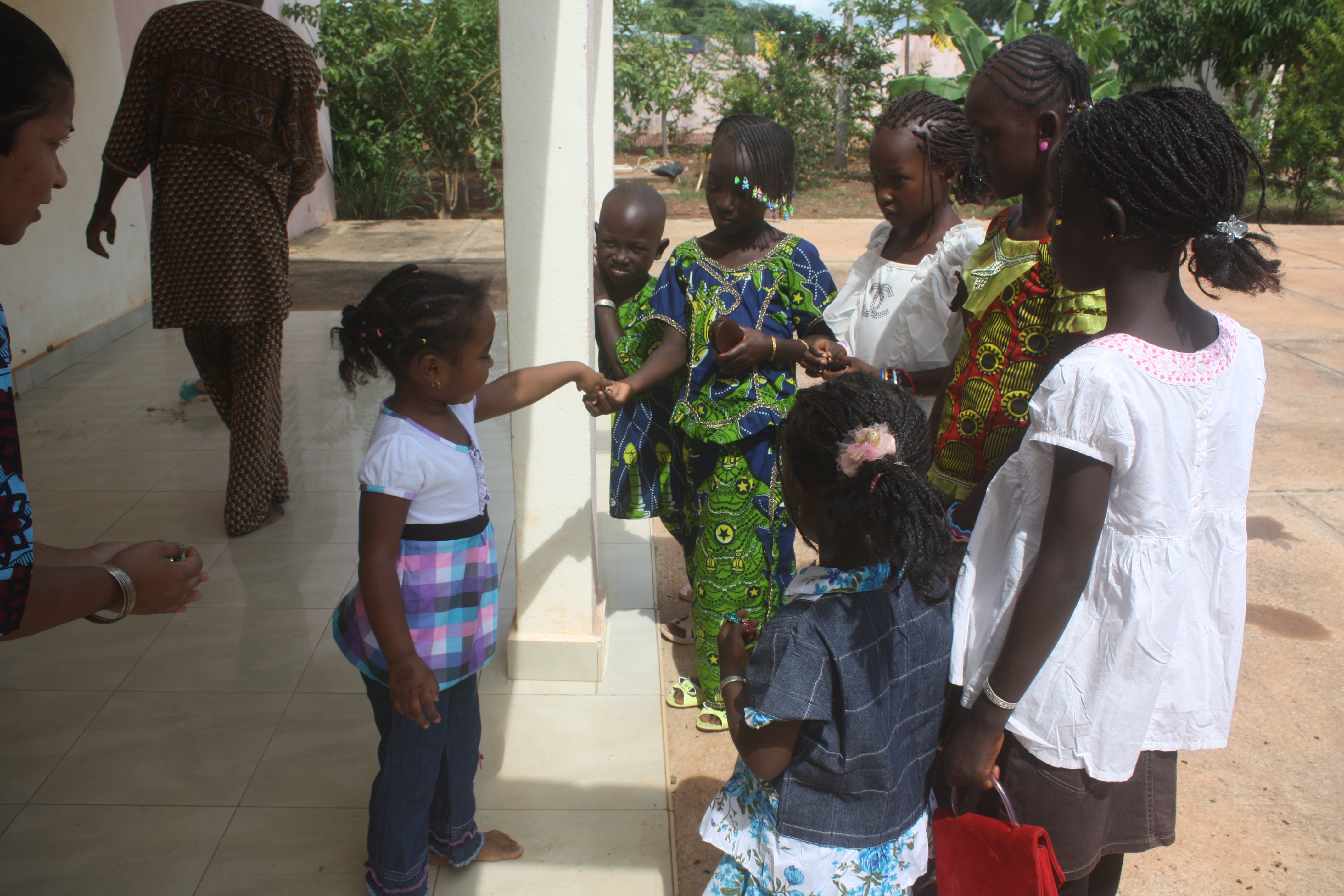
When we got home, there was a steady procession of young kids that came to pay their greetings and spurt out blessings in return for money and candy (almost like Halloween). Keanen and Carmen had a blast handing out the candy. The experience highlighted for me how much they have grown in just one year. Last year, they would not have heard about handing out candy. This year they were volunteering! Even fiery little Carmen! At Bei’s compound, they ran around like the other kids chasing chickens, eating brochette (meat on a stick) and exploring for treasures. The experience in Mali has taught them much. However, I think, because of how much they are blessed with, in their own childlike way they acknowledge the stark difference in the fortunes and are happy to share. May their kind hearts rub off on me so that I may learn to be as generous. Mali is teaching my children to remember how blessed they are and how they should try and share those blessings.

Handing candy out to the kids.

To my Malian brothers and sisters, I wish you: “Aw Sambe Sambe. ‘Ala ka san wɛrɛ yira na’ May next year be better than last; ‘Ala ka hɛrɛ caya’ May God increase your peace; ‘Ala ka batow mine’ May God answer your prayers’; ‘Ala ka kɛnɛya soro’ May you be healthy. Ala ka san caman yira an kene la (May God give us many years of health); Ala ka yaf’u ma (May they forgive us); Ala ka yafa an bema (May we be forgiven)

This slideshow requires JavaScript.

 
1 Comment

Posted by on August 19, 2012 in Past Posts


Tags: , , , , , , , , , ,

Join Yeah Samake at an event in UTAH!

Billy Hesterman, from the Daily Herald in Utah, did a story on the situation in Mali and what Yeah Samake is doing to make a difference. Click on the Link below or read the story posted in the Daily Herald in Utah.

BYU grad’s bid to be president of Mali on hold

The situation in Mali is bleak.

Just this year Mali’s military staged a coup on the national government because they claimed they were not receiving enough support to fight the al-Qaeda supported rebellion in the northern part of the west African country. More than 300,000 Malians have fled from their homes to avoid being ruled by the rebels and the country is losing foreign aid as it goes deeper into conflict.

The country was supposed to hold elections this year in which Brigham Young University graduate Yeah Samake was hoping to take over as the country’s president. But with a major conflict taking place and the government being overthrown by the military, that election has been put off until May 2013 so that the country can get its affairs in order.

Currently an interim government has been established and work is being done to strengthen the army that overthrew the government. But the slow-moving process is leaving people without food and sufficient hygiene supplies while they wait for the military to reclaim areas in the northern part of the country.

Samake though isn’t just waiting for the military to act or for his election to come around, he is trying to do something to bring help to his country. He is in the United States right now giving leaders an insider’s view of the situation. He has met with U.S. Sen. Mike Lee, R-Utah, to brief him on the status of the country and also met with state department representatives and United Nations officials to inform them about his country’s struggles.

“There is significant human suffering going on right now in Mali. People are hungry. They can’t provide meat for their families. They sit and watch their kids and worry about providing daily meat to them. As a father and as a mother that hurts,” he said.

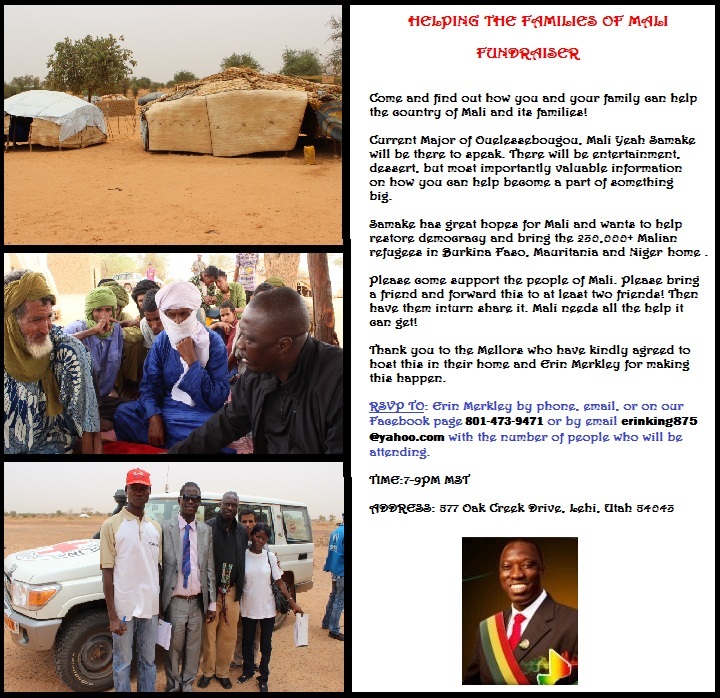
In addition to his briefings to leaders about the status of his country, he also has traveled to Utah to raise money to support the refugees that are suffering in Mali. On Monday he will be in Lehi to host an event that is aimed at raising money and awareness about his people’s situation.

“One of the reasons I am here is to help women and children in those situations,” Samake said. “I’ve been in the refugee camps. I’ve met with the people. I’ve talked with the Red Cross and UNHR and have tried to find the needs of the people. Truly food shortage is significant. But tents are lacking, as well as hygiene kits. And the children that are out of school, they also need a playground and toys to play with.”

So far local businesses have stepped forward to support Samake in his efforts. Nu Skin and Overstock.com have offered their support to him and Lehi resident Erin Merkley is organizing the Monday night event that is open to the public to help support those suffering in Mali. Those wishing to attend the event should contact Merkley at erinking875@yahoo.com.

“Utah can make unique contribution to this because of the connections and ties that so many Utahns have with Mali,” Samake said.

Samake remains hopeful for his country’s future. He also remains optimistic about his chance of becoming the country’s next president. He hopes his current efforts will show the Malians that he genuinely cares for his country and that he has the ability to get things done to get his country on the right track.

“People are looking at me. And this struggle is an opportunity for me to rise up as a leader for my people to see what I can do for the country,” he said.

Just more than 14 million people live in Mali. The annual salary of a skilled worker there is about $1,500. The nation is equal in land size to Texas and California combined.

———————————————————————————————————————————————————————————

WANT TO MAKE DIFFERENCE? NOT DOING ANYTHING MONDAY, JULY 16TH? THEN COME JOIN YEAH IN UTAH AS HE SPEAKS ON HIS FIRST EXPERIENCE MEETING THE DISPLACED MALIAN REFUGEES THAT HAVE NOW FLED TO BURKINA FASO.

CAN’T COME? PLEASE TELL 10 FRIENDS IN UTAH ABOUT THIS EVENT. ALSO, IF YOU CAN, PLEASE DONATE ONLINE AT WWW.SAMAKE2012.COM TO SUPPORT THE REFUGEES.


Together I believe we can make a difference in the lives of the refugees that have been displaced. I pray that soon our Malian brothers and sisters will come home. I cannot imagine the conditions they are being subjected to. The shelter they have is no match for the hot, humid weather mixed with rain showers. The food cannot meet the constant pains of hunger. Imagine sitting 15-20 hours without doing anything, day in and day out. The supplies are running out soon and we need to help continue the aid till we can bring them home. This is not a life and I would never wish it even on my worse enemy.

Please help if you can today. Donate at http://www.samake2012.com

 
2 Comments

Posted by on July 15, 2012 in Past Posts


Tags: , , , , , , , , , , , , , , , , , , , , , , ,

Political Ping Pong and Helping women help themselves

The political situation in Mali, as far as South Mali goes, remains quite stable. The Prime Minister seems to have gotten his team together so that the country can be run. The Interim-President Diacounda Traore remains absent as he continues to have treatment in Paris. To be honest, it really matters little that he is not here as much of the government running is done by the Prime Minister and his transitional government while the President remains in name alone. There are pitter-patters of discontentment from the political circle in regards to the running of the government. The transitional government that was formed left out all political parties, one feature that has received international credit but that has caused major discontent among Mali’s political class who feel they should have been included in the government. While it seems admirable that no old guards from the political parties were represented among the transitional government, it would have been advisable to have a few fresh faces from Mali’s political circle as advisers. The result now is that there are many parties, mainly the big ones that are creating a stir by saying the Prime Minister is ineffective and the country is not making progress.

Yeah’s had formed a political coalition ADPS (Alliance des Démocrates Patriotes pour la Sortie de crise) with other political parties. This past week saw members of some of the political parties claiming that they wanted to ask the Prime Minister Diarra to resign and have a new government be created. Yeah refused to go along with this and advised PACP’s official position as such: “The Political Bureau of the Party for Civic and Patriotic Action(PACP) informed the Executive Board of the Alliance of Democrats for the Patriots out of the crisis (ADPS) of our decision to disengage from the memorandum between the ADPS and FDR. Given the principles and values that led to the creation of the ADPS, PACP will reserve from partnering with FDR. Our party is committed, in this delicate moment in the life of the nation, to support the government of Mali in its mission to regain territorial integrity of our country and the organization of upcoming elections.”

It is essential at this point in time that Mali not falter back to the position it was in 3 months ago. To return back to a non recognized form of government would create more uncertainty in Mali and encourage further rebel actions in Mali’s North. Already, the Northern region has declared their independence and is looking for Mali to separate from that region. The question is not whether Mali will relinquish its hold, it’s when it will start to regain its territory so that it’s displaced people in Niger, Mauritania and Burkina Faso can return home. Also letting the Northern region go will mean doom to other ethnic groups that form the majority in these regions as they will be driven out and suffer the same fate that the refugees suffer today. Also, already the activities of rebels and AQIM are pointing in the direction that the North will become Al-Qaeda’s new playground.

Mali’s dilemma is complicated to say the least. Diarra, the Prime Minister, needs to become more vocal about his intentions or his people will start to lose faith in his abilities. There is little indication as to where his policies are headed. An uninformed people can easily be led away and become an opposition. Diarra, now more than ever, needs to get his people on his side. Food prices are rocketing and it is the general population that lives on less than a $1 a day that suffers. Two things remain a priority for Mali. First and foremost, Diarra needs to show the Malian people who is in charge and share his ideas to get Mali where it needs to be. Second, he then needs to bolster the Malian army so that terrorist groups can be expelled from the country. When these groups are removed, then negotiations can happen with the Tuaregs to determine their rights without infringing on other ethnic groups.

While the political scene remains complicated, but stable, the Malian people continue on with their daily lives. Yeah’s party PACP has been growing in droves ever since the coup happened. With the major political parties in disarray with no leadership, many youth leaders are knocking on PACP doors to investigate joining the party. PACP is engaging in tasks that follow its core principle of patriotic and civic action. Along these lines, PACP sent a delegation to Burkina Faso to assess the refugee situation a week and half ago. Their visit lit a fire under the Malian authorities who now have also paid a visit to these camps.

Another group that has received some attention from PACP is the women. Personally, I believe that Malian women are strong. They work dawn to dusk taking care of their families and are usually the first to wake up and the last to go to bed. Usually they will have anywhere from 4-10 children with the average being six. Their responsibilities do not stop there. They cook, clean, chop firewood and often try to start small businesses so that they can bring in some income. All of this is usually done with a child on their back or one to two in tow. In Mali, women and men have separated incomes. The man is responsible for providing money for food and the general running of the household. Any money the women bring in can be used by her at her discretion. Having a business teaches these women how to sustain themselves. The culture in Mali is rapidly changing and it is very common to see small street businesses run by women selling anything from household items to produce.

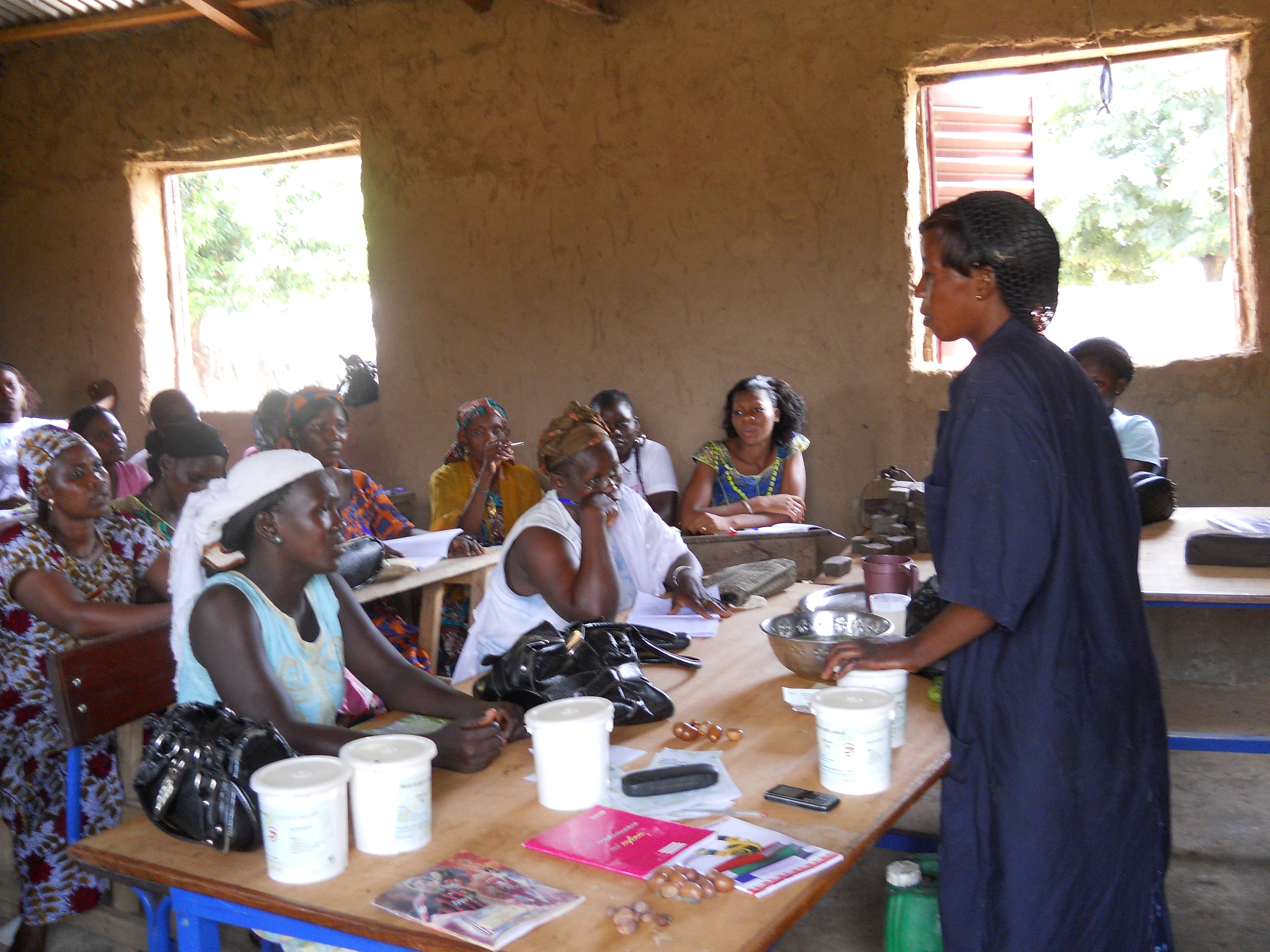
Classroom training for the women

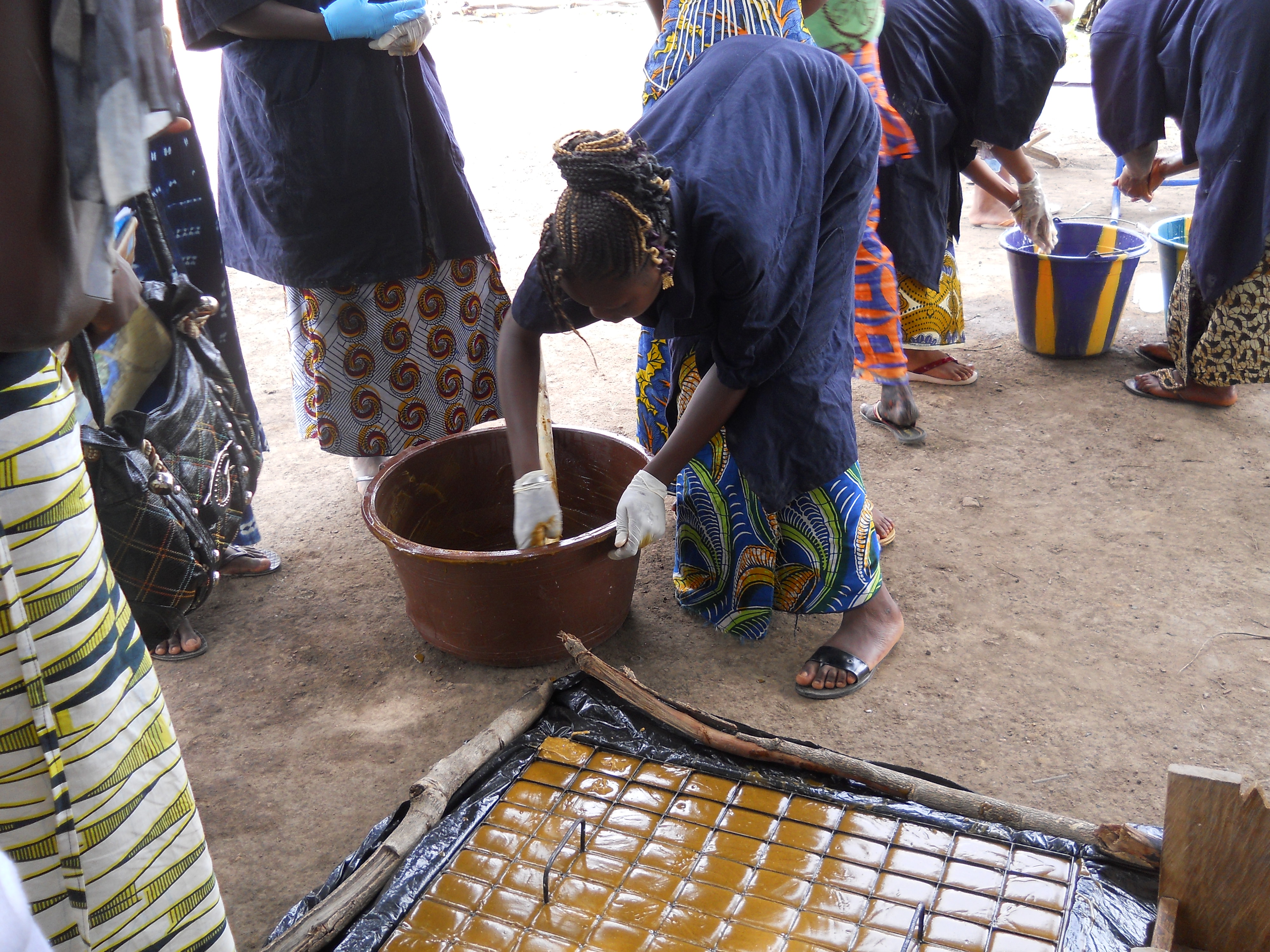
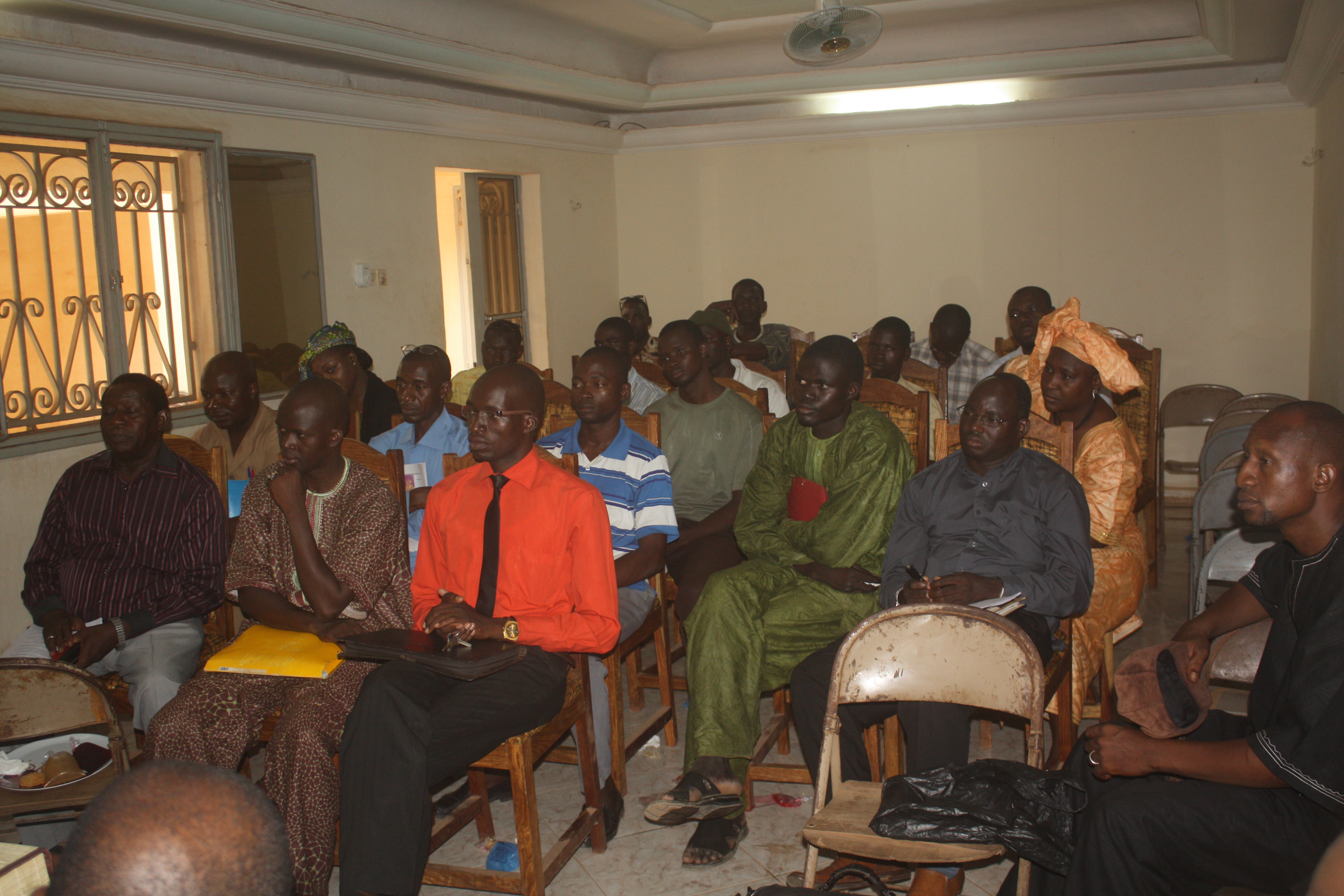
PACP in an effort to encourage increased women entrepreneurship hosted a free workshop for 25 women, led by PACP member Kone, to teach women how to make soap and shea butter. The women in a 5-day workshop received the benefit of formal training in a classroom setting as well as on the job training. This was an awesome opportunity for these women to learn a business that they could then take back to their own regions and implement. Shea butter is a very essential product in Mali everyday life. It is used for anything from a cosmetic value to a medicinal use. People in Mali will often use shea butter when they have a cold or sore throat and many will swear by its effectiveness. In addition it is used in cooking and some will even add a perfume into it and make it a cream. Soap as well is an essential part of everyday life in Mali. As polluted as Mali is, Malian women do the best they can do to keep their surroundings and personal/family items clean. These two items are essential in Mali’s economy and there can never be too much of either product. By teaching these women how to make these products, PACP is providing them the tools to learn a skill that could change their lives. This knowledge can be shared not only with the next generation, but more importantly with other women in their communities. Women are very social in Mali and by teaching one woman you are in essence teaching the entire group she will associate with.  On their final day of training the group met with Yeah in Ouelessebougou, where he expounded to them the importance of the training and what the women could gain from it if used.

Classroom Training on making Shea Butter

Practicing Making Soap

The finished product being allowed to set. In Mali, bars of soap are used to wash clothes, dishes etc. Detergent is reserved for car washing or cleaning the house.

Yeah speaking with the women at the end of their training

Many more trainings like this will happen and the need is great to empower women. Many women in Mali are illiterate having had little to no opportunity to gain an education. It is projects like these that will help women create opportunities for themselves. A 5-day workshop like this usually costs $1500-2000. You might be surprised, and this does not include the trainer’s fees. In the case above, the trainer donated his services to PACP. The fees come from renting vehicles, gas and for housing/food. To truly learn these skills, you have to travel to different villages and regions hence contributing to the cost. Regardless of the cost, I believe this was money well spent. I am a big believer in empowering women and it is my hope that projects of this nature will educate women and then give them the hope to change their lives and the lives of those around them.

 
1 Comment

Posted by on June 25, 2012 in Past Posts


Tags: , , , , , , , , , , , , , ,

Calm returns to the South while the North Struggles

This past week has passed in relative calm. The capital has almost gotten back to normal and one would find it hard to believe that a coup ever happened. The junta seems to have backed down completely and it’s probably the sweet deal that Sanogo got for himself that is keeping him quiet. However, I am quite surprised other members of the 500-strong junta have remained quiet, which lends to believe that either Sanogo was really the undisputable leader or the rest of the junta is getting something as well that has been undisclosed. Dioncounda remains in Paris and is supposed to return sometime this week. Life continues in much the same way as it did before. Prime Minister Diarra is attempting to fill his role as leader of the country. He has a great responsibility and many are relying on him to push Mali back on track. Yeah had met with him last week to discuss ideas and solutions on how to get Mali’s issues of leadership addressed as well as the issue in the North. Yeah’s take is that without strong leadership and a plan in the South of the country where the government is based, the North’s issues cannot be resolved.

Last week Yeah also gave an exclusive interview to the well known newspaper L’Independent in Mali where he talked of the struggles in Mali. He advised that Mali should not accept ECOWAS troops on Mali’s soil killing Mali’s people in the North. The solution has to be bred on Mali’s soil. Also Yeah encouraged ECOWAS to work with the political class in Mali. With the issue in the North, Yeah said that it is important to involve well off neighbors like Algeria and Mauritania because ECOWAS does not have the logistics and money to support troops despite them wanting to send troops to Mali. Also the stakes are higher for these countries because if rebels/terrorists overflow across their borders, it could cause instability for them. You can read the entire interview here in English: http://samake2012.com/updates/2012/05/interview-with-malian-newspaper-lindependent/#more-1296 or here in French: http://www.maliweb.net/news/interview/2012/05/28/article,69486.html

For the most part, people are just watching and waiting to see what the non-partisan Diarra will do. As I have said before, as long as their leaders don’t make things worse, Malians will put up with it. Diarra seems to be a calming force amidst the chaos. Malians seem to actually heed his words. For the first time yesterday on National TV, he spoke to Segou soldiers on the issue in the North of the country. “I have always said that I do not support war, because it’s war that makes a child an orphan and it’s war that makes a woman a widow. But if we love our country, we must liberate it even if it’s through war, a war that will end the daily wars. A war that will open the door for peace and security because without peace we cannot have security and without security, there will be no prosperity for this nation,” the PM said. He spoke with the most passion and conviction than I have ever seen him have. He talked of how Mali would not concede any part of its land to the rebels. Talk is all well and good. The thing that is most concerning is that Mali currently does not have an equipped army. The 7000-strong army that is reported by statistics websites like CIA may be correct as far as man count. However, the fact remains that the army lacked the arms before the coup and they continue to lack the arms. To send them into the North without the equipment would be like signing their death sentence. Apparently, Western countries, especially America had given ATT a lot of arms and vehicles to fight off the rebels before the coup. Rumor has it that ATT sold or gifted much of this to the rebels themselves when they initially came over to Mali after Libya’s Gaddhafi fell. There are no reports one way or the other to corroborate the story. Fact remains; the army is defenseless and has the manpower but not the equipment to fight.

What Mali needs immediately is strong leadership in the south that has a plan on how to re-unite the country and ultimately gain back the territories in the North. The Tuaregs are a minority and not even they are in control right now. Control seems to be shared between Ansar Dine, MUJAO, AQIM and MNLA, all terrorist factions. So while the South seems to be gaining some control, the North is struggling with a terrorist problem and a refugee issue.

UNICEF despite increasing the aid it is providing has been warning about the sanitary conditions at the camps as well as the demand outweighing the supply. Ultimately, it will be the women and children that will bear the brunt of this refugee crisis. This refugee crisis started with the drought but has been intensified by the crisis in Mali. The problem has been overlooked long enough as the world’s attentions focused in South Bamako. In addition governments of Mauritania, Algeria, Senegal and Burkina Faso also have to deal with the refugees that fled across the border. One country’s crisis is becoming West Africa’s dilemma. This is just one big mess and it needs the international community to bring light to the growing humanitarian crisis. On the other hand there are terrorist groups operating freely in the North. They are restricting aid and making life very hard for residents by imposing Sharia law. There have also been reports that they are damaging World Heritage sites in Tombouctou that have been around for centuries. Imagine the destruction of the Great Wall of China or the Taj Mahal. As an Indian, I would be angered if anything happened to a symbol of my culture. Even the youth of the North have mobilized themselves, fed up with the lack of leadership from Bamako.

Finally, given ECOWAS’ failed track record to help bring civilian rule to Mali, ECOWAS has designated a new representative from the country of Benin. Let’s hope the new leadership will not bully Mali and cause more issues.

Strong leadership first will allow Mali to resolve this crisis and attempt to resolve the growing issue in the North. The question remains, will Prime Minister Diarra be that stabilizing force that Mali desperately needs and will ECOWAS finally include all political forces in Mali rather than enforcing their will.

 
Leave a comment

Posted by on June 2, 2012 in Past Posts


Tags: , , , , , , , , , , , , , , , , , , , ,

Analyzing Mali’s strife

Mali currently stands on the cusp of a big decision to be made. On one side, a deal favored by ECOWAS would be to allow interim President Dioncounda Traoré to serve the next 12 months as President of the transitional government. On the other side, would be to choose a new president during the transition. Mali remains divided on this decision. Many would prefer Dioncounda to leave office on May 22nd as per the Malian constitution. To many, Dioncounda is a reminder of the “old guard” that allowed things to get so bad in Mali, a reminder that Malians would soon like to put behind them.

On May 21st, in response to a forced decision by ECOWAS to have Dioncounda serve as a transitional President, tens of thousands of protesters marched on the palace and brought harm to Dioncounda, who had to be admitted to hospital for head injuries.

Analysis from Presidential Candidate: N. Yeah Samaké

Yeah has always maintained that the solution to Mali needs to come from inside the country. In a Voice of America interview, he said: “Mali needs its partners, but we need to make sure that this is a Malian solution. We cannot make this solution outside of Mali [because] that will be an imposition. We don’t want that and it is not going to be a lasting solution”.

In response to today’s violence, Yeah stated: “These acts are condemnable. However may it serve as a lesson that there needs to be a concerted effort at a solution that is acceptable to all Malians, who believe the act of choosing a President is a sovereign decision.  After the violent reactions to the decision made by ECOWAS, we can anticipate a number of outcomes:

1) Follow the status quo decision keeping Dioncounda as the president of the transitional government as his term as interim President ends today. This means that ECOWAS will choose the interim President who will ultimately honor all agreements during the transitional power. The advantage of this decision will save Mali and ECOWAS from the daunting task of bringing Malians together to have a consensual President. It is also conducive to a quick return to an acceptable, seemingly acceptable constitutional order that is a pre-requisite for involvement of the international community. The drawback of the decision would be the sustainability of the solution beyond the 12 months transition. This decision excludes the participation of political leaders who are ultimately going to become the decision makers to upload the agreements made during the next 12 months.

2) The consensual decision. This implies the organization of a national convention that Sanogo and several political players have called for. This will allow for a consensual transitional body that will be accepted by all involved parties. This alternative will ensure a more stable transition supported by all the stakeholders. As a drawback this option may not be warmly received by the international community. As a result, Mali may continue to receive sanctions imposed by bilateral and multilateral partners such as ECOWAS, US, France, World Bank and the IMF. Ultimately the withdrawal of this support would cripple the country from the capacity to resolve the rebellion in Northern Mali.

3) An elected transition President as suggested by ADPS. ADPS is formed with 14 other political parties and their solution would allow Malian political leaders, civil society, and the junta soldiers to be proportionally represented in a 30-person body. Seven representatives of the military, 18 represented from the political parties and five from civil society. This 30-person body will elect the transitional president in their midst excluding the military representatives. This alternative would take the longest to achieve. It may also not receive the blessings of the international community. However the outcome would be the most compatible with the constitutional order. This alternative will offer the most legitimate form of leadership, where the president is actually elected and the remaining 29 members form the legislative body. The legislative body will replace the current Assembly that is reaching the end of its term. This option will resolve the unpopular decision to prolong the term limits of the Assembly which violates the constitution.

So which one is the best option for the Malian people? At the end of the day, Mali as a whole represented by leaders of civil and political society need to come together and decide. Mali’s future cannot be planned by other leaders and countries who are driven by foreign agendas. This solution has to be about the best for Mali and Mali alone.

Yeah would certainly love to hear your comments on which alternative would be your pick.

 
4 Comments

Posted by on May 22, 2012 in Past Posts


Tags: , , , , , , , , , , , , , , , , , , , , , , ,

Elections planned

Crazy "lovable" kids

Life in Mali seems to go on without much complaint. Keanen restarted school a week and half ago and thoroughly enjoys it. Even Carmen now is starting to ask when she will go to school, which is a change from a few months back, when the mere mention of the “s” word was enough to induce hysterics. The kids have settled into life in Mali or rather Mali has settled on them. They love the freedom of playing outside (despite the 115F weather) and the walks into the market to buy popsicles. They eat the food with no complaint and honestly seem to be enjoying the people they interact with on a daily basis. That is not to say they don’t miss Utah or the friends they left a year ago. They still talk about them and how they would like to go back and see them. And then the moment passes and they find themselves caught up in another activity or trip to the market. I think that I too have calmed down parent-wise. When I first came here, I worried about where they went and what they ate and how they did certain things. I have been able to trust the perspective what does not kill them will make them stronger. They are good kids, despite their healthy vocal cords and fighting, and I feel blessed to be able to spend time with them.

One of many meetings with community leaders

Yeah’s party PACP continues to remain politically active. Now more than ever given the political dilemma Mali finds itself in, it is essential to continue to spread the word about the party and what it stands for. Yesterday, party leaders Fomba and Kone did a leadership training so as to teach community leaders how to spread the word about PACP. By teaching community leaders, they in turn will spread the word and before you know it, there will be a domino effect.

On the political front things seem to be stabilizing. On April 27th, all the ECOWAS members met with the President of Mali and drew up the final installment agreement which decided on the elections and what to do in the North. A positive thing was that elections that were to happen today were decided would happen in 12 months. Two points of the agreement however caused much controversy in Mali today, namely:

  • “The Heads of State and Government decide to bring the transition in Mali over a period of 12 months, during which presidential elections should be held to choose a new President. The Summit also decided to extend the mandate of the transition bodies, including the Acting President, the Prime Minister and the Government over this period of 12 months to ensure, within the limits of the powers conferred on them by the Constitution, the continuity governance of the country.”
  • “The Heads of State and Government decide to take all necessary measures to help Mali in the restoration of its unity and territorial integrity. In this regard, the Heads of State and Government instruct the Commission to start with immediate effect, the deployment of the ECOWAS Standby accordance with the mandate approved.”

What the first point in effect is doing is ignoring the 40 day mandate of the constitution and stating that the interim President Diacounda would in essence serve for the coming 12 months. This has been the constant fear that Diacounda would try, like all other “old guard” politicians, to keep his position for longer. To be honest, there is little Malians have seen him do in the 30 years he held positions in the government. The last 10 days since his inauguration has seen him do even less. Other than his meeting with dignitaries, little has been done on his part (in my opinion) to bring the reunification of Mali. His actions belie someone who is unhurried by current circumstances. It is interesting that ECOWAS should ask that Diacounda remain in power for the term of 12 months. Interesting because Yeah had predicted this very thing would happen and a week ago had an article published that asked Diacounda, in the name of patriotism, to step aside after his remaining 20 days, to quick start the transition. (http://samake2012.com/updates/2012/04/le-coq-dioncounda-must-resign-in-the-name-of-patriotism-after-21-days-to-quick-start-the-transition-declared-yeah-samake-of-pacp/). Many political parties, including Yeah’s group ADPS quickly condemned the blatant disregard for the constitution. One cannot just decide to follow the parts of the constitution that are favorable and then change the parts that one doesn’t like. However, that is exactly what seems to be happening by allowing Diacounda to stay for more than his 40 days dictated by the constitution. Captain Sanogo, who led the March 21 coup, was quick to state in an address to the nation, how the junta would not allow such a violation of the April 6th framework agreement to happen. While it is a concern that the junta still seems to have a strong control over the national TV, it feels like the Malian people do have a protector that isn’t afraid to speak out and also let these power-hungry politicians know that Mali is the first priority and the policies that benefit Mali need to be followed.

The second point of day before yesterday’s agreement will allow foreign forces to conduct a military operation on Mali soil. This is a very sensitive issue. The entire problem has started in January with foreign rebels entering the Northern regions of Mali after the fall of Gaddafi, bringing weapons with them. By allowing ECOWAS to fight Mali’s fight with the rebels is continuing to feed the dependency that has made Mali and most African countries dependent on foreign aid. If a war must be fought, the charge has to be led by the Malian troops supported by the foreign forces in terms of weapons and logistics. These ECOWAS troops are not used to fighting in the desert conditions that are home to the rebels and such an operation could lead to the loss of more lives and more chaos.

Indeed it has been a couple of interesting days politically. But in some sense, you can almost see the young Malian politicians stand up and say to the “old guards”—No more. No more breaking the rules just to suit your power-hungry minds. No more putting self before country. No more sacrificing Mali’s sovereignty to please foreign interests. No more changing the constitution that was built on the 300 souls that perished in the previous coup. No more.

Mali is strong. The fight that is being fought is an essential one. Mali needs to find its own identity so that it may in turn hold its own among African nations. To have other nations build its democracy for it will only cause it to fail again.

Vive la démocratie! (Long Live Democracy), Vive le Mali! (Long Live Mali)

 
Leave a comment

Posted by on April 29, 2012 in Past Posts


Tags: , , , , , , , , , , , , , , , , , , , , , , ,

The price of conflict

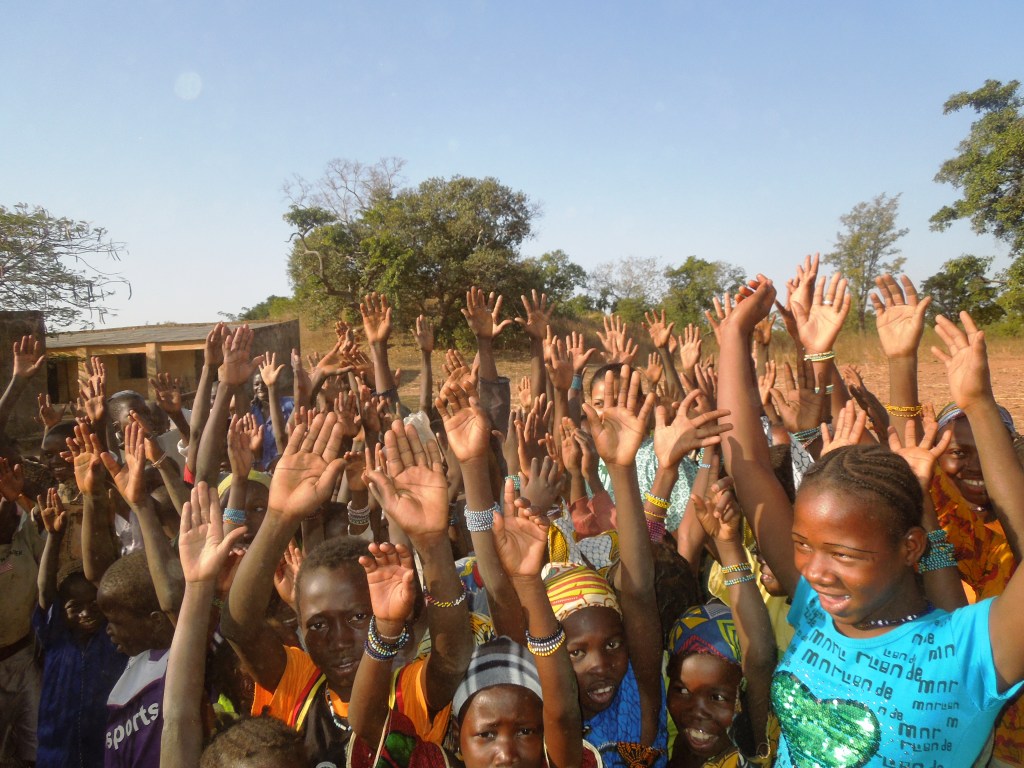
Mali’s present and future. The children celebrate a new school that will be built because of @YeahSamake work with building schools

For many weeks now, I have watched the internal crisis develop in Mali and throw the country into disarray. Many sectors have been affected as the junta dismantled any leadership that governed the different bodies that make up the country. Last week, the country saw the first real sign of returning back to pre-coup time as a new Prime Minister was named. However, the damage has been done and 20 years of democracy crushed in an instant of loss of control cannot be undone as easily.

So far little has been heard from the interim President Diacounda Traoré, in terms of what he is doing to get the country back on track. His term ends in about a month and his job is to do the things that will prepare the country for elections. A big part of that job involves the reunification of Mali and regaining the three lost territories. The job of the Prime Minister is to announce a transitional government. The PM and the transitional government will govern the country till elections happen. Any participant in the transitional government is not eligible to run in the elections. In the past week, there have been many arrests of key figures by the junta with the accusation that there was a threat to national security. The next day these individuals were released as the international community and political figures in Mali spoke out. These kinds of acts add a little uncertainty as to the junta’s role. I am not saying these individuals should not have been arrested but to play this game of catch and release not only destabilizes the community but also makes the whole thing a joke. Right now, the focus should remain on the return of governmental bodies back to a semblance of normalcy. That is what Malians want above all.

Mali has paid a heavy price for the actions of the top political figures. To begin with the “old guards” that allowed Mali to be taken advantage of in return for money/favors. Then the individuals that sat back and let it happen. And finally the junta that caused enough instability and weakness that part of Mali was lost. With the coup came change. As the rebels took over the North, many fled to escape the imposition of Sharia and also the unknown. As the junta made decisions, the international community watched as to how things would work out. Embassies pulled their non-emergency people out. Schools lost many pupils and even my son’s French school has started to look like a shanty town. European stores and restaurants saw a sharp drop in customers and hinted at the reducing expatriate population. The biggest loss however was of humanitarian NGOs that were operating in the different regions of the country. With the increasing uncertainty, many NGOs departed the Northern regions.

What I would like to say is, now more than ever, is that Mali needs all the humanitarian aid it can get. Most Malians get by on less than $1/day. Most can barely even make a $1. Today, I was approached by twin boys about 6 years old that looked no older than 4 because of their size. They came to me and told me they were hungry. My first reaction, as I looked around for their mother, was why you are out here asking for money. Where are your parents? And then I realized when parents cannot provide, then all the family are forced by their circumstances to make the little they can by begging.

I would like to send a message to all the people who read this. My message to NGOs is that Mali does have a future. They need all the help they can get. Now is not the time to abandon aid or run away. Now is the time to protect your investment and trust the Malians to stand by your side as they protect it with you. My message to aid organizations is not to let Mali down. Stay! Help the people. Continue to work in the community making a difference. Our children do need schools and teachers. The women do need to learn self-sufficiency through microenterprise and that they are strong individuals who can be part of a successful Mali. The current situation has hit the common man even more as they struggle to make ends meet. My plea to the international community is to help. Help a fellow brother, sister, mother, father and family. Do not fear that your investment will be in vain. Help because you can and because it will make a difference. Support organizations like UNHCR as they help the refugees. We can make a difference as individuals. The Malian people need your help.

Continue to keep this great nation in your prayers. Pray that they may be blessed with good leaders that put Mali’s needs first. Pray that aid organizations may continue to operate helping nurse back Mali’s failing infrastructure. Then, please spread the word about Mali and how to help. Contact your local organizations and see what they are doing to make a difference.

I am very grateful for all the wonderful support we have received and continue to receive. Mali has many friends and we are grateful that there are so many out there that do care about Mali’s present so that Mali may have a future. Thank you and may God bless all your efforts.

 
3 Comments

Posted by on April 23, 2012 in Past Posts


Tags: , , , , , , , , , , , , , , , , ,

Small steps in the right direction

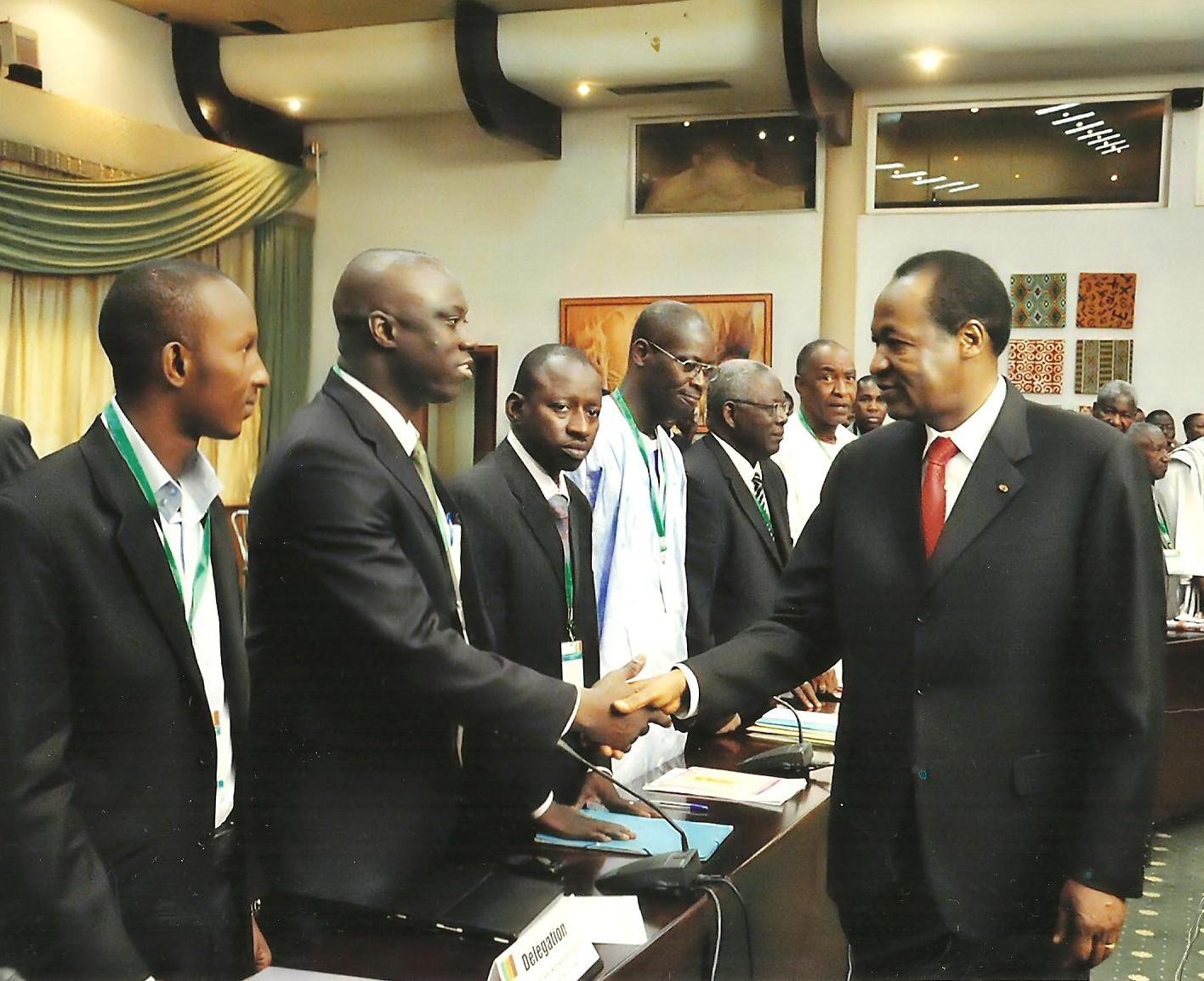
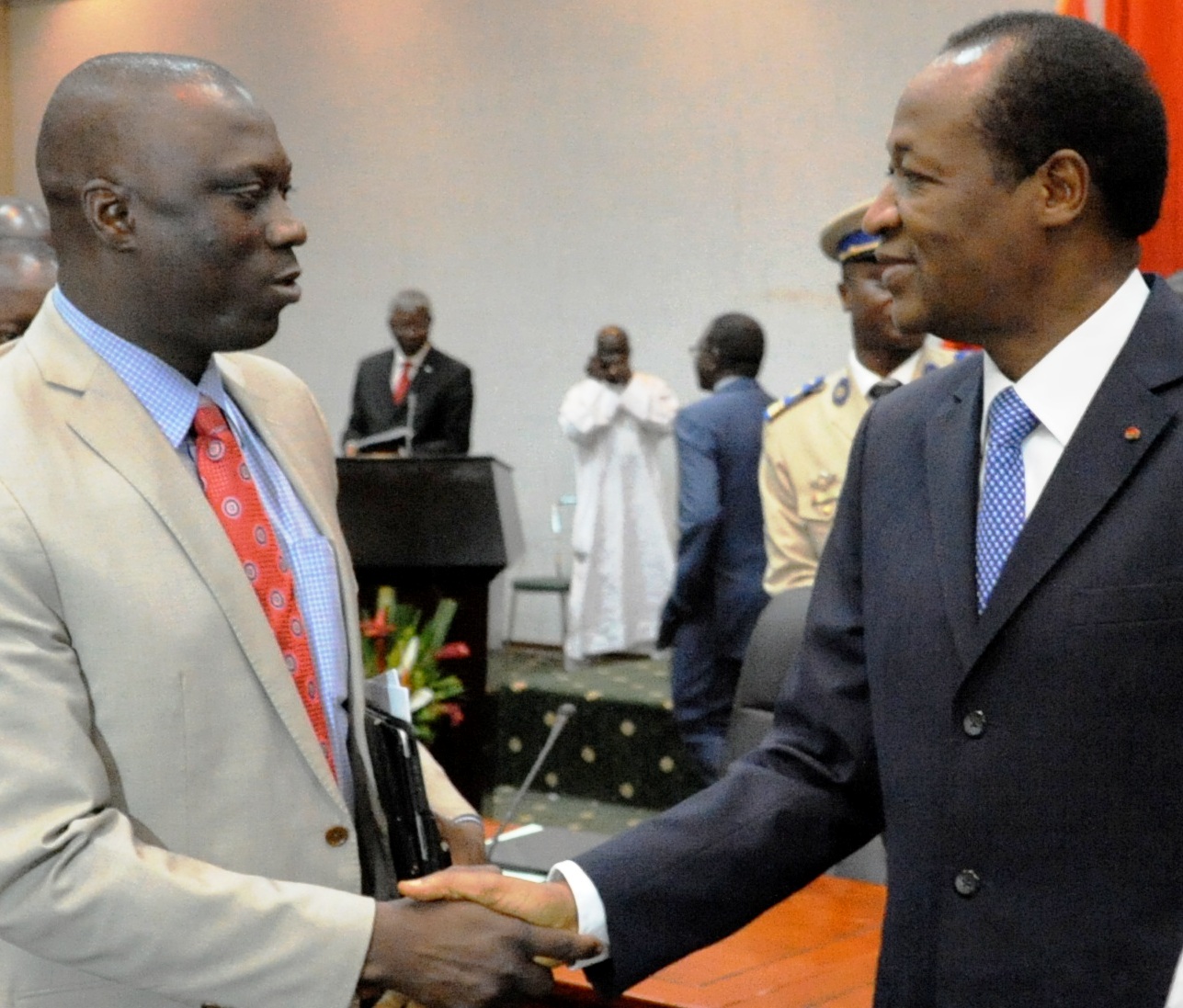
ADPS members Nouhoum Sa and Fomba watch on as Yeah exchanges a few words with Pres. Campaore

The meetings of this past weekend were a step in the right direction. Yeah and his team ADPS made sure that preserving Mali’s sovereignty was foremost as they headed to a weekend full of conferences with President of Burkina Faso, Blaise Campaoré, who has been appointed the official mediator by ECOWAS. Since the first part of the ECOWAS agreement had been honored by instituting interim President of Mali Diacounda Traoré, it was essential to discuss how Mali would now move forward. Diacounda’s primary responsibility is to reunite the country by regaining Mali’s 3 lost regions. The conference was filled with 78 members representing the different stakeholders in Mali. The conference provided a stage for political parties and representatives of the civil society to discuss their views on a number of topics including the territorial integrity of Mali, the transitional authorities, the duration of the interim presidency, and the authority that will make the choice of the Prime Minister to lead that the transitional government.

I am not going to lie and say that everyone had the same expectations.  Some of the participants were under the impression that the conference would designate the PM and members of the transitional government. However, it was more important to decide logistics before suggesting and appointing people. It was honestly a nice change to see somewhat of a democracy in action as leaders discussed what would best serve Mali in terms of leadership.

Yeah advised that the current interim President should not be able to name the next Prime Minister. If given that ability, Diacounda would have the power to put someone affiliated to his political party and potentially cause unneeded bias, especially at this sensitive time. It will be important for a non-partisan body to choose the Prime Minister. The only non-partisan body at this time is the junta. Hence, that role was given them and they will be tasked with choosing the Prime Minister. The Prime Minister in turn will be responsible to lead his transitional government before elections takes place.

So who is the new PM? The new PM announced just 30 minutes ago is Cheick Modibo Diarra, Microsoft’s Africa Corporation chairman and a former NASA astrophysicist. (http://en.wikipedia.org/wiki/Cheick_Modibo_Diarra). He was also a Presidential candidate for the 2012 elections. This could be either good for the country or really bad. Diarra lacks the political experience having no role in the political circle but might be what is needed to bind the differing political parties and views together in a strong transitional government that can lead the country till elections.

The agenda in Burkina contain essential promises and decisions that will affect the future of Mali. I can’t believe this all started less than a month ago. Mali has seen three different Presidents (ATT, Sanogo and now Diacounda) in a matter of 27 days. Now more than ever, Mali and Malians need to feel some stability return to the country. The country looks like it’s getting back on the track of democracy. And that is the right direction!

For those interested, the agreement (translated) made and acknowledged by all parties in Burkina Faso is as follows:

SOLEMN DECLARATION PROJECT BY THE VITAL FORCES OF MALI

The Conference of Active Forces of the Republic of Mali met in Ouagadougou in Burkina Faso, under the auspices of His Excellency Blaise Campaoré, President of Burkina Faso, and the mediator of the Economic Community of West African States (ECOWAS) in the Malian crisis.

Welcoming the Framework Agreement of 6 April 2012 on the implementation of the solemn declaration of the President of the National Committee for the relief of Democracy and Restoration of the State (CNRDRE) from 1 April 2012 on the return to constitutional order;

Read the rest of this entry »

 
Leave a comment

Posted by on April 17, 2012 in Past Posts


Tags: , , , , , , , , , , , , , , , , , , , , , ,