RSS

Tag Archives: democracy

On the agenda for Mali’s new Interim President

Today at 9am GMT, Malians around the country tuned in to their TV sets to watch the Malian government become legitimized at least in the world’s eyes. The roller-coaster of events that derailed a 20 year democracy saw a crest as an interim President Diacounda Traoré was sworn in.
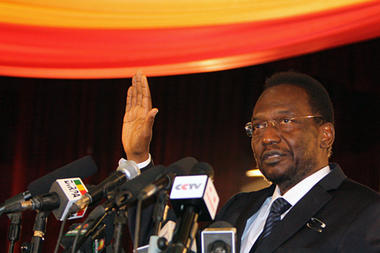
So what does this mean for Mali? Diacounda’s task is by no means a small one. Plan of action during the next 40 days: reunite the country and set up elections. With Islamist forces taking over the North and calling for the independence of Azawad, Mali is in essence being divided. There is no clear indication as to which groups are involved in the takeover of the North. Initially, while it was thought that MNLA and AQIM were the only forces, it is becoming more and more apparent that many smaller factions may be involved like MUJWA, MUJAO, GSPC and GIA (http://thewasat.wordpress.com/2012/04/06/the-black-flag-flies-in-mali/). The latest report points at Boko Haram members in Gao. This is the same group that takes credit for its violence in Nigeria. If it is true that all these groups are operating in the North, the Northern regions of Mali are already proving to be a dangerous breeding ground which if not contained and eliminated could spread to the rest of Mali and even West Africa. More and more this takeover is becoming more about just having the land and free range to do as they please versus trying to create a better equal environment for the Tuaregs. This is best shown by the degree of looting and destruction of property as well as the harm of individuals. If one truly wanted to take over land for the end purpose of freeing one’s “oppressed” people, then one would not scare its residents or destroy hospitals, pharmacies, stores etc that are the proof of a civilized community. No! No one is trying to free the Tuaregs. What is happening is a personal agenda of terrorist organizations to take over a territory that can be best used to facilitate their drug and trafficking activities and serve as a breeding ground for training camps. What we have is a pre-9/11 Afghanistan being created.

The Rebels in the North
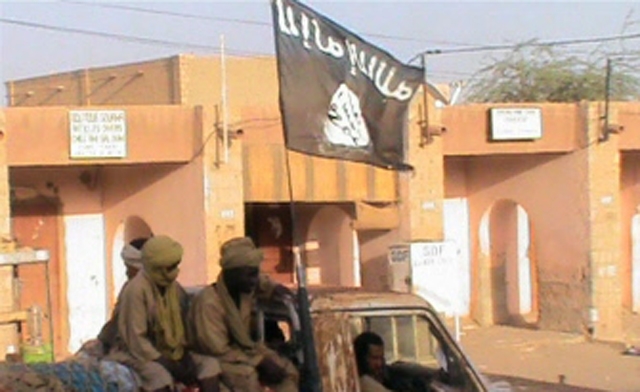
The Black Flag flies in Tombouctou signifying Ansar-Al Dine presence.

Furthermore, in the region of Tombouctou, there is the imposition of Sharia law, which essentially the leader of Ansar Al-Dine wants for the whole of Mali. What would Sharia mean for Mali? Well for one, the wearing of veils would become mandatory as it is now for our sisters in Tombouctou. Women are a very fashion oriented gender in Mali and would not appreciate being told how to dress or how to look. More serious however, would be the strict observance of Islam, which would seem out of place in this moderately Muslim country. Also, Muslim law follows a very strict punishment policy with thieves/vandals having their hands cut off and adulterers being stoned.

So how are we to restore territorial integrity? Initially, when the three territories had fallen, the junta had asked the African Union to provide help. The African Union stands ready to provide a 3000 strong army, but the junta have said, we don’t need boots just give us arms. The Malian army is a 7000 strong army and has been trained for many years by foreign forces to battle these problems in the North. However, not even the bravest of soldiers will run into battle without arms. Arms are a necessary evil but plans need to be carefully drawn and dialogue needs to happen before war. Waging a war without assessing future impacts could be dangerous. We do not want to harm more innocent lives. Plus the Malian army is capable( if equipped) and are more familiar with the desert regions. For all their mistakes, the junta, only 500 strong does not speak for Mali’s army and did not create the Northern problem; they exacerbated it by causing a moment of weakness for the country.

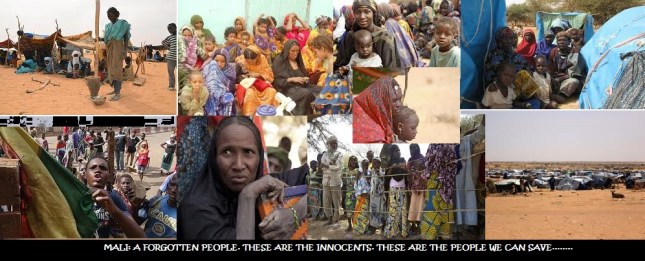
A forgotten people

In addition with the drought of the region, the refugee crisis worsens with each passing day. My heart aches to think of mothers that watch their children die and cannot do a thing about it. My heart aches as the number of people fleeing their homes grows each day. In this day and age, to watch one part of the world flourish and another continue to suffer seems unimaginable. But it exists. It gives individuals like me an opportunity to share my blessings and make a difference to someone in need. Yeah has been working with various organizations to make this possible. Hopefully soon, we will see these organizations shipping containers bringing much needed food. We have also set up a trust to accept anonymous donations if you can help: Friends of Mali Trust, 472 East 4380, North Provo, Utah 84604 or you may donate online at www.samake2012.com and put the keyword “refugee” in the comment field. If you today, could make a difference, please do. Even $1 will feed a child for a day in Mali. Imagine what $10 could do? Imagine what $100 could do? And if you cannot help financially, use the blessing of your voice and spread the word to your network. Let this not become another “African” problem or “not my problem”.

Given these issues, can Diacounda truly set up elections within the next 40 days? The answer is one riddled with ifs. If Diacounda truly embodies the things his party ADEMA says about him like “very keen on working toward consensus” and “a man of the people” (http://www.aljazeera.com/news/africa/2012/04/20124917549965212.html), then maybe a united Mali is possible. Diacounda cannot do this alone. He has to work with other political parties whose leaders are not contaminated with embezzlement and bad governance. “We will never negotiate the partition of Mali,” Traoré said in his inauguration speech in which he promised to organize “free and transparent elections over the whole of the national territory”. Time will tell. The only solution now is for Diacounda to surround himself with “true” leaders who view Mali’s unity and integrity and the Malian peoples safety as their personal goal.

Tomorrow, Yeah will fly out with other members of ADPS to Burkina Faso. Why Burkina? The ECOWAS team has assigned President of Burkina Faso, Blaise Campaoré, as their mediator for the Mali crisis. Yeah and his team will present to the President of Burkina, their joint solution to saving Mali from further casualties and loss of territory. This is an important meeting and dialogue is the key to breeding a Mali solution rather than an international plan to restore Mali to its former self.

We will not rest till Mali is whole again. We will not rest till democracy is restored. We will not rest till every refugee returns home. That is the Samake2012 fight! Are you in? Make your voice heard today at http://www.samake2012.com

 
1 Comment

Posted by on April 12, 2012 in Past Posts


Tags: , , , , , , , , , , , , , , , , , , , , , , , , , , , , , , , , , , , , , ,

A Deal reached ending Sanctions: political aftermath

As yesterday night passed, so did a deal between ECOWAS and the junta. The consensus concurred with the old constitution that the head of the National Assembly would be named as Mali’s next President. The deal came amidst mounting pressure placed on the junta by economic sanctions.

Within two weeks Mali has not only been further weakened but the number of regions it presides over has been reduced by three. AQIM (an Al-Qaeda branch) and the MNLA have taken over the main regions of Gao, Kidal and Tombouctou. The Tuareg claim is one that has been consistent for the past 50 years going back to when this ethnic group requested their French colonizers to grant them an independent territory. With the return of Gaddhafi’s fallen soldiers that originally hail from Mali, arms have made their demands more attainable. Confusion in the South allowed these groups to take over these three regions in a period of 3 days.

Our Mali divided

This agreement that installs the head of the National Assembly, 70-year old Diacounda, has been received with a mixture of feelings. Diacounda is himself a Presidential candidate and had been pursued by the junta for his alliance with ATT.  Malians in general, while they would not want him as a leader, I think, are glad that the sanctions have been lifted. Two weeks after it started and 1 month before elections were set to happen, one could say that the coup seems almost pointless. My concern however is that coups do not happen for “no” reason. They happen because there is an issue within the government. By installing an “old guard”-one from ATT’s regime that allowed many of ATT’s law to pass the legislative body unquestioned, the issue is not being resolved, merely being brushed over because the world says it’s time for the coup to be over. By not resolving the very reason that the coup happened, which is the government’s inabilities and shortcomings in dealing with corruption and the lack of a well-prepared army, we are setting ourselves up for failure. However all Mali can do at this point is to move forward. Yeah will continue to work with his team ADPS to ensure that the voice of the people is heard in the transitional government and that individuals are instituted in the interim that have Mali’s best interest.

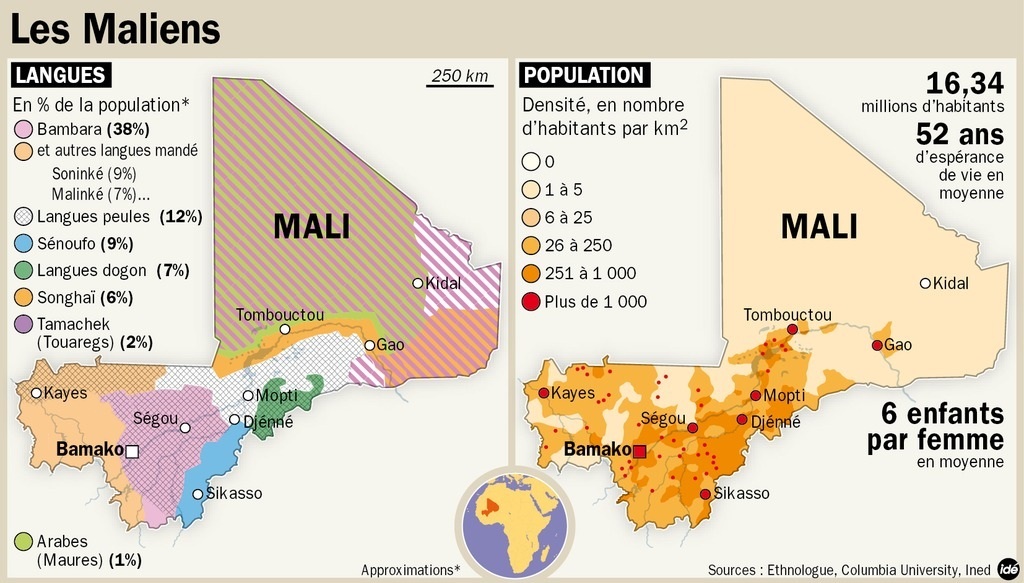
So what does this new deal mean for Mali? The good things are that Mali will get the international help it desperately needs right now. Humanitarian conditions are worsening and in the regions captured Malians are being forced under a rule of terror and religious law. We are thankful that our African neighbors are willing to provide boots on the ground to fight the rebels of the North and free our people that are being oppressed. Another good thing is sanctions are being lifted and the economy once again will breathe a sigh of relief as the flow of goods is restored. On the other hand, no time line has been set in place, on when the change of power will happen. The junta promise that it will be soon. Also, the agreement hints it might be impossible to hold elections within 21-40 days as dictated by the constitution because of the attacks on Mali’s territorial integrity. Before elections can be held, territories need to be regained or let go. To clarify, the regions of Tombouctou, Gao and Kidal do not just hold a Tuareg population. These regions hold a higher percentage of Songhai and Peul. So to allow these territories to just “go” as some countries are suggesting would be to deny citizenship to certain ethnicities that have been part of Mali for centuries.

Mali's various ethnicities

All in all there are some steps in the right direction. It is a hope that the humanitarian crisis will end soon and our brothers and sisters in Gao, Kidal and Tombouctou may once again be free. Within the weeks to come the date of the election will be established as a transitional government is put in place.

The election will go forward. Please continue to show your support at www.samake2012.com. We need you with us as we continue this historic journey. Spread the word, the campaign continues! The spirit of democracy in Mali that is Samake2012 lives on!

For those interested, the agreement (translated into English) reads as:

Whereas a return to constitutional normality requires compliance with the constitution of 25 February 1992 which, in Article 36 organizes the Acting President of the Republic in case of vacancy or incapacity.

Read the rest of this entry »

 
5 Comments

Posted by on April 7, 2012 in Past Posts


Tags: , , , , , , , , , , , , , , , , , , , , , , , , , , , , , , ,

ADPS: A solution from within

Mali as it stands today, finds itself slapped with sanctions, its refugee crisis worsening and with the North declaring their independence. I have always maintained that sanctions do not affect governments but individuals. It would take a lot of individual suffering to get Malians on the street protesting against the junta that believe they have just saved Mali from a bigger evil. So why were sanctions issued? Ecowas, pressured by the international community, felt the need to apply sanctions so that the junta would return the country to democracy and the former constitution.

Democracy is one thing, but the former constitution might be a tall order for a number of reasons. Particularly Article 36 of the former constitution.

Article 36 states: When the President of the Republic is temporarily unable to fulfill his duties, his powers shall be provisionally exercised by the Prime Minister.

In case of a vacancy of the Presidency of Republic for some unforeseen, disruptive cause that is an absolute or unavoidable obstacle, noted by the Constitutional Court, and the President of the National Assembly and the Prime Minister, the functions of the President of the Republic shall be carried out by the President of the National Assembly.

A new process for election of a new president for a new period of five years shall then commence. The election of the new President shall take place between twenty-one and forty days after the official recognition of the vacancy or preventative obstacle.

Diacounda Traoré, leader of Adema-PASJ and a Presidential candidate himself, was the President of the National Assembly, before the junta abandoned the constitution. He was also one of the individuals sought to be arrested by the junta. The junta has been wildly popular for the very reason that Malians believe that ATT and top politicians did nothing to serve the common Malian. By putting back the very individuals that have caused harm (in the people’s eyes) would serve little purpose. In addition, Diacounda’s term expires in July. With three electoral regions fallen, it will be impossible for him to hold elections within the 40 days. First the territorial integrity of Mali needs to be restored. Then, Mali can start to plan elections so the people’s voice can be heard.

Yeah and his team, consisting of 10 other political parties and 3 other presidential candidates have formed the Alliance of Democrats for the Patriots out of the crisis (ADPS) or (l’Alliance des Démocrates Patriotes pour la Sortie de crise (ADPS) in French).

ADPS has been working hard to find a solution that is the most compatible with the previous Constitution.

Yeah has been in consistent meetings for the last two weeks trying to come up with a plan politically that can save Mali from further sanctions and loss of territorial integrity. ADPS stance is that there is no way to restore the constitutional order, as it formerly existed because there would be a political deadlock. ADPS maintains that it is impossible for Diacounda to hold free and fair elections before his term expires as per the constitution.

Article 85 states: “The Constitutional Court is the judge of the constitutionality of the laws and it shall guarantee the fundamental laws of the individual and public liberties. It is the regulating body of the functioning of the institutions and the activity of the Public Powers.”

By instituting article 85 instead, ADPS calls on the constitutional court to organize a national forum with the purpose of legitimizing a transitional authority, an intermediate body that is not party bound and that can oversee the return to democracy.

Here are the governing principles of ADPS:

  1. Pass the state power to a body acceptable to all parties subject to validation by the Constitutional Court under Article 85 of the Constitution;
  2. Restore public confidence in the state and strengthen social peace and national harmony;
  3. Strengthen security measures for people and goods, restart and re-deploy the Administration, the economic and commercial activities;
  4. Ensure freedom of speech and press as well as equal access to all state media;
  5. Obtain immediate ceasefire in northern Mali for the total liberation of the country, the return of refugees and tranquility of the people in the northern part of our country;
  6. Avoid isolation of Mali at the regional and international levels and get support from the international community to implement the program of the Transition;
  7.  Fight against all illicit trafficking, terrorism and all forms of insecurity in the country;
  8. Reform and re-mobilize the armed forces and security by providing them with adequate means to defend the territorial integrity and national unity;
  9. Preserve the physical and moral integrity of all those arrested during the recent events, release those against whom there would be no charge, guarantee respect for human rights and a fair justice for all Malian;
  10. Democratic elections, free, credible and transparent within a realistic timeframe;
  11. Restore the authority of the State.

ADPS has met with embassies (American, French, and Algerian to name a few) and organizations hoping spread their message. To install Diacounda in power would be almost as if the coup was pointless. The coup was an expression of what every Malian has been feeling for the past few years. The feeling of being marginalized by the powers in office. By installing a transitional authority by the constitutional court as the intermediary body, ADPS is suggesting a fresh start while attaining an end goal of restoring the territorial integrity and also organizing elections in which all of Mali can participate. The regions of Gao, Kidal and Tombouctou need to be won back. Mali cannot do this alone. It needs the help of its neighbors to fight the better armed armies of MNLA and AQIM.

The solution has to come from within. In the countries where the international community has come up with the solution, those countries still struggle with the concept of democracy. Democratic rule of law that fits with the culture of its people are very essential to its success. ADPS hopes that while the international community will help with gaining back territories, but ultimately, the political solution to Mali’s crisis needs to be born on Mali soil and in the hearts of Malians.

ADPS hopes to invite all political leaders to a national forum. The Forum hopes to outline what ADPS espouses but more importantly, hopes that all political parties will put aside their partisan differences and will have one goal only and that is the good of Mali and the Malian people. It is also hoped at the Forum that Malians can together agree on how the transition can be managed, the period of transition and the President of the transition government. Also it will be essential to decide how the three lost territories can be won back effectively and without the loss of lives.

This national Forum is a crucial step in the restoration of national unity, territorial integrity and peace throughout Mali.

Once order is restored, then fair elections must be held. Fair elections are the very heart of democracy. Without free and fair elections, the leader that gets selected becomes a farce to be put up with.

My two cents. I hope that Mali, my adoptive country, will come together and build some consensus on how to resolve the power vacuum and how democracy can be successfully restored. We cannot blindly assume that things should return to the way they were two weeks ago. Things happen for a reason. The coup happened for a reason. That means something was not working. Now is Mali’s chance to rectify the thing that wasn’t working. To go back to the same situation would be to repeat the mistake that was made. If we do this, in 20 more years we will find ourselves at the same crossroads and no closer to a solution. Let’s get this right so that Mali as a whole can truly once again become the beacon of democracy it should be.

This slideshow requires JavaScript.

 
Leave a comment

Posted by on April 6, 2012 in Past Posts


Tags: , , , , , , , , , , , , , , , , , , , , , , , , , ,

A Double Whammy: The North Falls and the Refugee Count Rises

As the weekend passed, the new work week invited new changes in Mali. Over the weekend, MNLA and AQIM made advances in the North and as Mali watched, the three biggest regions of Gao, Kidal and Tombouctou fell. This could have been possibly the worst thing that could have happened at this critical time. As soldiers found themselves ill-prepared and distracted, these rebels took over the North and the count of captured territories increased.

These takeovers further cement how inadequate this new regime is to handle the various issues of Mali. The very issue of the North that caused them to revolt is now biting again. In addition, we are starting to hear residents in those areas report that the Islamists are ordering Western pictures to be taken down and Sharia law is already being implemented in Timbuktu. As the reports of change came out of the North, last night the countries around Mali followed through on their promise of sanctions locked down their borders. Under the sanctions, the five neighboring ECOWAS members will close their borders with landlocked Mali except for humanitarian purposes. Its member states are to deny Mali access to their ports, freeze Mali’s accounts in regional banks and suspend Mali’s participation in cultural and sporting events. Also in the works, is the possible deployment of 2000 military soldiers from the neighboring countries. It is still confusing as to whether these soldiers will attempt to take down the military leadership or be deployed to fight rebels in the North.

Sanctions could be disastrous for Mai that relies on imports for most of its goods. The biggest one is fuel as Mali imports all its fuel from neighboring Ivory Coast. No fuel could spell trouble for gas stations and residents. Yesterday night, when the embargo was announced, people rushed to gas stations to fill up afraid that fuel would run out. Also with the banks being cut of the money supply, residents that rely on banks could be very affected. Most Malians however do not bank and so this might not be a thing that affects them. Rising food prices and things like cement and fuel being in short supply are more likely to happen as Malians adjust to the sanctions.

Sanogo, continues to say he will hand back power and in the face of sanctions, he continues to make these promises without attaching a deadline. Yeah continues to work with other political parties to make leaps and bounds that hopefully will see results. The hope is for Sanogo to cede power peacefully. Already Yeah and his team are in talks with the different embassies and also different organizations that can help facilitate this process. Now is the time for peace talks, not sanctions and threats. Now is also the time to start backing our army with better prepared and equipped outside forces so that the rebels do not decide to consider taking their offensive further south.  It certainly will back fire to have a radicalized violent extremist movement well rooted in Northern Mali.  This is bound to threaten regional stability.

If the sanctions continue, it could be disastrous. Already the Northern regions are experiencing deteriorating conditions. In addition to a drought and extremely hot weather, almost 200000 refugees are displaced by the fighting in the region. These individuals need help now. There are children that are dying every day because of inability to get food and water. The heat is unbearable and makes conditions even worse. April is the hottest month for Mali and here temperatures in the North easily reach 120F. Now more than ever, our Malian brothers and sisters need your help. We need funds that can not only handle the immediate concern of improving their living conditions. Once we have answered that need, a need to stabilize them in society becomes essential.

A rising count. 2000 in the last 5 days!!

I have said it before, but I am compelled to say it again. People in the world need to realize that the refugee issue is not just a Mali issue; it is a human rights issue. We have refugees that are living in despicable conditions with little to no resources. Our teams have been attempting to raise refugee aid to help our displaced Malian brothers and sisters while the issue in the North plays out. We are calling on the international community to step up aid to these displaced people so that basic necessities like food, water and shelter are given them so that we don’t have a similar issue like that in Sudan and Somalia. Those interested in doing so through the Samake 2012 campaign may make anonymous donations to a trust that has been set up:

Friends of Mali Trust

472 East 4380

North Provo, Utah 84604

As soon as the current violence ends in the north, a new need will arise: Helping those who have been displaced to return and resettle into productive lives.  In East Africa, many displaced populations have suffered for years – prohibited from finding local employment near their shantytowns, they have become dependent upon western aid organizations. In some cases, these camps have witnessed second and even third generations growing up in these conditions.

Mali must be different. The people of Mali are strong and independent.   Beyond the immediate aid needed to sustain life, we also seek just enough aid to help families return to their formerly productive lives.

If you can help today, help make a difference. Every little bit helps.

 
4 Comments

Posted by on April 3, 2012 in Past Posts


Tags: , , , , , , , , , , , , , , , , , , , , , , , , , , , , , , , , , ,

Getting Democracy back on Track

UN PEUPLE, UN BUT, UNE FOI ( ONE PEOPLE, ONE GOAL, ONE FAITH) IN OUR COUNTRY MALI

The past week has been an eye opener to not take things for granted. A democracy that had become the beacon and lesson for other countries in Africa was pulled to its feet. As the world watched, a coup led by junior army officers brought down the soldier of democracy himself, Amadou Toumani Toure (ATT).

Much of the Western world has responded in addition to the surrounding African countries requesting a swift return to democracy. The US, EU and ECOWAS have issued sanctions and in some cases threatened them if democracy does not return. So why is democracy so important? Democracy is a relatively fresh concept for many Africans and even at that those countries that have democracies and have elected leaders, eventually find themselves distanced from the very leaders that they put in power. Democracy which entails the formation of policies and determination of state’s role becomes a hard sell in general for so called young African democracies that do not see an exchange of this sort at the local level. In order for democracy to succeed and truly be embraced, leaders need to involve their constituents in running the government. Constituents need to see how laws passed affect them at a local level. For democracy to succeed, local participation should not only be hoped for, it is essential.

Mali had been a democracy for 20 years. The one thing that weakens a democracy like no other is when there is a vast difference between the elite that make the rules and the majority of Malians. Mali has been independent for 52 years, but has seen little improvement in healthcare, education and the poverty standards. Despite an influx of NGOs, unless the Malian government takes a personal stance literacy will stagnate at 46%. 1 doctor will continue to serve 20000 people. The average life expectancy will remain 52 years—almost 30 years shorter than the average Westerner. A huge percentage of the population will continue to live below the international poverty line of 1.25USD a day. The biggest challenge remains the institutions that have been created to resolve these issues. In addition, while great foreign investments have happened in terms of infrastructure, Mali has seen little investment to enhance its primary strength in the agricultural field. 70% of Malians work in agriculture; however, changing climate and the demand on food has made Mali very dependent on importing a majority of its food. More investments need to be made to make Mali self-sustainable and profitable in the agricultural arena.

The new leader will have a plateful of challenges.

  1. Teaching a man to fish: Education needs to be an important part of a new Mali. Today with 46% of the population literate, Mali has very few Bachelor degree holders and even fewer Master degree holders. Very few PhD holders will ever return to Mali because of the lack of opportunity. The new leader will need to increase the number of schools in the rural areas; pay teachers better and make education mandatory. Today, children are favored to work in the fields rather than in the classroom because the first option yields an income for the family. By providing incentives to children and their parents to enroll in school as well as making schools accessible, education can become a reality for many Malian students. Yeah hopes to build 1000s more schools as soon as he comes into office as well as hiring more teachers. He hopes that each region will have its own university and that the strikes that have ravaged the educational systems since 2009 can be resolved with better pay and more investment in the student’s future.
  2. The healthcare situation in Mali is despicable. The average Malian finds healthcare unaffordable and unreachable. With the life expectancy very low and the death from preventable diseases very high, Yeah hopes to build hospitals in every region. Ouelessebougou will have its first hospital in the area that will house a maternity center, pharmacy and eye/dental center. In addition, it will be important to make Mali a safe haven for medical expeditions that come to serve the people of Mali. Through our years we have been blessed to meet many giving hearts and hands and we hope that they will continue to come and bless the people that need it most in Mali.
  3. Jobs: Malian people are not asking for a handout. No one likes to beg and Malians are no exception. However, circumstances currently do not give much choice and it is hard to pass a street without seeing a hoard of hungry children or a mother with a baby on her back and another two in her hands. An important task will be to create jobs for the individuals graduating and also those in the unemployed middle class. Mali’s unemployment is gauged around 30% and is evident in the streets where young men sit hoping that opportunity knocks. Yeah has been able to create jobs with the hospital, school and solar panel field. Also with the cotton plant reopening in Ouelessebougou, 100 more individuals have a paycheck.
  4. A security issue: The north is becoming more and more an Al-Qaeda battle ground. The issue of sovereignty has existed for a few centuries with the Tuareg feeling unappreciated and unaccounted for in a government they elected. The only reason Al Qaeda stands a chance in Mali is that our youth are desperate for opportunities. Normally our people are not prone to radicalization. The Tuaregs in the North believe they have been marginalized—that the government is not serving them.
  5. All these things can only be instituted if you have a government that is not riddled by corruption and institutions that are run effectively and efficiently. Many current government institutions are riddled with inefficiencies and bureaucracy.

Democracy is not lost. This is evident in the opinion polls where 74.5 % prefer democracy to any other regime type. However it has been hit hard in Mali. More than half of Malians feel that government has not served its purpose. Malians for the most part believe government is there to make their lives better. Lives have not gotten better.

Once the immediate security threat of MNLA is crushed, it will be important to start creating stability for our Northern brothers and sisters and also creating opportunities in the North for the refugees displaced by all the fighting. Then it will be important to return to the democratic process and allow Malians to truly choose their candidate unbiased by money and favors.

I truly believe that Malians need a leader with a vision. I truly believe that they need young blood that has been untainted by lives lost and the people’s money stolen. I believe the people of Mali will find a leader who cares in Yeah Samake. Yeah has been distraught over the current crisis that has gripped Mali. Today he told me:” My heart is crying for my country”. I hope that the leaders that are running the country today will work with the international community to end the Northern rampage of MNLA. I hope that international organizations will not forget my people suffering the North. I hope and pray that democracy will be restored temporarily with an interim government and then with free and fair elections. But most of all, I hope Mali will get the leader it so desperately needs that can show his people that there is hope and that Mali can be a great country not made great by foreign aid but by Malians themselves.

Democracy can be and will be restored. Make your voice heard at www.samake2012.com. Support Samake for Democracy!

SAMAKE FOR DEMOCRACY!

 
1 Comment

Posted by on March 31, 2012 in Past Posts


Tags: , , , , , , , , , , , , , , , , , , , , , ,

Mali in crisis


Yesterday afternoon, as Yeah was finishing up a meeting in downtown Bamako, he watched in surprise as across the street military troops led by Capt Amadou Aya Sanogo surrounded the National TV station. Shots were fired in the air, but no civilian was endangered. Soon after the TV and radio stations shut down. For a while the troops blocked access out of the downtown area, but Yeah was able to get home.

As we waited for events to unfold, we received reports that several military officials were livid with the government’s handling of the issue in the North, specifically not arming the troops well with food and weapons to match their enemies. The result of the last few months of fighting in the North between AZAWAD and Mali’s troops have caused deaths on both sides and also displaced about 180000 refugees. As we watched and waited, these military troops stormed the Presidential palace and several high-ranking government officials were captured. Gunfire could be heard sporadically as additional ministers were captured and citizens warned not to interfere.

At 4am, the military troops under the name of National Committee for the Reestablishment of Democracy and the Restoration of the State, or CNRDR came on National TV advising the reasons behind which they had removed the President from power. They advised that temporarily military rule and curfew was in place and asked citizens not to venture outdoors. Then again about 11am, they issued another statement reaffirming their intentions and advising that a temporary government would be put in place on the 27th of March and advising all administration to return to work on that day or consider it job abandonment.  Currently all airports and borders are shut down as well.

This situation has definitely been hair-raising. At this time, there is no word on the elections that were to happen on April 29th. This group keeps reaffirming that power is not their intention and there will be a return to democratic rule once national unity is restored and territorial integrity is re-established. The only question that remains is when.

Yeah issued this statement regarding the situation on behalf of his party PACP. It follows in French and English

————————————————————————————————-

Chers compatriotes,

Le Parti pour l’Action Civique et Patriotique (P.A.C.P) a suivi avec stupéfaction la mutinerie d’hommes de rang qui s’est dégénérée en une usurpation du pouvoir démocratique.

Le P.A.C.P condamne avec la dernière vigueur la confiscation du pouvoir par des militaires se réclamant du Comité National …pour le Redressement de la Démocratie et la Restauration de l’État (C.N.R.D.R). …

Le P.A.C.P demande à l’ensemble du Peuple souverain du Mali de se mobiliser pour la défense et la consolidation des acquis démocratiques.

Nos ambitions politiques personnelles ne devraient pas nous éloigner des gages qui consacrent la splendeur et la pureté des grandes valeurs qui reposent sur les fondements du vivre ensemble. Ce vivre ensemble qui fortifie la confiance et la cohésion entre les citoyens d’un même pays qu’est notre Mali.

Nous demandons aux forces armées de restaurer urgemment l’unité des différents corps militaires pour la quiétude de la population et prendre les dispositions idoines pour la protection des personnes et des biens sur toute l’étendue du territoire national.

Nous invitons la classe politique malienne à s’organiser pour exiger la remise immédiate du pouvoir au peuple malien par la constitution d’un gouvernement d’union pour assurer la continuité de l’administration et le maintien du calendrier électoral dans le respect strict de la constitution.
Vive la démocratie !
Vive le Mali !
Divisés nous perdons tous ! Unis nous gagnons tous!

In English:

Dear compatriots,

The Party for Civic Action and Patriotic (PACP) followed with amazement the mutiny of men of rank which has degenerated into a usurpation of democratic authority.

The PACP condemns with the utmost vigor the confiscation of power by the military calling itself the National Committee for the Recovery of Democracy and the Restoration of the State (CNRDR).

The PACP asks all of the Sovereign People of Mali to mobilize for the defense and consolidation of democratic gains.

Our personal political ambitions should not get away from pledges to spend the splendor and purity of the great values that are based on the foundations of living together. This is what strengthens confidence and cohesion among citizens of a country that is our Mali.

We ask the military to urgently restore the unity of the various military corps for the tranquility of the population and make appropriate arrangements for the protection of persons and goods throughout the national territory.

We invite Malian politicians to organize and demand the immediate transfer of power to the people of Mali by the formation of a unity government to ensure continuity of administration and maintenance of the electoral calendar in strict compliance with the constitution.

Long live democracy!
Long live Mali!
Divided we all lose! United we all win!

————————————————————————————————————-

To all my family and friends, please be assured that my family is fine. We are very worried about what this means for Malians and the Malian refugees displaced. Now is a crucial time for the Malian people. At this time, we pray and hope that there is a swift resolution to this internal crisis. We also pray and hope that no more people will fall on the way to restoring democracy. May Mali recover from this crisis. Vive Mali.

 
5 Comments

Posted by on March 22, 2012 in Past Posts


Tags: , , , , , , , , , , , , , ,